Should You Sleep In The Same Bed Tonight?
Yes — hard as it sounds, sleeping in the same bed is usually the right move. Bed bugs follow their food. If you move to the sofa or a spare room, hungry bugs follow you there and the infestation gains a second home.
Pros give this advice on almost every first call: keep the sleeping arrangement exactly as it was until treatment starts. The bugs are already settled around your bed; your job tonight is to keep them there, in the one place the treatment will hit hardest.
If the bed itself is unbearable, a cleaned, inspected air mattress in the SAME room is a better fallback than any other room in the house. What matters is the room, not the furniture — the infestation must not be given a tour of your home.
What Should You Do In The First Hour?
Confirm what you can, record it, and contain the bed area. A flashlight, your phone camera and a roll of tape are enough: inspect the mattress seams and headboard, photograph any live bugs or spots, and note which rooms show signs.
Look where the EPA tells people to look: mattress piping, seams and tags, the box spring, cracks in the frame and headboard, and the joints of nearby furniture. Live bugs are flat, oval and reddish-brown, about the size of an apple seed. Rusty stains and tiny dark spots count as evidence too — photograph them in place rather than scrubbing them away.
Then stop. You do not need to strip the whole room tonight. Pull the bed a few inches away from the wall if it touches it, and tuck bedding so it does not drape onto the floor — those two small gaps make it harder for bugs to commute on and off the bed while you sleep.
What Should You Never Do On The First Night?
Three things make infestations worse overnight: carrying bedding, clothes or furniture into other rooms; moving to sleep somewhere else; and spraying — especially foggers, which scatter bugs deeper into walls and neighbouring rooms instead of killing them.
Every item that leaves the room can carry bugs or eggs with it. If something truly has to move, seal it in a plastic bag first and take it straight to a washer or outside bin — never onto another bed, sofa or carpet. Throwing the mattress out is the classic mistake: it rarely removes the whole problem (bugs also live in frames, skirting and furniture), it can spread bugs through shared hallways, and someone else may take the mattress home.
Skip the bug bombs entirely. Foggers are one of the most thoroughly documented ways to turn a one-room problem into a whole-home problem, and heavy DIY spraying tonight can also interfere with the products a pro plans to use tomorrow.
Need Bed Bug Treatment Help Near You?
One free call connects you with a local pro who can arrive in 30–60 minutes.
Call (800) 555-0100Free Call · Answered 24/7 · Local Pros Near You
What Can The Dryer Do For You Tonight?
Heat you already own: a tumble dryer on its hottest setting for at least 30 minutes kills bed bugs and eggs in the items that go through it. Tonight, run one bag's worth — tomorrow's clothes, and bedding only if you can spare it.
Carry the items to the machine in a sealed bag so nothing drops on the way, empty the bag straight into the drum, and throw the bag itself away outside. Dry heat is the reliable half of laundry — a hot wash helps, but it is the sustained dryer heat that does the killing at every life stage.
Resist doing the whole house tonight. Laundry has a real role in treatment preparation, and your pro will give you a proper list. One clean outfit and a calm room beat six hours of midnight washing that spreads you — and possibly the bugs — across every room.
Can You Make The Bed Itself Harder To Reach?
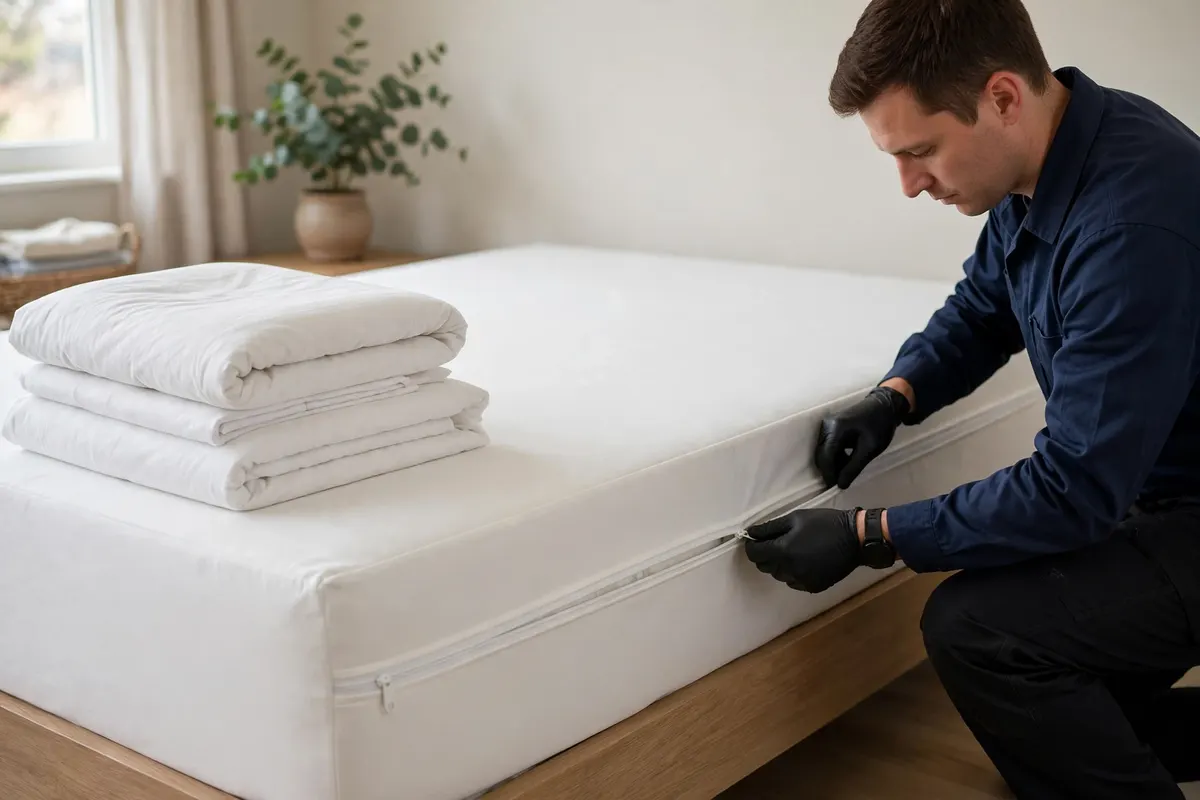
A little. Interceptor traps under the bed legs — if you have them or can get them quickly — trap bugs travelling to and from the bed. A mattress encasement, fitted carefully without tearing, seals in any bugs already inside the mattress so they cannot feed or escape.
Neither is a treatment on its own, and neither needs to happen at 2 a.m. But if they are already in the house, tonight is a good night to fit them: interceptors start telling you where the traffic is, and an encasement removes the mattress's seams as a hiding place and makes later inspections much easier.
Keep the bed an island either way: away from the wall, bedding tucked off the floor, and nothing stored underneath that bridges the gap. Bugs climb well, but every break in the route slows the commute.
What Should You Tell The Pro In The Morning?
Where you found signs, which rooms you sleep in, and what you have already done. Your photos, the rooms involved, any recent travel or second-hand furniture, and whether neighbours or adjoining flats are affected all shape the inspection and the treatment plan.
Be honest about anything you sprayed or moved — a good pro would rather know than guess, and it changes what they can safely apply. Mention anyone in the home who is pregnant, elderly, unwell or a pet owner; preparation and re-entry advice is built around the household, not just the bugs.
This is also the moment to ask the two questions that predict how the next fortnight goes: what is the plan for the eggs, and when is the follow-up visit? You will sleep better with both answers.
The first night is about containment, not cure. A problem that stays in one room is a problem treatment can finish.
How Do You Get Through The Night Itself?
Lower the lights, keep the routine, and give the worry a boundary. You have confirmed, contained and made the call — the remaining job of the first night is rest, because tomorrow has a preparation list in it.
It helps to know the plain facts: bed bugs are a pest problem, not a hygiene verdict — the CDC is clear they turn up in clean and dirty homes alike, spread mainly by travel and moved furniture, and are not known to spread disease. Finding them says nothing about how you keep your home.
If sleep will not come, our guide to bed bugs, sleep and anxiety covers the longer stretch while treatment runs its course. For tonight: pyjamas from the dryer bag, bed as an island, phone down. The pro takes it from here.
And if tonight is the night, you do not have to wait for morning: Bed Bug Treatment Austin, TX, Bed Bug Treatment Albertson, NY and Bed Bug Treatment Apollo Beach, FL all take calls around the clock.
The Words Pros Use For All Of This
Guides like this one translate as they go, but on a call you will hear the trade's own terms. The species behind nearly every case is Cimex lectularius, the common bed bug. A bed bug egg is a millimetre long, pearly white, and glued into a seam or crack where sprays rarely reach. A bed bug nymph moults five times before it can breed, and it needs a blood meal at every stage. Pros call the colony's daytime hiding place a harborage — a seam, crack or void within reach of the bed. Fecal spots, tiny black dots of digested blood, gather on the seams and frame where the colony rests. Shed skins (exuviae) are the papery shells left behind at each moult, and they collect beside the seams where the colony rests. Rusty stains on bedding come from crushed, blood-fed bugs rolled on in the night.
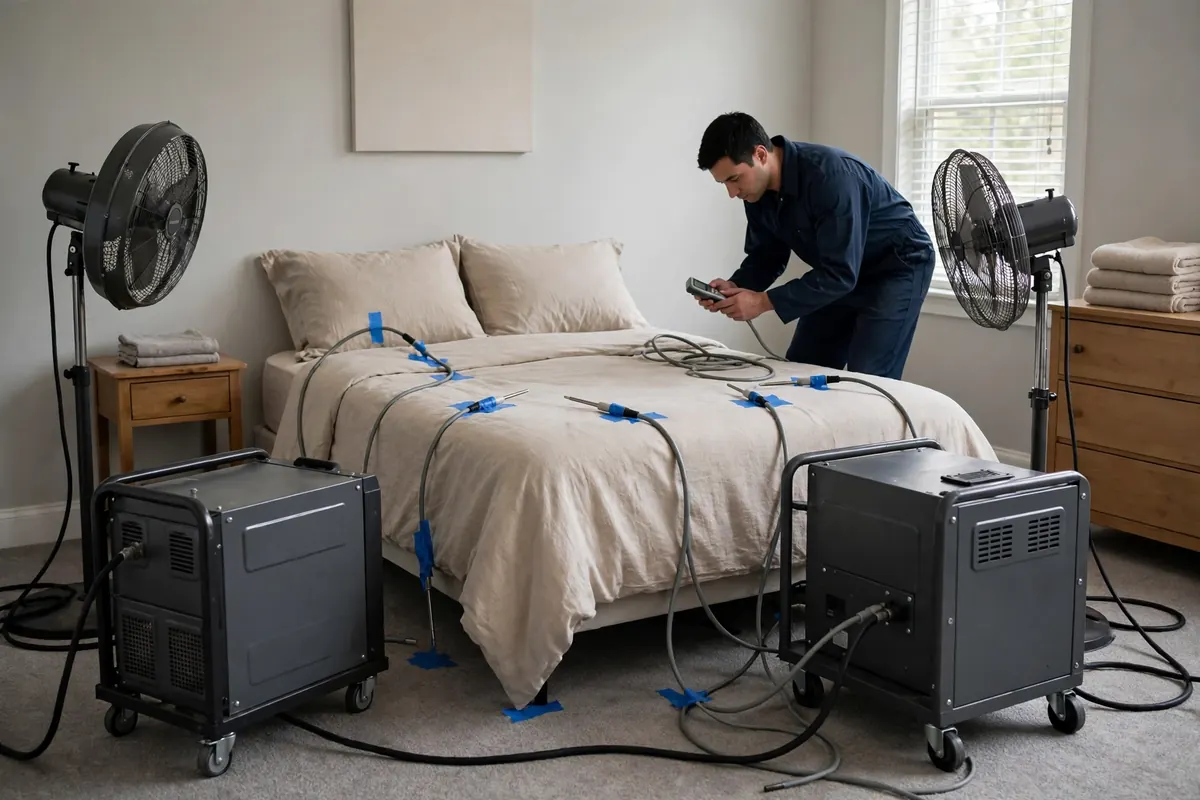
The kit those terms describe is simple: A passive monitor tucked at the head of the bed gives wandering bugs a harbourage that can be checked in seconds. A box-spring encasement does the same for the base, whose torn fabric and staples hide colonies well. K9 scent detection can sweep a room in minutes, the dog's nose finding what eyes miss in clutter. Everything starts with a visual inspection — seams, screw holes, headboard backs and the joints of the frame. Thermal heat remediation raises the whole room to a lethal temperature and holds it there until every stage is dead.