What Is Bed Bug Fumigation, Exactly?
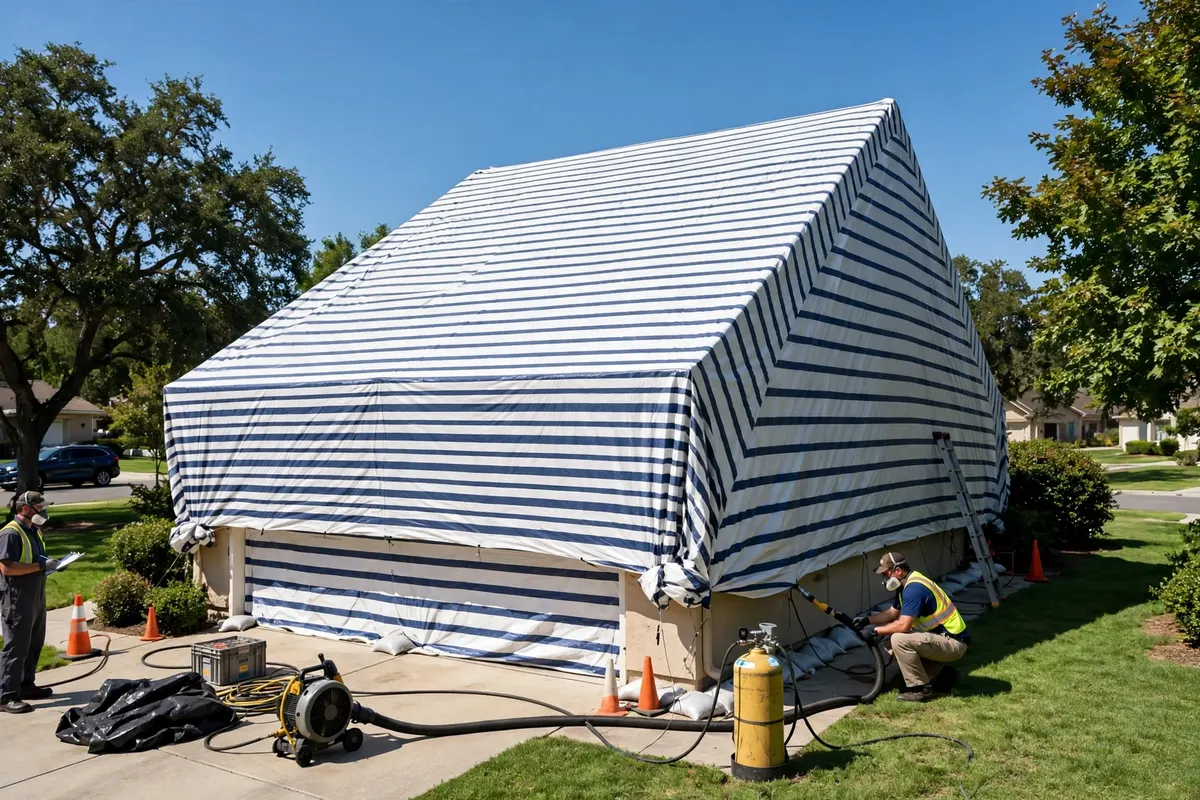
Fumigation seals the whole structure — usually under a tent — and fills it with a fumigant gas such as sulfuryl fluoride for a set period. The gas penetrates everywhere air goes: inside walls, furniture, belongings and clutter. Unlike surface sprays, it reaches the eggs too, which is its great advantage.
That penetration comes at a price in logistics. The home is out of use for days, not hours: preparation, sealing, the exposure period, then aeration and clearance testing before anyone can re-enter. Food, medicines and anything living — people, pets, plants — come out first, under the fumigation company's instructions.
Fumigation is done by specialist companies with dedicated crews, regulated by your state pest control authority (FDACS in Florida, NYSDEC in New York, the Texas Department of Agriculture's Structural Pest Control Service in Texas). It is a planned operation, closer to a small construction project than to a pest control visit.
When Is Fumigation Actually The Right Call?
In a minority of cases: severe, whole-structure infestations spread through many rooms; homes so cluttered that heat and sprays cannot reach harbourages; infestations inside items and voids that other methods cannot penetrate; and situations where repeated heat and chemical programs have already failed and the eggs keep restarting the cycle.
The common thread is reach. Every other method has a contact problem — heat must raise every hiding place to killing temperature, sprays must touch the bug or leave a residual it crosses. Where clutter, construction or sheer spread make that unreliable across an entire structure, a penetrating gas stops being overkill and starts being the honest option.
It is also considered for structures that can be fully emptied and sealed — a vacant property between tenancies, for example — where the days out of use cost nothing. What fumigation is not is a first response to finding bugs in one bedroom; for that, it is the most expensive and disruptive answer to a problem smaller methods solve.
Why Does Fumigation Kill What Sprays Miss?
The eggs. Surface insecticides largely fail against bed bug eggs, which is why chemical programs need follow-up visits timed to the hatch. Fumigant gas, held at the right concentration for the full exposure period, kills every life stage in one operation — egg, nymph and adult — including the ones nobody could see.
Heat shares this advantage — sustained temperatures above about 113°F at the bug's location kill eggs too — which is why heat is the more common 'one and done' method, and our heat-vs-chemical guide compares the two in detail. Fumigation's edge over heat is purely penetration: clutter and dense contents that shield cold spots from heat do not shield anything from gas.
The discipline is in the dosing: fumigators calculate concentration against the structure's volume and monitor it through the exposure period, because a half-dosed fumigation is just an expensive way to select for survivors.
Need Bed Bug Treatment Help Near You?
One free call connects you with a local pro who can arrive in 30–60 minutes.
Call (800) 555-0100Free Call · Answered 24/7 · Local Pros Near You
What Does Fumigation Leave Behind?
Nothing — and that is its great weakness. The gas disperses completely during aeration, leaving zero residual protection. A bug carried in on a suitcase the week after fumigation starts a brand-new infestation in a perfectly treated home. Follow-up monitoring and prevention carry the whole load afterwards.
Compare the chemical program fumigation often replaces: whatever its limits on eggs, a residual barrier keeps killing for weeks, catching hatchlings and stragglers between visits. After fumigation, pros lean on interceptor traps, encasements and scheduled inspections to prove the home stayed clear — and on your travel habits to keep it that way.
Ask any fumigation quote what the aftercare is. If the answer is 'nothing — the treatment settles it for good', be sceptical: the treatment can be verified, but no method can promise what your next hotel stay brings home.
Why Is Fumigation So Expensive?
Serious money, for structural reasons: the tenting or sealing crew, the gas and monitoring equipment, the specialist team across several days, and the sheer labour of a whole-structure operation. It is typically the most expensive bed bug option per home, priced by the size and complexity of the structure rather than by the room.
We do not quote figures here because they vary too much by structure and state to be honest as a general number — get itemised quotes and compare the full scope: preparation support, exposure period, clearance testing, monitoring afterwards. A cheaper quote that skips monitoring is not the same product.
Cost is also relative to failure. A severe infestation that has already burned through two failed programs can make fumigation the economical end-point: one operation that closes the question, instead of a third and fourth round of visits.
What Should You Ask Before Agreeing To Fumigation?
Ask four things: is my whole structure really the problem, or the worst rooms? Can it be sealed properly — attached homes and shared structures complicate tenting? What exactly is the exposure and clearance process? And what monitoring follows, given there is no residual? The answers separate a recommendation from a sales pitch.
Also ask what happens to the contents list: which foods and medicines must be removed or specially bagged, what happens to plants and aquariums, and who signs off re-entry. Professional fumigators work to strict label and state requirements here — their paperwork should feel thorough, because it has to be.
If the recommendation still sounds oversized for what you have found, get a second assessment from a company that offers heat and chemical programs too. A firm that sells only fumigation will tend to find fumigation-shaped problems.
What Do Most Homes Get Instead?
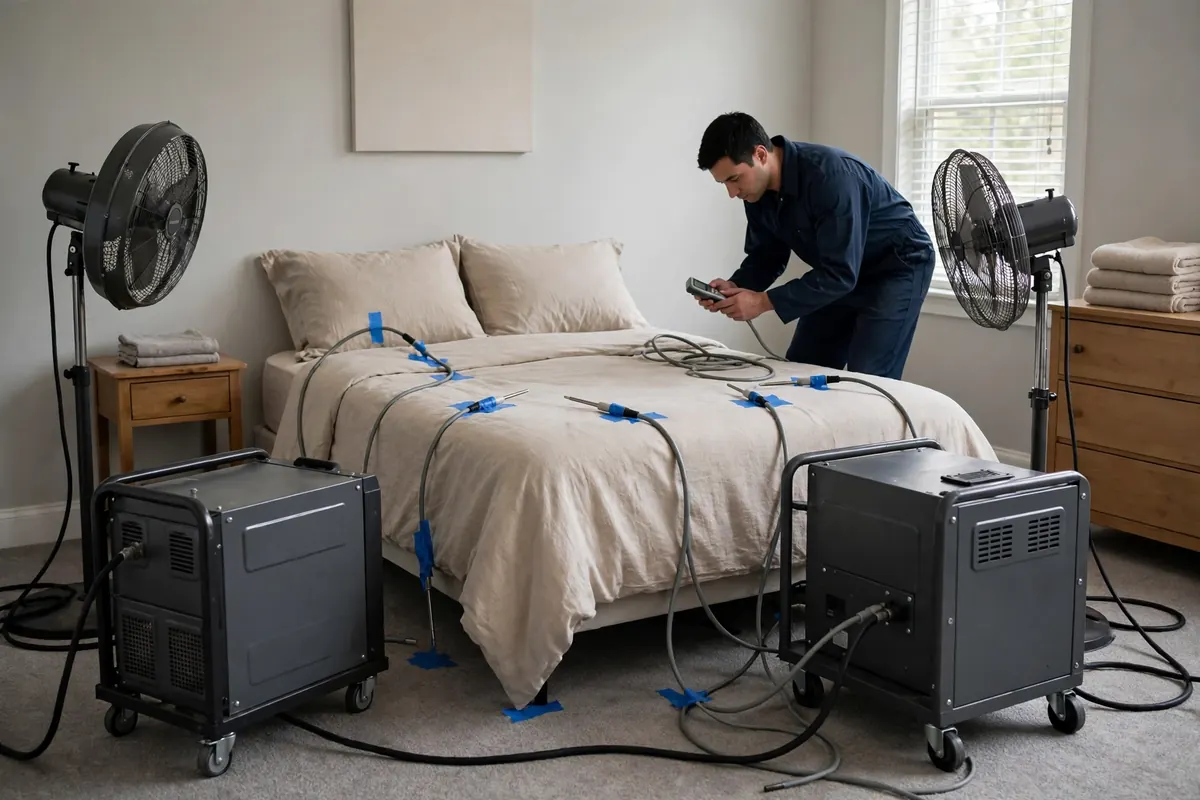
Usually: heat for the main sleeping areas, a residual chemical barrier for the weeks after, encasements and interceptors for monitoring, and targeted methods — steam, freezing contact sprays, desiccant dusts — for the awkward items. That combination covers the egg problem through heat and follow-up timing rather than through gas.
For the great majority of infestations found in time, that program is the whole story: one treatment day, two or three follow-ups, and a home you sleep in throughout. Fumigation stays in reserve for the cases where inspection shows the problem has outgrown room-by-room work.
Either way, the decision starts in the same place: a thorough inspection that maps how far the bugs have actually spread. The map, not the fear, should choose the method.
Fumigation is arranged case by case, after an inspection shows the building needs it — start with Bed Bug Treatment Abilene, TX or Bed Bug Treatment Alachua, FL, and see the state rules on our Bed Bug Help In Texas page.
The Words Pros Use For All Of This
Guides like this one translate as they go, but on a call you will hear the trade's own terms. The species behind nearly every case is Cimex lectularius, the common bed bug. A bed bug nymph moults five times before it can breed, and it needs a blood meal at every stage. Pros call the colony's daytime hiding place a harborage — a seam, crack or void within reach of the bed. Fecal spots, tiny black dots of digested blood, gather on the seams and frame where the colony rests. Shed skins (exuviae) are the papery shells left behind at each moult, and they collect beside the seams where the colony rests. Rusty stains on bedding come from crushed, blood-fed bugs rolled on in the night.
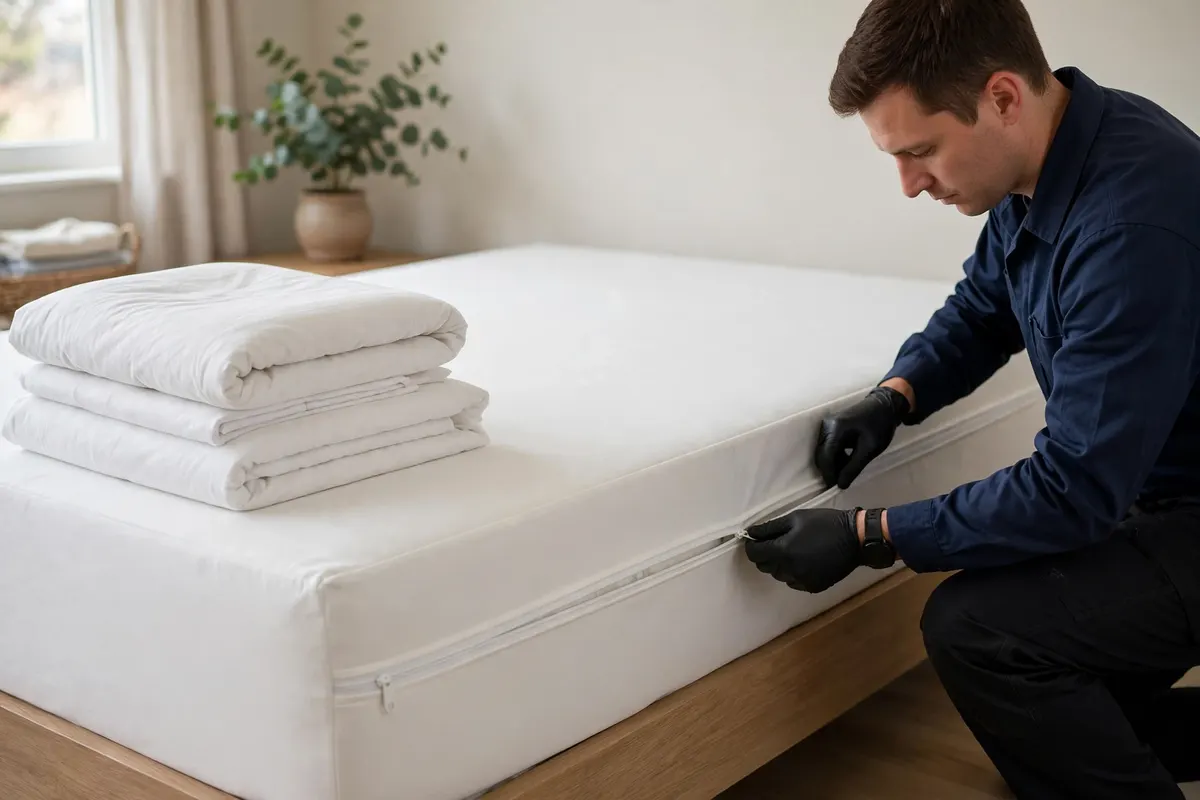
The kit those terms describe is simple: A passive monitor tucked at the head of the bed gives wandering bugs a harbourage that can be checked in seconds. A mattress encasement seals the bed itself, so nothing can hide in its seams or tufts. A box-spring encasement does the same for the base, whose torn fabric and staples hide colonies well. K9 scent detection can sweep a room in minutes, the dog's nose finding what eyes miss in clutter. Everything starts with a visual inspection — seams, screw holes, headboard backs and the joints of the frame. Thermal heat remediation raises the whole room to a lethal temperature and holds it there until every stage is dead.
Fumigation is not the strongest treatment — it is the deepest-reaching one. It earns its place when nothing else can physically reach the whole problem.