Why Do Bed Bugs Settle In Couches So Often?
Because a couch is a bed that never gets checked: warm, dark, full of seams, and occupied by a still host for hours every evening.
A bed bug needs two things: a hiding place within walking distance of a sleeping or resting person, and hours of undisturbed darkness. A sofa offers both better than almost any bed. Cushion seams, the folds where arms meet the seat, the cavity under the dust cover, recliner mechanisms and the joints of the wooden frame give deep, layered harbourage — and the person on the couch sits still, exhaling the carbon dioxide bugs track, through a whole film or a whole nap. Homes that found bugs in a bedroom first often discover the second front here, in rooms like those handled by Bed Bug Treatment Apopka, FL every week.
Couches also spread the map of an infestation. Someone who starts sleeping on the sofa to escape a bitten bed carries the feeding station with them, and bugs follow the host. If the couch is involved, it is never an afterthought in treatment — it is half the problem.
How Do You Inspect A Sofa For Bed Bugs?
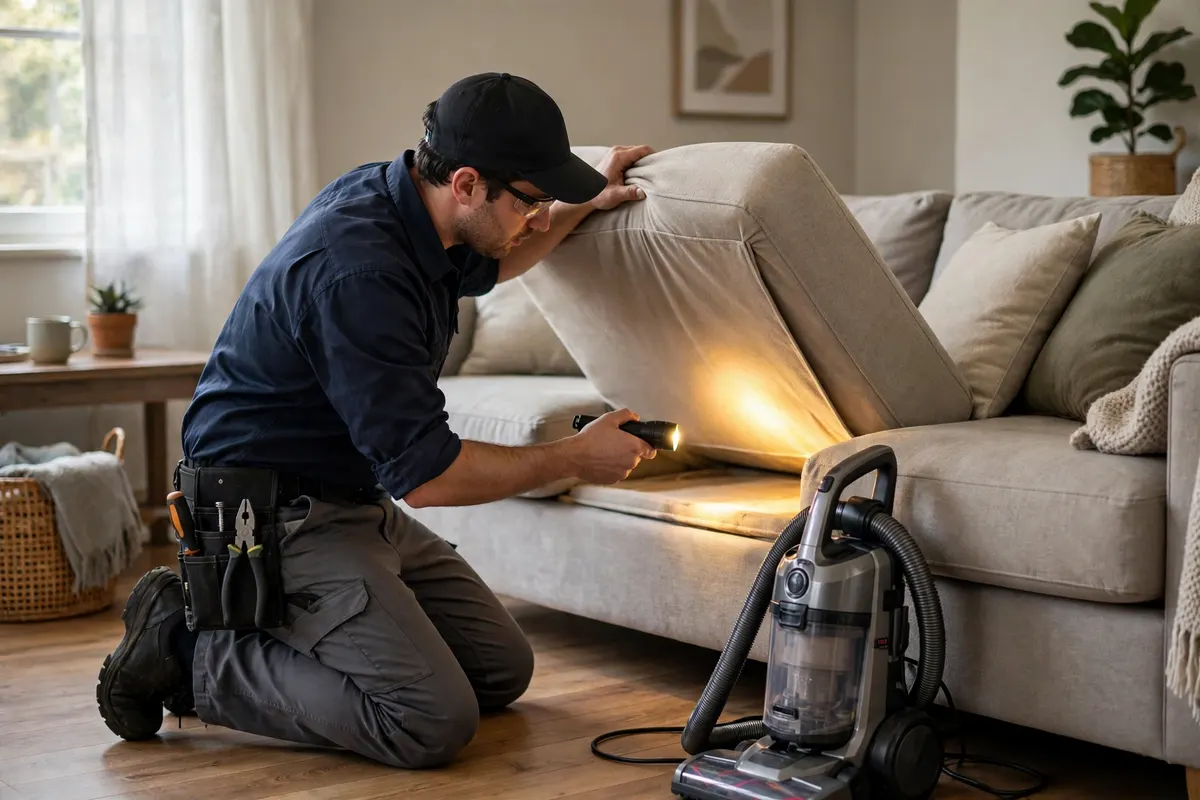
Cushions off, torch on: seams and zips first, then under the dust cover, into the frame joints, and inside the recliner mechanism housing.
Strip the couch: cushions off and bagged nearby (not carried through the house), then work in a fixed order. Run a thin card along every cushion seam and zip line and watch the piping — fecal spots gather there as tiny dark dots that may smear. Peel your eyes along the folds where the arms and back meet the seat, the classic deep harbourage. Turn attention underneath: the thin dust cover fabric on the base hides the whole frame cavity, and shed skins, eggs and live bugs collect along its staples and the wooden rails behind it.
Recliners and sofa beds need their hidden rooms checked too: the mechanism housing, the folded mattress seams of a pull-out, the joints where the back detaches. Photograph what you find. One live bug, one cluster of fecal spots or a scatter of pale shed skins in the folds is confirmation enough — the piece is infested, and the question stops being 'whether' and becomes 'how far'. In family homes around Bed Bug Treatment Belleview, FL, the couch check is where that answer usually turns serious.
Do the check even when nobody has been bitten. Couches hide their colonies well: a sofa can host bugs for months while the household blames the bedroom, because the person napping on it does not react, or reacts and never connects it to the furniture. The weekly habit that protects a home is boring and total — cushions up, torch along the seams, glance under the dust-cover edge — worked into the same round as the bed check, not saved for when marks appear.
Can An Infested Couch Be Saved, Or Must It Go?
In most cases, yes — with steam, targeted treatment and encasement working together. A couch is harder to clear than a bed, but it is a treatment job, not an automatic write-off.
What decides it is depth and access. A light infestation caught in the cushion seams is very treatable. A long-established one, with eggs laid deep inside frame voids, padding and a recliner mechanism, is a harder promise — an honest pro will inspect and tell you which couch you own. What never helps is the halfway gesture: spraying the cushions you can see and hoping the frame is empty. The bugs you cannot see are the infestation.
Disposal remains the last resort, and when it happens it must be done properly — piece wrapped and sealed before it moves, marked so nobody rescues it, and removed without dragging it through clean rooms. Most couches that reach that point got there because the problem was treated late or treated partially.
The couch is the bed nobody inspects — which is exactly why the bugs choose it.
Need Bed Bug Treatment Help Near You?
One free call connects you with a local pro who can arrive in 30–60 minutes.
Call (800) 555-0100Free Call · Answered 24/7 · Local Pros Near You
Which Parts Of The Couch Need Which Treatment?
Each zone of the sofa has its own harbourage and its own right tool — this is the map a pro works from.
What Can You Do Yourself, And What Are The Limits?
Steam, worked slowly along the seams, is the one home method that genuinely kills on contact — everything else you can buy off the shelf has a catch.
A steamer is a contact weapon: where the steam physically reaches at full temperature, bugs and eggs die. Its discipline is speed — the nozzle moves slowly, an inch or two at a time, so heat soaks through the fold — and coverage: every seam, zip, piping line and fold, worked twice. Removable covers come off and go through a hot wash and a long, high-heat tumble dry. A thorough vacuum with a crevice tool, emptied straight into a bag and out of the house, removes surface bugs and skins before you start.
Now the catches. Foggers scatter couch bugs deeper into the frame and the room — never use one. Hardware-store sprays rarely penetrate padding and can repel bugs further in. And no home method reaches inside a sealed frame void or a recliner's inner mechanism with any certainty. DIY steam is a containment and reduction step that buys time and evidence; when signs were confirmed across several zones, the realistic finish is a professional treatment of the piece and the room around it — as arranged daily in Bed Bug Treatment Alice, TX.
What If The Couch Is Infested But The Bed Looks Clean?
Treat the room's evidence, not the single suspect piece: inspect the bed again, monitor with traps, and plan the couch and the bedroom as one case.
Trust the pattern, not the snapshot. Couches become primary harbourages in homes where the bed was treated but the sofa was missed, where someone sleeps on the couch most nights, or where the infestation arrived in second-hand upholstered furniture and has not yet reached the bedroom. A clean-looking bed today does not clear it: check its seams weekly and put interceptor traps under its legs, because a couch colony under pressure will send bugs exploring, and the bed is where they are heading.
Expect the couch to be the harder half of the job and plan time accordingly. It cannot be encased as neatly as a bed (sofa-bed mattresses aside), its harbourages are deeper, and it sits in the room where the household spends its evenings — so treatment visits, drying time and verification checks all need scheduling around real life. That is an argument for starting sooner, not for skipping the piece: every week of delay is another egg cycle laid down inside the frame.
The treatment plan should cover both zones at once — couch treated zone by zone, bed inspected and protected with encasements, traps monitoring the floor between them. Handled that way, a couch-first infestation is entirely winnable. If you want it assessed properly, Florida's state page explains how inspections are arranged at Bed Bug Help In Florida. One free call connects you with a local pro who can arrive in 30–60 minutes and tell you, from evidence, whether your couch is a treatment job or a goodbye.
A Short Field Glossary
A few terms run through every inspection report and treatment plan. The species behind nearly every case is Cimex lectularius, the common bed bug. A bed bug egg is a millimetre long, pearly white, and glued into a seam or crack where sprays rarely reach. A bed bug nymph moults five times before it can breed, and it needs a blood meal at every stage. Pros call the colony's daytime hiding place a harborage — a seam, crack or void within reach of the bed. Rusty stains on bedding come from crushed, blood-fed bugs rolled on in the night.
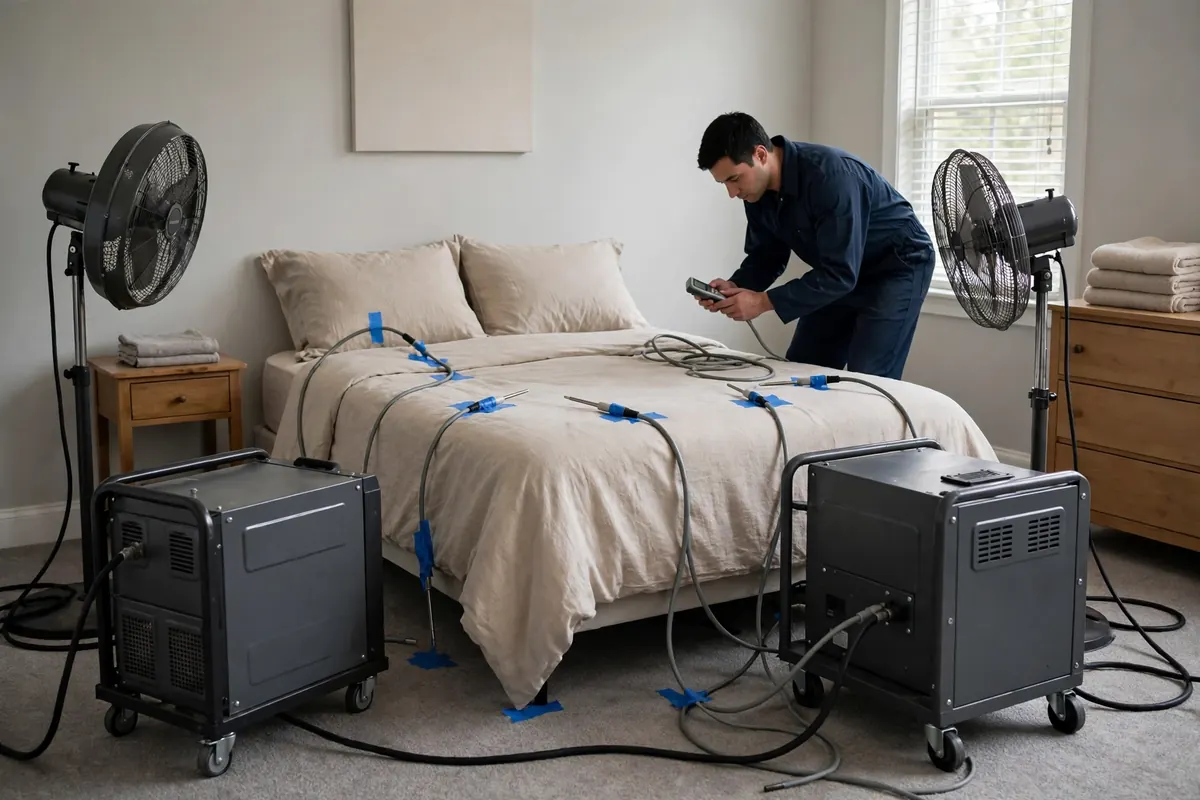
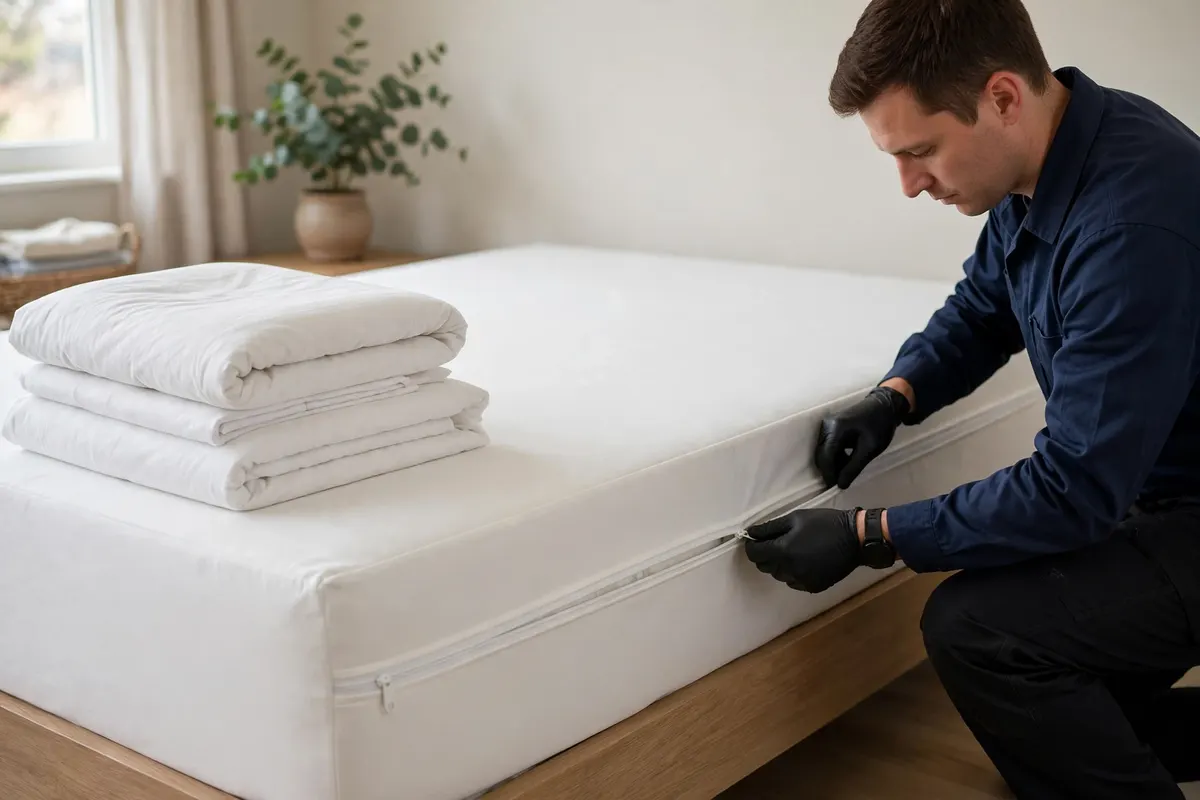
The tools behind the terms are just as plain: A passive monitor tucked at the head of the bed gives wandering bugs a harbourage that can be checked in seconds. A box-spring encasement does the same for the base, whose torn fabric and staples hide colonies well. K9 scent detection can sweep a room in minutes, the dog's nose finding what eyes miss in clutter. Everything starts with a visual inspection — seams, screw holes, headboard backs and the joints of the frame. Thermal heat remediation raises the whole room to a lethal temperature and holds it there until every stage is dead.