Are Frequent Travellers Really At Higher Risk?
Yes — not because hotels are dirty, but because exposure is arithmetic: every room you sleep in is a small chance, and frequent travel rolls that dice dozens of times a year.
Bed bugs do not care about star ratings or housekeeping scores; they care about a steady supply of sleeping hosts, and every hotel, guesthouse and rental on earth provides one. A clean, expensive room can hold bugs in the headboard from last month's guest just as a cheap one can — cleanliness is simply not the variable. What frequent travellers have is volume: more rooms, more beds, more luggage opened on more floors, and more tired late-night arrivals when checking feels impossible.
The good news inside that arithmetic is that a routine beats luck. The travellers who never bring bugs home are not the cautious ones — they are the systematic ones, running the same ninety-second check and the same unpacking discipline every single trip, including the one-nighters. Road-heavy households around Bed Bug Treatment Anna Maria, FL treat it like locking the door: unglamorous, automatic, done.
Rentals and short-stay apartments deserve the same routine with one adjustment: you cannot know the turnover cleaning standard, and the bed is often against the wall with the headboard fixed — check it exactly the same way, seams and joints, before the case opens. Cruise cabins, sleeper trains and hostels compress the same risk into smaller spaces; the two-minute check scales down, not away. Anywhere you sleep away from home, the bed gets inspected before your luggage joins it.
What Should You Check In The First Two Minutes In A Hotel Room?
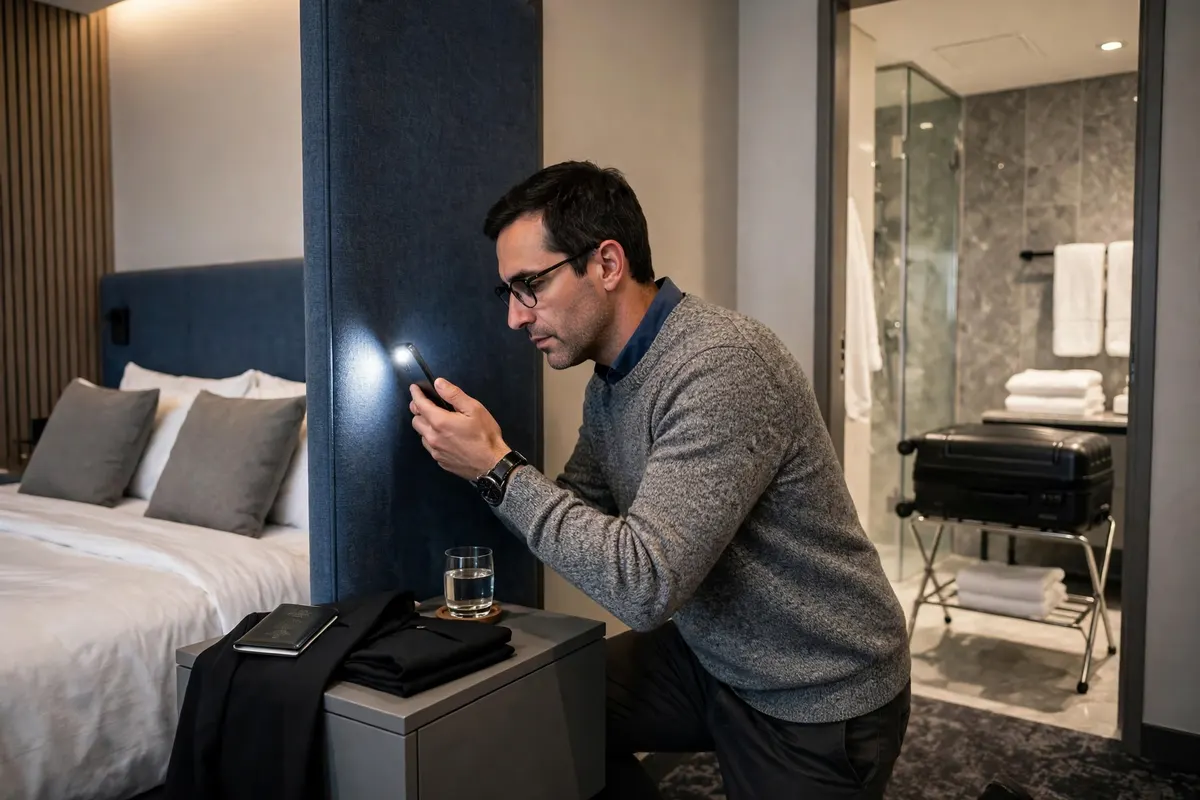
Luggage in the bathtub or on a rack away from the bed, then a torch check of the mattress seams, headboard and bedside joints before the case opens.
The order is the whole trick. Suitcases go straight into the bathtub or onto a luggage rack pulled well away from the bed — never on the bed, never on the carpet beside it, never on the upholstered chair. While the case waits somewhere inhospitable, pull the bedding back at the corners and run your phone torch along the mattress seams and piping, then behind the headboard and into the bedside table joints. You are looking for the usual evidence: live bugs, tiny dark fecal spots, pale shed skins, rusty smears.
Finding signs does not mean making a scene — it means not unpacking. Photograph what you found, go back to reception, and ask for a different room, ideally not beside, above or below the one you checked. Then run the same two minutes in the new room. Frequent guests of hotels near Bed Bug Treatment Amagansett, NY will know the staff side of this: a calm report with a photo gets you moved faster than any complaint.
Prevention is not a product. It is the same two minutes, run the same way, in every room, on every trip.
What Does The Full Routine Look Like, Stage By Stage?
Three habits decide most outcomes: where the suitcase sleeps, how the room is checked, and how the return home is handled. The rest is detail.
Need Bed Bug Treatment Help Near You?
One free call connects you with a local pro who can arrive in 30–60 minutes.
Call (800) 555-0100Free Call · Answered 24/7 · Local Pros Near You
What Should Happen To Your Clothes The Moment You Get Home?
Hot wash what tolerates it, and tumble-dry everything washable on the highest heat the fabric allows — sustained dryer heat is the traveller's lethal weapon.
Unpack somewhere that is not the bedroom: a garage, a laundry room, a hallway, straight from the case into bags. The washable load goes through a hot wash and, more importantly, a long tumble-dry on the highest heat setting the fabrics tolerate — it is sustained heat, not soap, that kills every life stage, eggs included. Items that cannot be washed can often still be tumble-dried dry, which is the step people skip and the step that matters most.
The case itself gets vacuumed inside and out — seams, pockets, wheel housings — and then stored away from the bedroom: a garage, a loft, a cupboard that is not beside your bed. Non-washable gear that travelled with you — shoes, wash bags, book, chargers — gets a visual check and a wipe or vacuum rather than a ritual; bed bugs travel in seams and folds, not on smooth hard surfaces. The whole homecoming takes twenty minutes, and in travel-heavy homes around Bed Bug Treatment Alice, TX it is treated as non-negotiable as unpacking the toiletries.
How Should Your Own Bed Be Set Up Between Trips?
An encased bed on interceptor traps, checked weekly — a monitored bed turns a hitchhiker into a caught specimen instead of a colony.
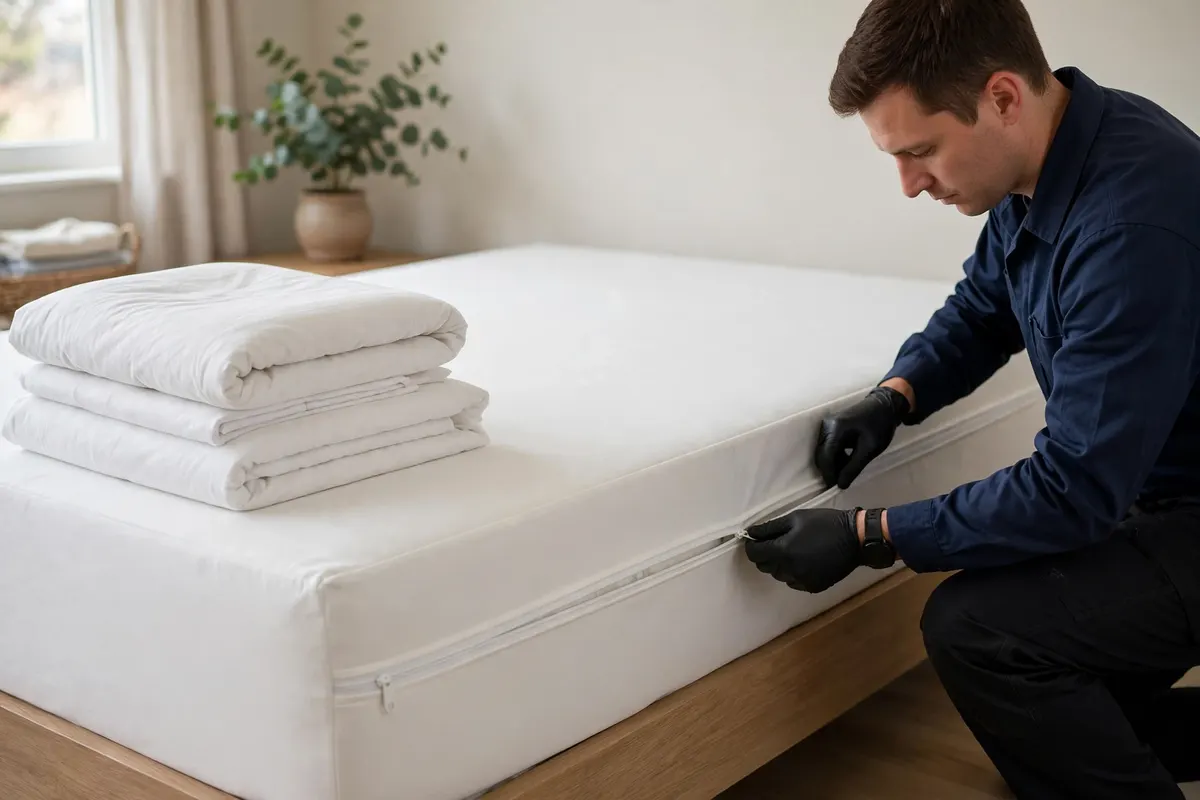
Prevention at home is architecture, not vigilance. Fit mattress and box-spring encasements so the bed's favourite harbourages are sealed for good. Put interceptor traps under every bed leg and glance at them when you change the sheets; a bug arriving in your home and heading for the bed has to climb a leg, and the trap makes that journey fatal and visible. Keep the suitcase stored away from the bedroom permanently, so the bridge between hotel and mattress is never left standing.
Then stop worrying between checks. The failure mode this routine is designed against is not the dramatic find — it is the silent one: a single fertilised female, carried home in a case seam, feeding and laying eggs behind a headboard for two months before the first bite. Weekly trap checks collapse that timeline to days. If a trap ever holds a bed bug, photograph it, keep the specimen, and get the room inspected while the problem is still one bug wide.
What If You Find A Bug In Your Case Or Room After A Trip?
Stay calm and shrink the problem: do not unpack further, isolate the case, run the homecoming routine on everything, and increase monitoring for the next few weeks.
One bug found is the routine working, not failing. Close the case where it stands — ideally still outside the bedroom — and bag or isolate anything that was in it with your clothes until each item has been through the heat routine or a close inspection. Vacuum the case, store it isolated, and check the bed traps daily for a week, then weekly. Do not spray the bedroom 'just in case' and never fog: with no established harbourage, chemicals add mess and can scatter the very thing you are hunting.
If signs multiply — a second bug, a fecal spot on the mattress seam, bites clustering after the trip — that is the line where a professional inspection earns its money, because the problem is now a location question, not a luggage question. New York readers can see how inspections are arranged at Bed Bug Help In New York. One free call connects you with a local pro who can arrive in 30–60 minutes — early enough that a traveller's hitchhiker stays a story, not an infestation.
Terms You Will Hear On The Call
Pros describe the same things this article has been circling, in their own shorthand. The species behind nearly every case is Cimex lectularius, the common bed bug. A bed bug egg is a millimetre long, pearly white, and glued into a seam or crack where sprays rarely reach. A bed bug nymph moults five times before it can breed, and it needs a blood meal at every stage. Pros call the colony's daytime hiding place a harborage — a seam, crack or void within reach of the bed. Rusty stains on bedding come from crushed, blood-fed bugs rolled on in the night.
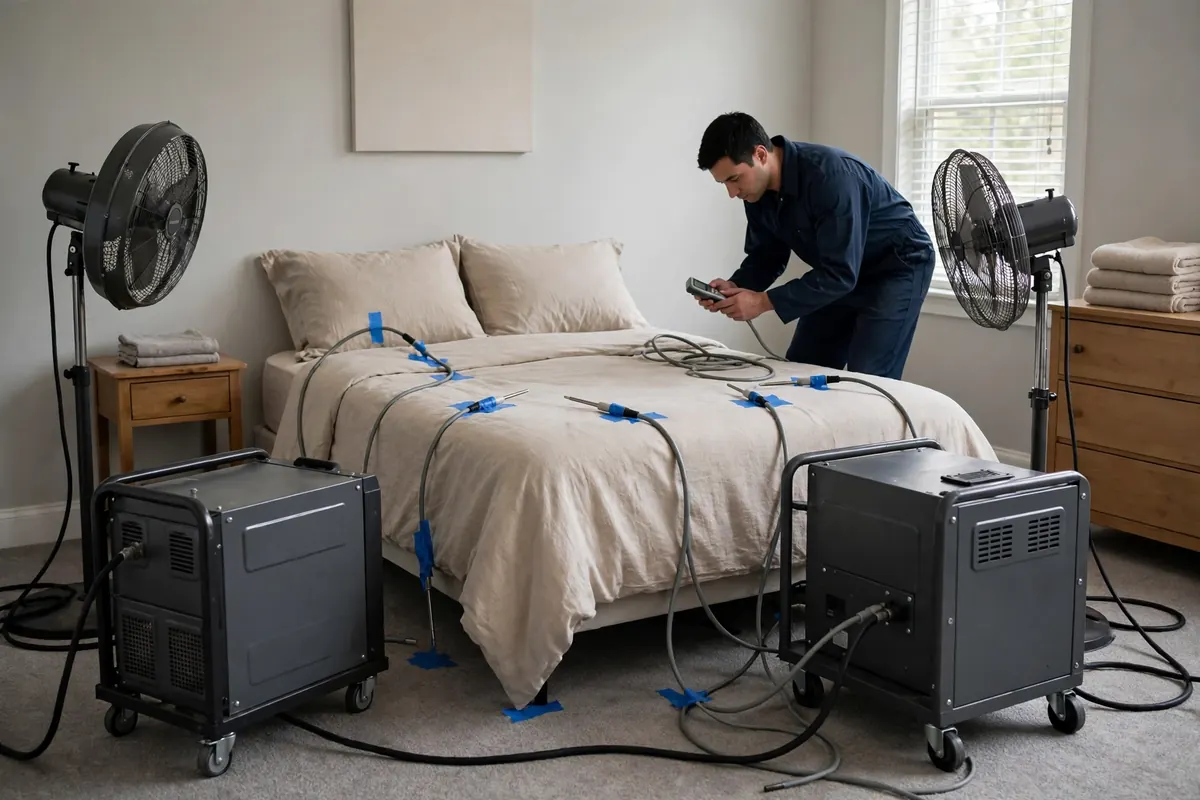
And the equipment in that shorthand is standard: A passive monitor tucked at the head of the bed gives wandering bugs a harbourage that can be checked in seconds. A mattress encasement seals the bed itself, so nothing can hide in its seams or tufts. K9 scent detection can sweep a room in minutes, the dog's nose finding what eyes miss in clutter. Everything starts with a visual inspection — seams, screw holes, headboard backs and the joints of the frame. Thermal heat remediation raises the whole room to a lethal temperature and holds it there until every stage is dead.