What Is Heat Treatment, Exactly?
Heat treatment — thermal heat remediation — means heating the affected rooms with professional equipment until bed bugs at every life stage die from the temperature itself.
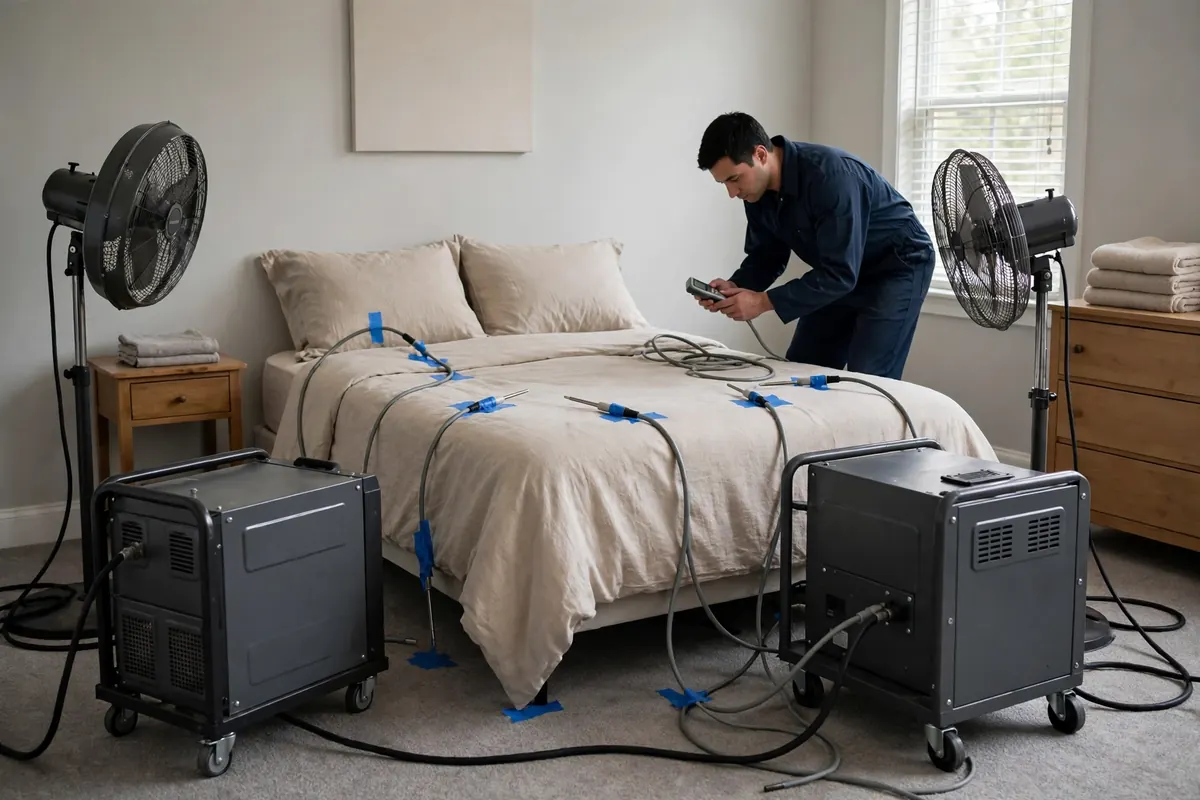
A pro brings in industrial heaters and circulation fans and raises the room's temperature steadily, then holds it. Bed bugs die when their body temperature reaches 113°F (45°C) — the thermal death point stated by the EPA — so the room air is heated well above that, and temperature sensors are placed in the cold spots: inside the mattress, behind the headboard, deep in the box spring. The hold continues until those sensors prove the harborages themselves reached lethal temperature, not just the air near the heater.
Nothing is sprayed. The kill mechanism is physics, which is why heat works on populations that have developed insecticide resistance, and why it reaches bugs hiding in places a spray never touches — provided the heat itself can get there. Crews run the same monitored heat process in Bed Bug Treatment Archer, FL and Bed Bug Treatment Apopka, FL.
What Is Chemical Treatment, Exactly?
Chemical treatment means a pro applies labelled insecticide products directly into the cracks, seams and travel routes bed bugs use, so the bugs contact the product as they move and feed.
A modern chemical program is not a general spray around the room. It is targeted work: residual products in mattress seams and piping, bed frame joints, baseboards and furniture cracks, sometimes with desiccant dusts in wall voids and behind electrical outlets, and sometimes an insect growth regulator (IGR) that disrupts development and reproduction. The residual keeps working after the visit, which matters because of one stubborn fact: bed bug eggs resist many insecticides.
That is also the method's weakness. A single visit rarely ends an infestation, and many bed bug populations now show real insecticide resistance — inherited survival of pyrethroid insecticides that once killed reliably. Product choice, rotation and placement are skilled decisions, which is why results vary so much between a careful program and a quick spray.
Heat Vs Chemical: How Do They Compare Side By Side?
The honest comparison is not 'one is better' — it is which trade-offs fit your home. This table sums up the differences pros explain on inspection visits.
Which One Actually Kills The Eggs?
Heat. A bed bug egg dies at the same thermal death point as an adult, so a properly monitored heat treatment ends every life stage in the room that day.
Eggs are the reason chemical programs are built around follow-up visits. A bed bug egg typically hatches in about a week to ten days, so the pro schedules the return visit for that window: newly hatched nymphs, which must feed before they can grow, walk across the residual product and are killed before they can mature and lay eggs of their own. Skipping that second visit is the single most common reason a chemical treatment 'didn't work'.
If a pro quotes you one chemical visit with no follow-up and no monitoring, ask what the plan is for the eggs. There should be an answer.
Need Bed Bug Treatment Help Near You?
One free call connects you with a local pro who can arrive in 30–60 minutes.
Call (800) 555-0100Free Call · Answered 24/7 · Local Pros Near You
How Long Does Each Take — And When Can I Sleep There Again?
Heat takes most of a day for the treated rooms, and you can usually sleep there the same night. Chemical visits are shorter, but there are more of them, spread over two to three weeks.
A heat treatment crew sets up in the morning, heats, holds and monitors, and packs down once sensors confirm the job — everyone, including pets, stays out while the rooms are hot, and returns once temperatures are back to normal. A chemical visit is quicker on the day, but you must stay out for the product's labelled re-entry interval, and the clock restarts at each follow-up visit. And if you found live bugs tonight and cannot wait for a booked visit, Emergency Bed Bug Treatment Alachua, FL is the route Alachua readers take.
Total disruption is closer than most people expect: one long day out, versus several shorter ones. Families with pets, shift workers and anyone with a deadline — guests arriving, a baby due, a move — should weigh that calendar as seriously as the price.
What Affects The Cost Of Each Method?
Rooms, severity and follow-ups drive both prices — which is why this guide gives no figures: an honest quote only exists after an inspection of your home.
For heat, you are paying for equipment, energy and a full monitored day: more rooms and a bigger treated area cost more, and severe, spread-out infestations take longer to bring every cold spot up to temperature. For chemical treatment, the number of visits is the multiplier — a light, single-room problem caught early may need two visits, while bugs in several rooms, a sofa and the baseboards need more product, more time and more returns.
Property type matters too. A detached house, a rental between tenants and a unit in a multi-unit building each bring different access, preparation and coordination. Anyone quoting a firm bed bug price sight-unseen, for either method, is guessing with your money. For a worked local example of how these factors combine, see Bed Bug Treatment Alachua, FL.
When Is Heat The Better Fit — And When Is Chemical?
Heat tends to win when the infestation is established, eggs are the worry, or a deadline is close. Chemical tends to win when the problem is caught very early, the budget is tight per visit, or ongoing residual protection matters most.
Choose heat when: bugs are in several rooms or deep in furniture; a previous spray has failed or resistance is suspected; you need the room back the same night; or you want no insecticide used at all. Choose a chemical program when: activity is confirmed in one small area; the home suits targeted treatment of seams and voids; or the building — for example a rental with neighbouring units — benefits from a residual barrier that keeps intercepting bugs afterwards.
In multi-unit housing, whatever the method, tell the landlord or manager promptly: bugs in one unit are a building problem, and adjoining units may need inspection too. Building-wide cases are covered in Bed Bug Help In Florida.
Can The Two Methods Be Combined?
Yes — and combined programs are common, because the methods cover each other's weaknesses.
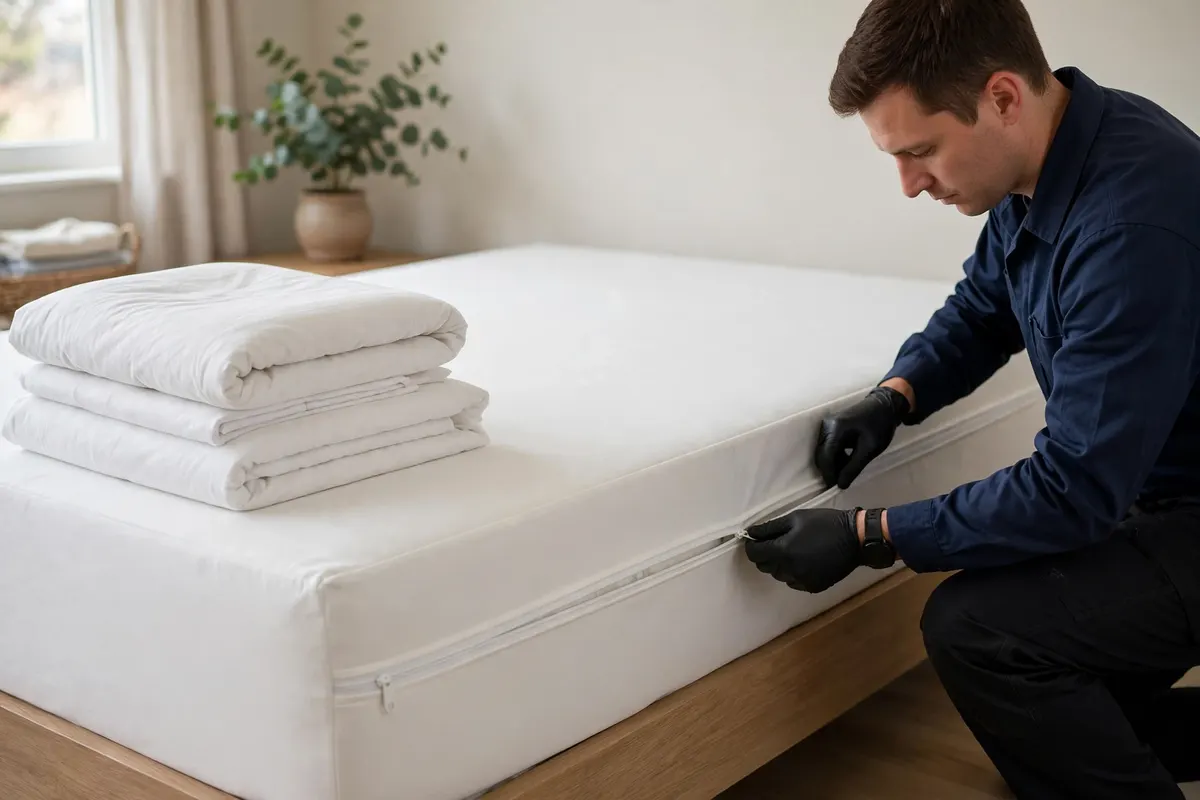
A typical integrated pest management (IPM) plan uses heat for the infested rooms, where it kills every life stage that day, then a targeted chemical residual in cracks, baseboards and travel routes to intercept anything that was missed or reintroduced. Add the physical parts — HEPA vacuuming, steam for seams and upholstered items, mattress and box-spring encasements, interceptor traps for monitoring — and the program does not depend on any single product or any single visit.
Reviewed by Hamza, whose work centres on exactly this combination: thermal heat remediation first, with integrated chemical barrier protocols after it. Whichever method you choose, the pattern that succeeds is the same — confirm the pest, treat the harborages, verify afterwards. One free call connects you with a local pro who can inspect your home and tell you plainly which side of the heat-versus-chemical line your infestation sits on.
What About Steam, Freezing, Fumigation And Dusts?
They all have a place — as support acts or last resorts rather than the main treatment for most homes.
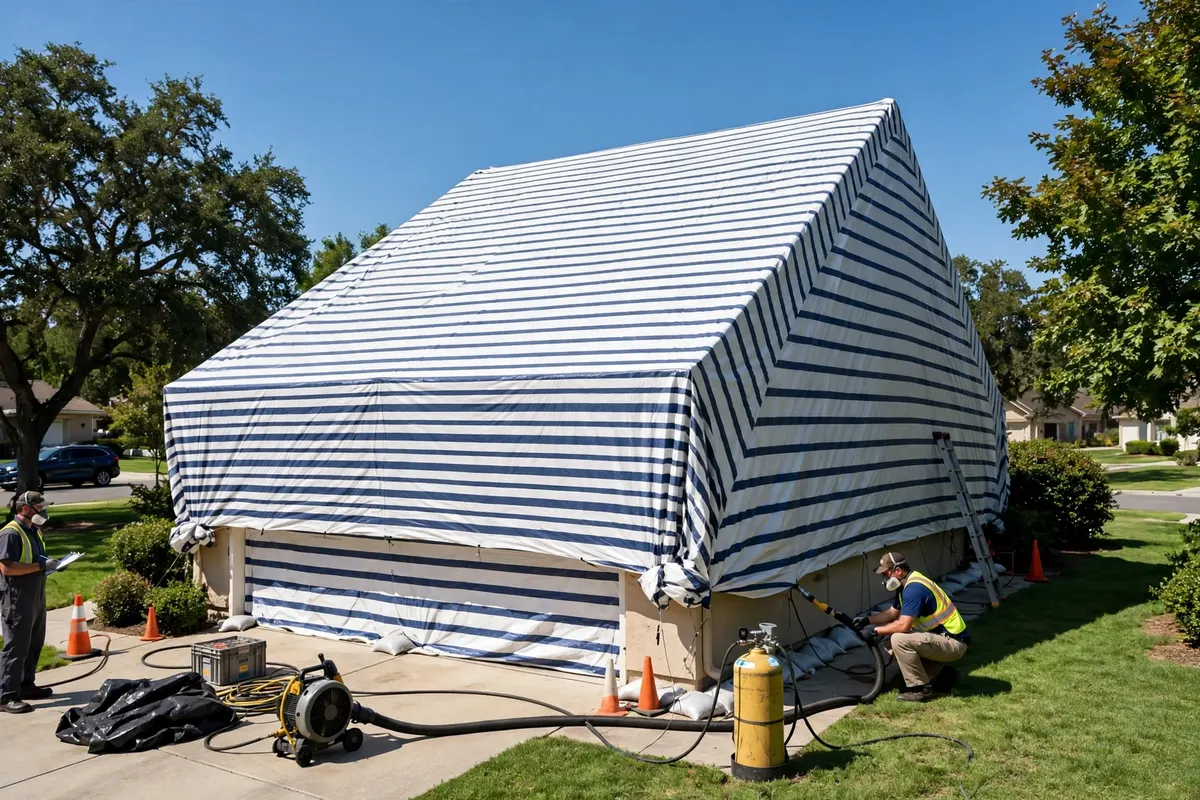
Steam treatment kills on contact and suits seams and upholstery, but leaves nothing behind. Cryogenic freezing treatment does the same with cold. Whole-structure fumigation with sulfuryl fluoride clears everything in a sealed building, but it is a last resort: costly, disruptive and residual-free. Desiccant dusts work slowly in voids — silica gel dust and diatomaceous earth both dry bugs out — and a fungal biopesticide (Aprehend) is a newer biological option a pro may add. Chemical residual treatment remains the backbone most of these are paired with.
None of them changes how a problem is confirmed. A pro starts with a visual inspection, sometimes backed by K9 scent detection, and leaves a passive monitor to prove the room stays clear. The evidence is the same everywhere: fecal spots, shed skins and rusty stains on bedding show where bugs have fed, and a bed bug nymph must feed before every molt — which is why follow-ups are timed the way they are. The species behind nearly every case is Cimex lectularius, the common bed bug.