How Do Bed Bugs Move Between Apartments?
Through the building itself: wall voids, pipe and cable runs, gaps under party-wall baseboards, shared corridors and the spaces behind sockets and light fittings.
Inside a single home, bed bugs spread slowly, room by room, usually by hitchhiking. Between apartments they have architecture on their side. A party wall is not solid: it carries pipework, wiring and voids, with gaps at floor and ceiling lines, and an established infestation next door pushes bugs along those routes looking for new feeding territory — especially when the source unit is treated badly, emptied, or fogged, which scatters them. In dense housing like that covered by Bed Bug Treatment Astoria, NY, this is the standard way a one-unit problem becomes a whole-floor problem.
They also travel the visible routes: under the door from a shared corridor, on laundry carried in open baskets, on furniture moved between units, and via adjoining balconies. None of this needs a heavy infestation next door — a modest one, disturbed at the wrong moment, is enough to send scouts through the wall.
Floors and ceilings count as walls too: the units directly above and below the infested flat share its pipe runs and voids just as you share its wall, which is why proper building treatment inspects in every direction, not just sideways. Shared laundry rooms are the other quiet route — machines, folding counters and baskets left standing in a warm room that every unit uses. Keep your laundry moving through it rather than stored in it, and carry it in closed bags, not open baskets.
What Should You Do First When You Hear Next Door Has Them?
Tell the landlord or building manager in writing, inspect your own unit the same day, and start monitoring the wall you share with the infested flat.
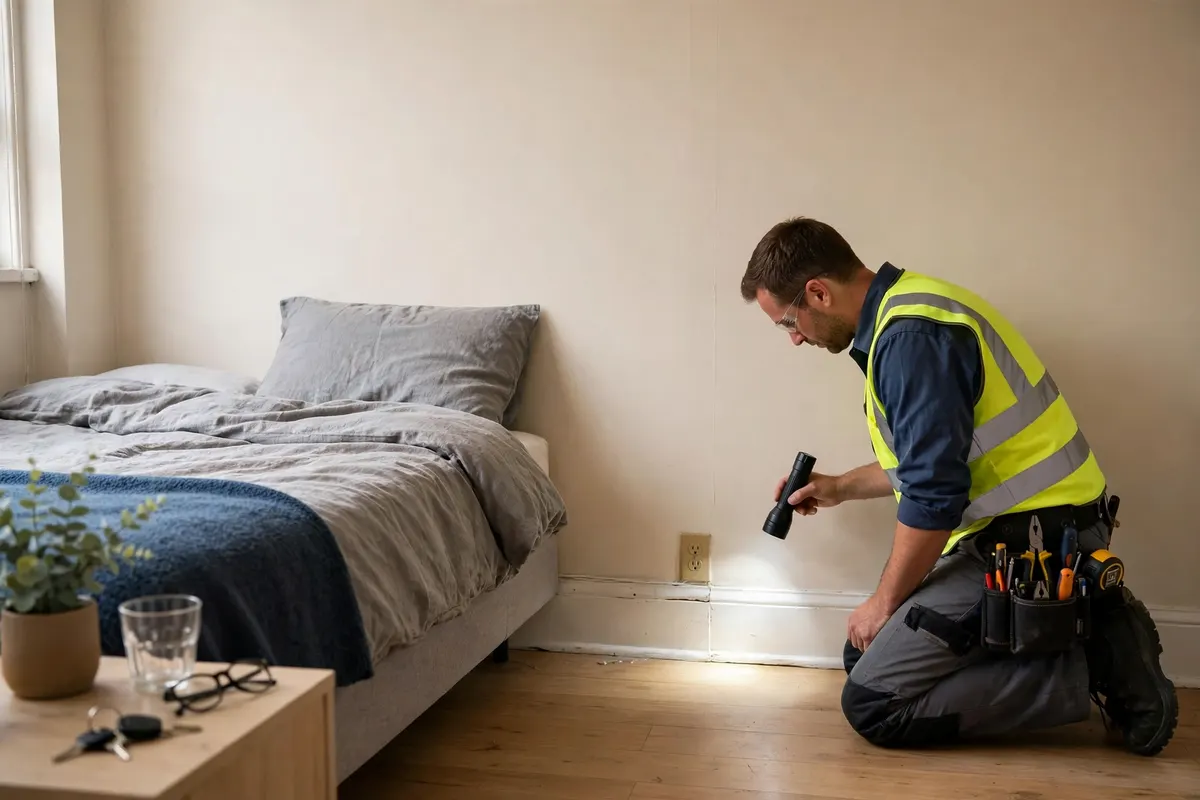
Written notice matters: date it, keep a copy, and state what you were told and when. Responsibility for building-level treatment usually sits with the building, not with you — the exact rules vary by state and lease, and the guide on who pays covers the detail — but a dated paper trail protects you either way. Then inspect your side of the shared wall: bed headboard against that wall first, then sockets, baseboards and pipe entries along it, looking for the five signs — live bugs, fecal spots, shed skins, eggs, rusty stains.
Set interceptor traps under the legs of beds and sofas that stand against or near the shared wall, and check them twice a week. Interceptors are your early-warning system: a bug trying to reach you from the wall has to cross the floor and climb a leg, and the trap catches it as evidence. Readers in the position of Bed Bug Treatment Arverne, NY residents will recognise the pattern — adjoining-unit cases are a large share of city inspections.
In an apartment building, bed bugs are never a one-flat problem — they are a building problem with a first address.
What Should You Never Do In This Situation?
Foggers are the single worst response: their repellent effect drives bugs out of the treated unit and through the walls into yours.
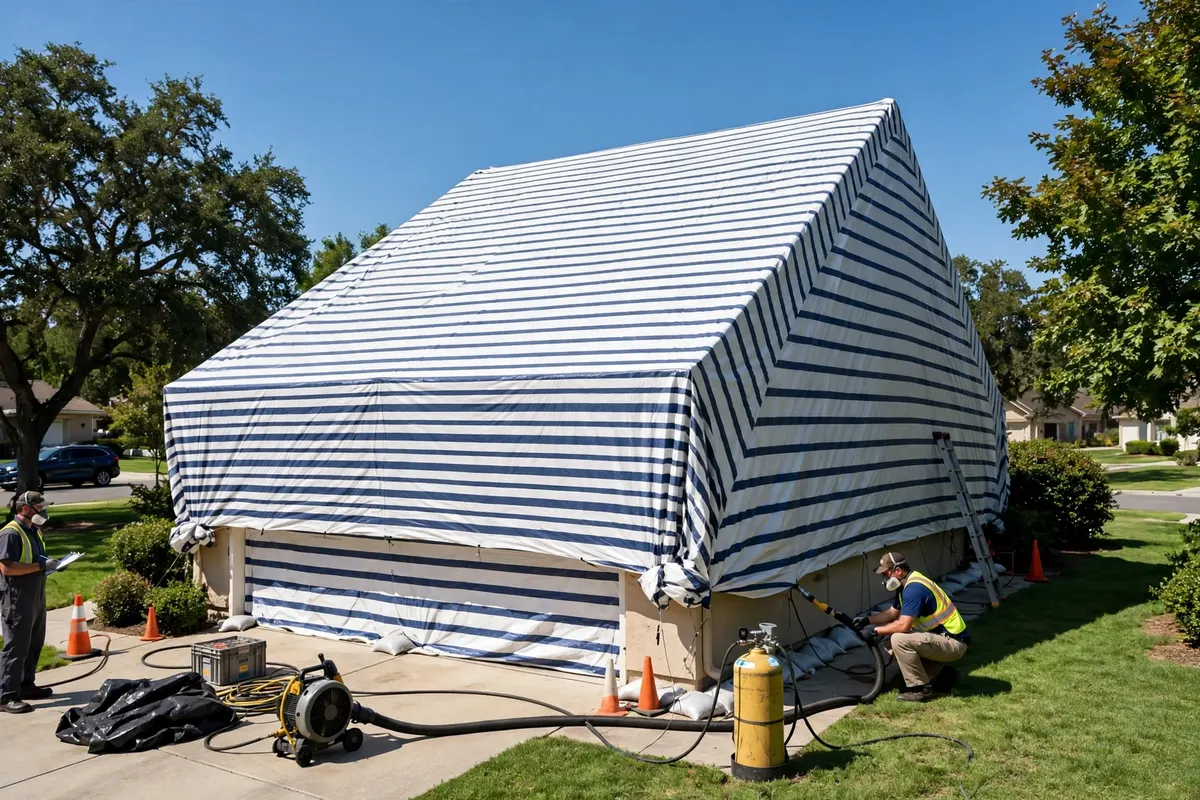
Bug bombs do not kill bed bugs hiding deep in harbourages, but the aerosol does flush them out of cracks — and in a multi-unit building, out means sideways, into the flats above, below and beside. If next door is planning a fogger, that is worth a polite conversation and a call to the landlord today, because their DIY attempt can become your infestation by the weekend. The same logic applies to heavy DIY spraying of your own party wall: flooding the wall line with repellent sprays can push an arriving problem deeper rather than stopping it.
Also avoid the panic moves: do not throw out your furniture (nothing about your sofa changed), do not move your bed against a different infested route, and do not stop sleeping in your bed and start sleeping on the sofa — that just gives any arrivals a second feeding station to find.
Need Bed Bug Treatment Help Near You?
One free call connects you with a local pro who can arrive in 30–60 minutes.
Call (800) 555-0100Free Call · Answered 24/7 · Local Pros Near You
What Should The Landlord Or Manager Arrange?
Inspection of every adjoining unit — yours included — and treatment planned at building level, not unit by unit in isolation.
Can You Protect Your Own Unit From Your Side?
Physically, yes — carefully: seal the gaps on your side of the shared wall, encase the bed, and keep interceptors running. What you cannot do is treat the other side of the wall.
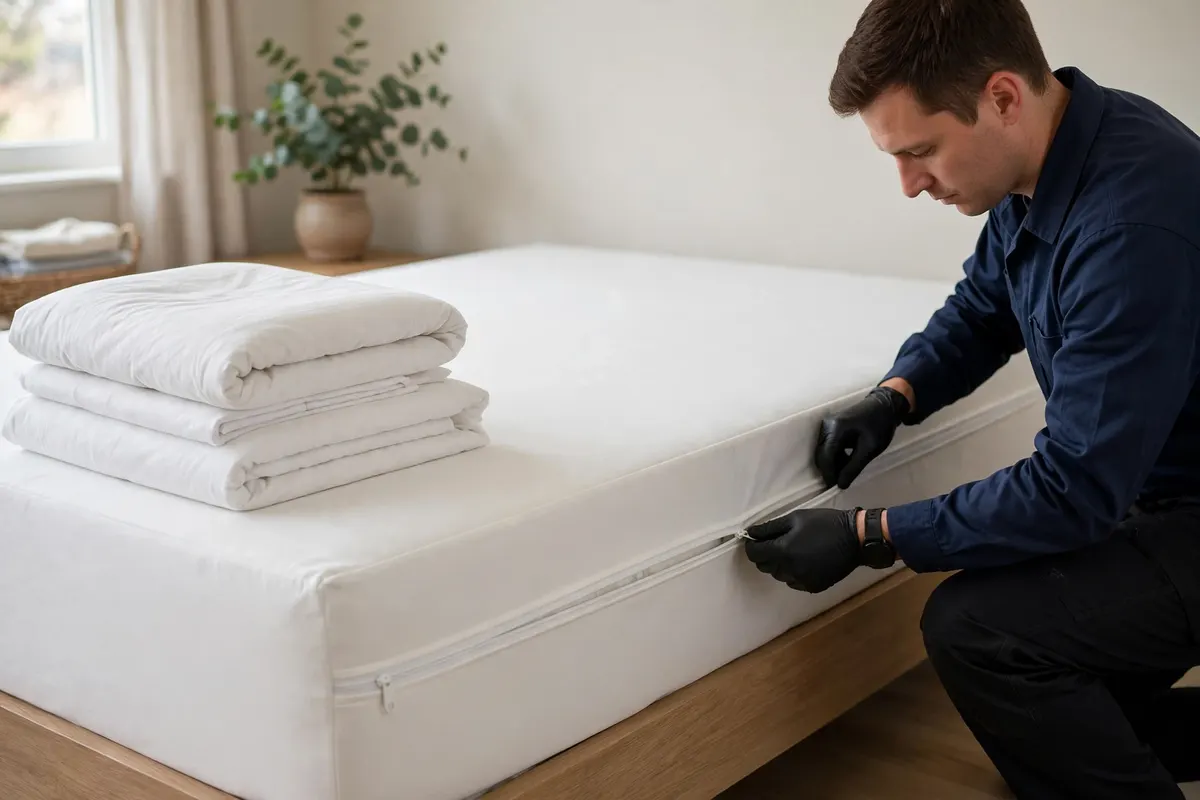
Work the shared wall methodically. Seal cracks and gaps along baseboards, around pipe and cable entries, and behind socket covers (power off first) with sealant — you are closing the motorway exits on your side. Fit mattress and box-spring encasements: they remove the harbourage nearest to you and make inspections fast. Keep beds a few centimetres off the shared wall where the room allows, legs in interceptor traps, and bedding not touching the floor. In buildings served by Bed Bug Treatment Austin, TX, pros set exactly this defensive line while the source unit is treated.
Laundry discipline matters too: wash and hot-dry bedding and clothing, and do not leave laundry baskets sitting in shared corridors or laundry rooms against infested-unit routes. None of this guarantees a determined spread stays out — but combined with building-level treatment next door, it is the difference between a scare and a second infestation.
How Long Should You Keep Monitoring Afterwards?
Monitor for at least the weeks around next door's treatment and its follow-ups — eggs hatch over time, and pressure on the source population is when strays move.
The risky window is not just today. When the infested unit is treated, surviving bugs move; when its follow-up visits happen, they move again. Keep interceptors in place and checked through the neighbour's full treatment cycle and for several weeks after their final visit, and keep the weekly seam check going on the bed nearest the shared wall. If a trap catches a bug, photograph it, save the specimen in a sealed jar if you can, and notify the landlord in writing the same day — one caught bug early is a monitoring success, not a disaster.
Keep a simple log alongside the traps: dates you checked, what you found, when the neighbouring treatment visits happened, any marks or spots and where. It takes a line a week, and it converts 'I think it is getting worse' into evidence a landlord, a pro or a housing inspector can act on. In building cases the log is often the document that moves a hesitant manager — it shows a pattern tied to treatment dates next door that nobody can argue with.
If signs establish in your unit despite everything, your case becomes part of the building treatment, arranged the same way. If you would rather have your own inspection on your own timetable, state-level arrangements for Texas readers are at Bed Bug Help In Texas. One free call connects you with a local pro who can arrive in 30–60 minutes — and in a building case, that dated evidence trail you kept is exactly what gets your unit treated as a priority.
The Words Pros Use For All Of This
Guides like this one translate as they go, but on a call you will hear the trade's own terms. The species behind nearly every case is Cimex lectularius, the common bed bug. A bed bug egg is a millimetre long, pearly white, and glued into a seam or crack where sprays rarely reach. A bed bug nymph moults five times before it can breed, and it needs a blood meal at every stage. Pros call the colony's daytime hiding place a harborage — a seam, crack or void within reach of the bed. Rusty stains on bedding come from crushed, blood-fed bugs rolled on in the night.
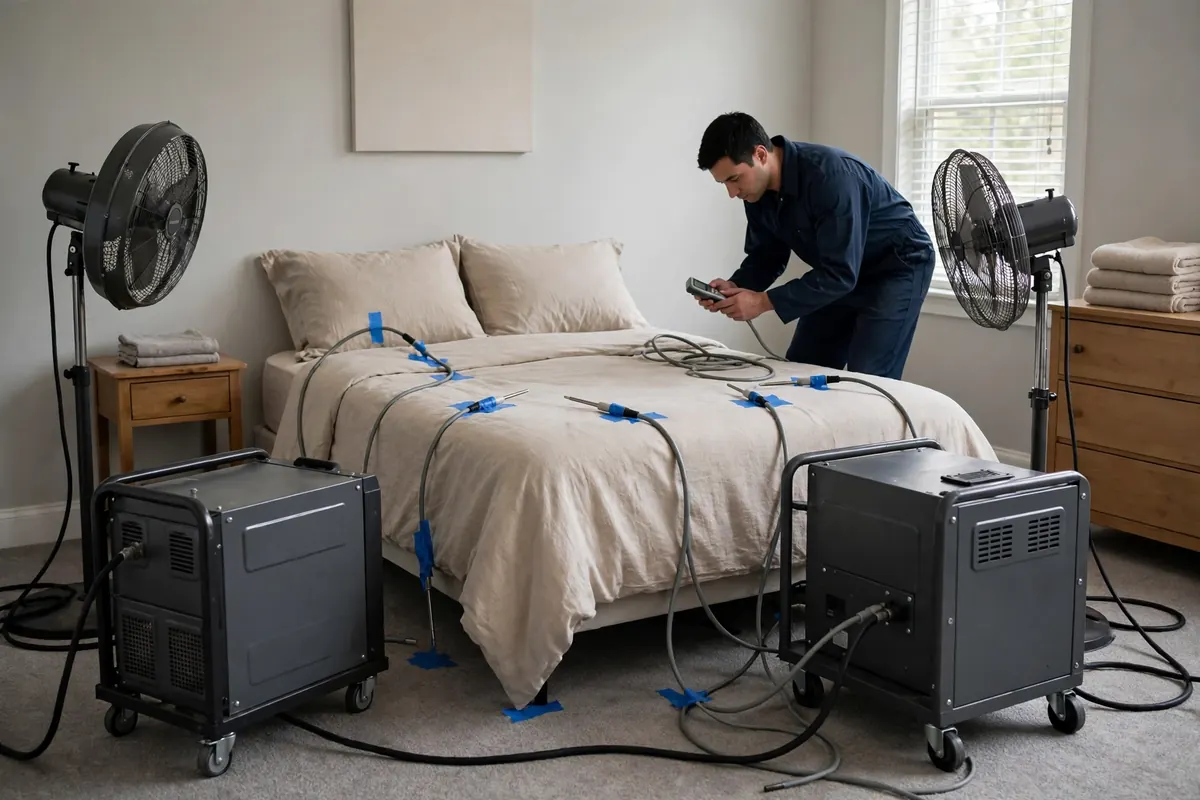
The kit those terms describe is simple: A passive monitor tucked at the head of the bed gives wandering bugs a harbourage that can be checked in seconds. A mattress encasement seals the bed itself, so nothing can hide in its seams or tufts. K9 scent detection can sweep a room in minutes, the dog's nose finding what eyes miss in clutter. Everything starts with a visual inspection — seams, screw holes, headboard backs and the joints of the frame. Thermal heat remediation raises the whole room to a lethal temperature and holds it there until every stage is dead.