What Is The Tropical Bed Bug?
The tropical bed bug, Cimex hemipterus, is one of the two bed bug species that feed on people. It is the warm-climate member of the family, common across tropical Asia, Africa and parts of the Caribbean and South America.
Everything about its daily life matches its famous cousin. It is a flat, wingless, reddish-brown insect about the size of an apple seed. It hides by day in a harborage — mattress seams and piping, the box spring, bed frame joints, the headboard — and comes out at night for a blood meal, which a bed bug nymph needs before every molt. It leaves the same evidence: fecal spots that bleed into fabric like a marker, shed skins, and rusty stains on bedding where a fed bug was crushed.
The difference is geography and history, not behaviour. Cimex lectularius, the common bed bug, tolerates cooler climates and dominates across the United States. Cimex hemipterus needs warmth, which is why, of all fifty states, Florida is the one where it can establish — the same pattern pros see when they work through Bed Bug Treatment Cape Coral, FL and other warm coastal towns.
Is It A New Species?
No. The tropical bed bug is not a recent invader or a mutation. Older records show it was once the more common of the two species in Florida, before the common bed bug took over across the state during the twentieth century. What is new is simply that it is being found and confirmed again.
Is The Tropical Bed Bug Really Back In Florida?
Yes — in small numbers, confirmed by experts. The most widely reported modern find was in Brevard County in 2016, identified by University of Florida researchers and described at the time as the first confirmed Florida detection in decades.
Since then, University of Florida IFAS Extension specialists have treated the species as one to watch in the state rather than a curiosity. That does not mean most Florida infestations are tropical bed bugs — the overwhelming majority are still the common species, and any single find says nothing about the house it was found in. Bed bugs of both species are hitchhikers, carried in luggage and overnight bags and used furniture, as the CDC describes; they are not a mark of a dirty home.
It does mean a Florida pro who finds a specimen worth a closer look has a real reason to send it for expert identification, particularly in the southern half of the state. Statewide background is covered in Bed Bug Help In Florida.
Tropical Vs Common Bed Bug: What Is Actually Different?
Less than the headlines suggest. The two species share size, shape, colour, life cycle and habits; the reliable differences are microscopic, and the practical differences are about range, not about how an infestation behaves in your bedroom.
Need Bed Bug Treatment Help Near You?
One free call connects you with a local pro who can arrive in 30–60 minutes.
Call (800) 555-0100Free Call · Answered 24/7 · Local Pros Near You
Can You Tell Them Apart At Home?
Realistically, no. Even experienced inspectors treat a field identification as provisional, because the separating features are proportions on a segment smaller than a pinhead, checked under a microscope.
So do not try to name the species from a phone photo, and do not let the question delay the response. Catch the bug if you safely can — on tape, or in a sealed jar — and photograph the area before you clean. A pro can send a specimen to an extension service or entomologist for confirmation, the route used by crews confirming finds around Bed Bug Treatment Brandon, FL.
What you can identify at home is the infestation itself, and it is identical for both species: live bugs in mattress seams and piping, fecal spots, shed skins and rusty stains on bedding. Remember the EPA's caution while you look — bites on skin are a poor indicator, because they resemble other bites and rashes, and some people never react at all.
Does The Species Change The Treatment?
No. Whether the specimen comes back as hemipterus or lectularius, a competent program is built the same way: confirm, treat every harborage, and verify afterwards.
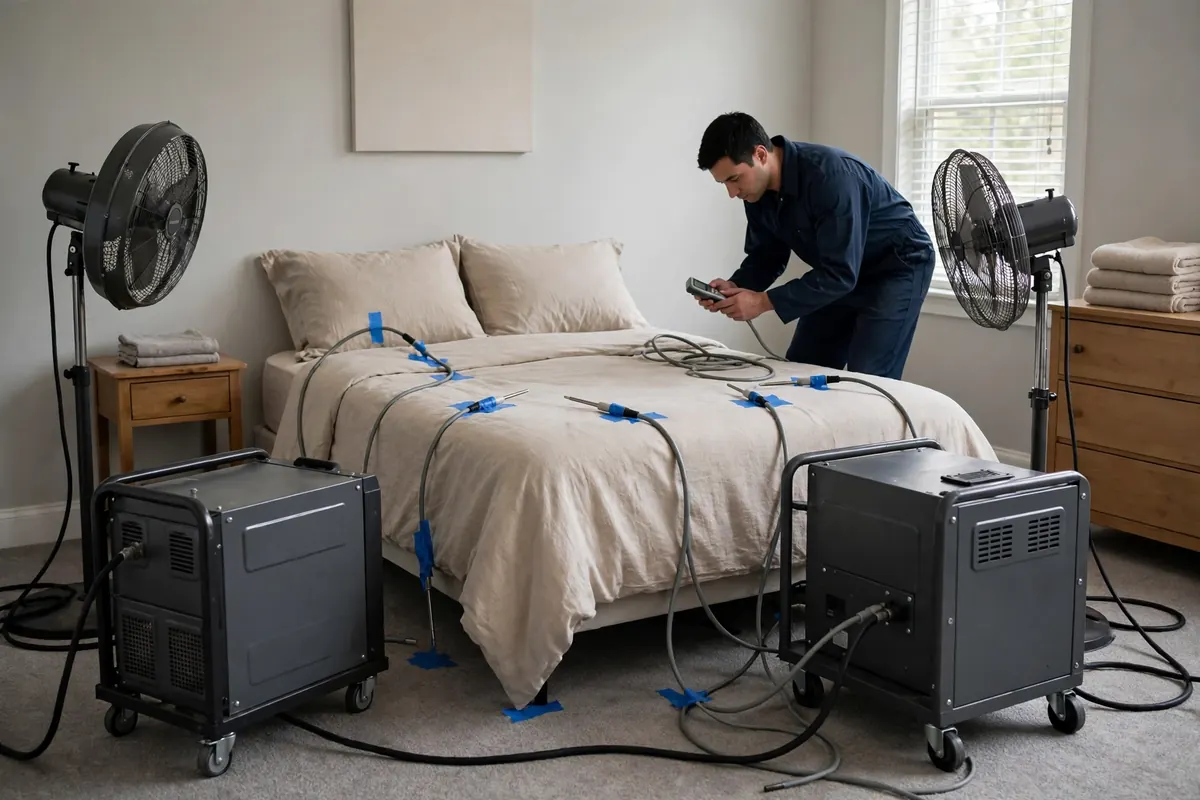
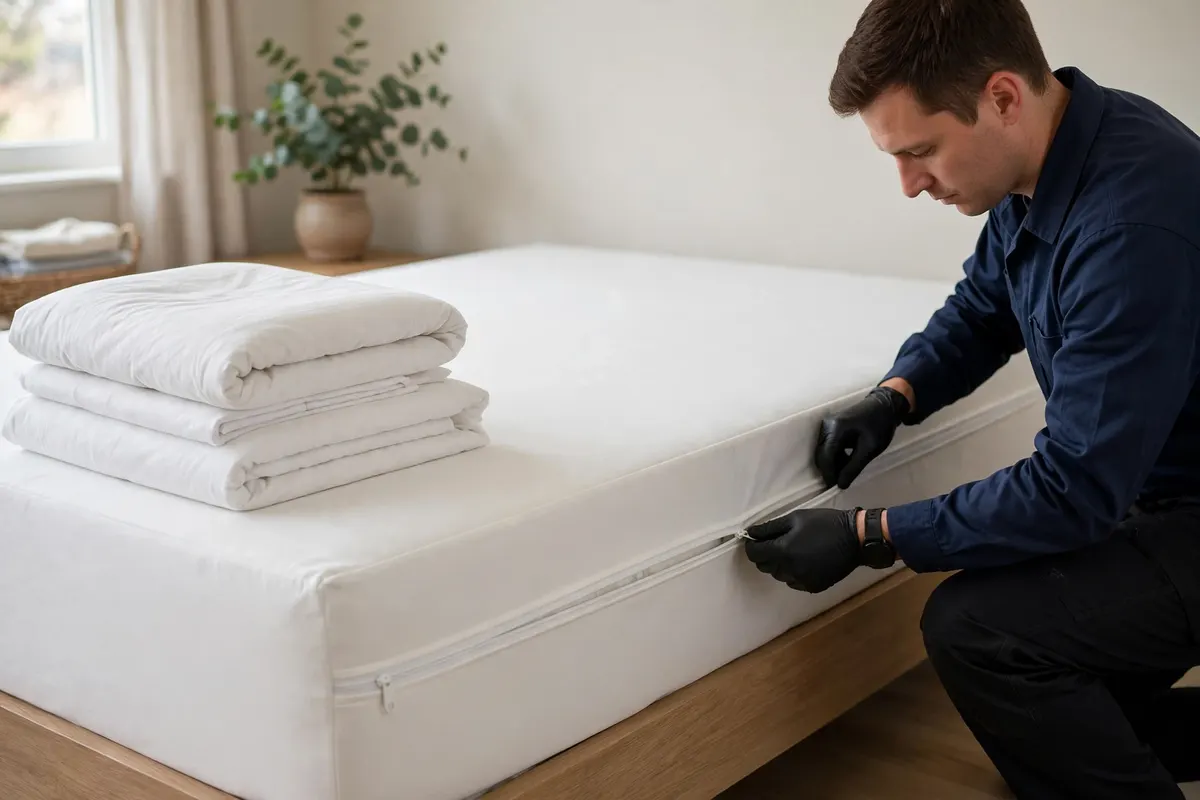
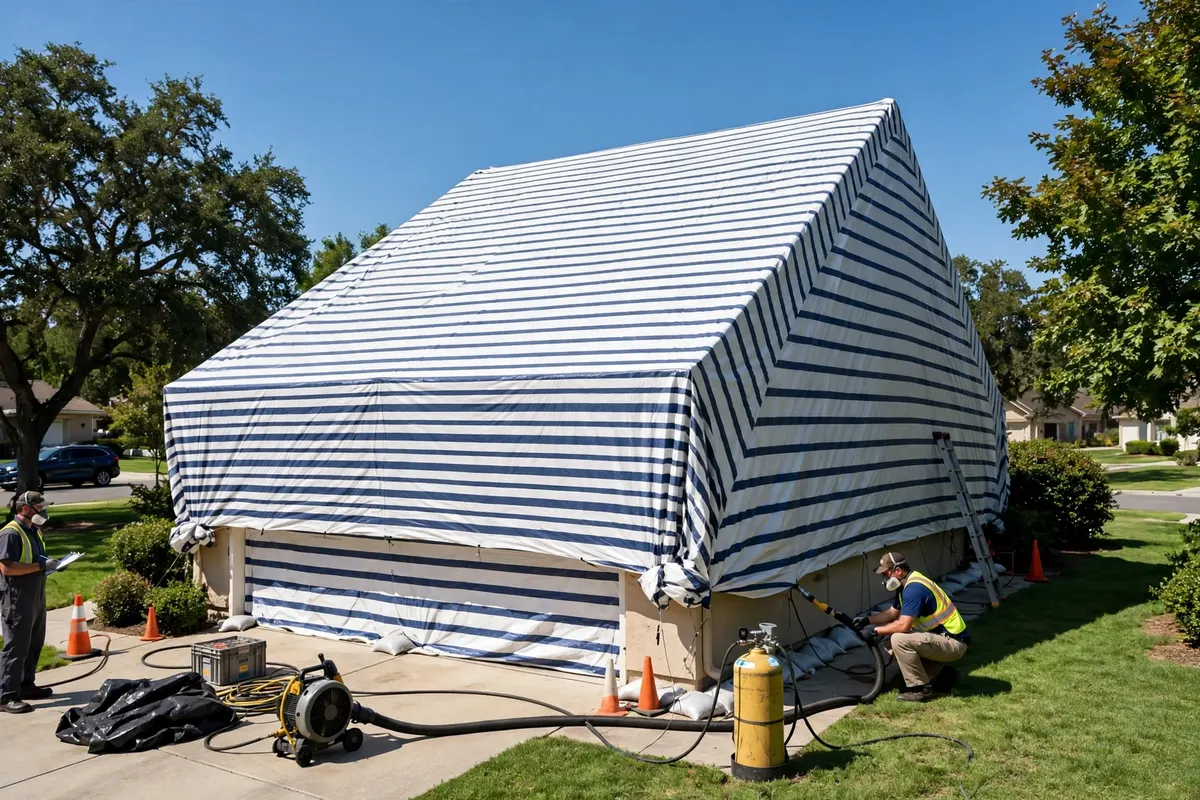
Thermal heat remediation works on both species for the same physical reason — bed bugs die when their body temperature reaches the thermal death point of 113°F stated by the EPA, and physics does not check Latin names. Chemical residual treatment is laid in the same seams, joints and travel routes, follow-up visits are timed to the same egg hatch, and the physical tools — HEPA vacuuming, steam treatment, mattress encasement and box-spring encasement, interceptor traps for monitoring — are unchanged.
Where the species name does matter is behind the scenes: researchers track whether tropical populations respond to insecticides the same way, and Florida agencies and universities log confirmed finds to map the species' return. That is a reason to get the ID done, not a reason to treat your home differently.
The species name changes the report, not the rescue plan.
Why Does Florida Suit The Tropical Species?
Warmth, all year. The tropical bed bug is built for climates that never really cool down, and Florida's indoor and outdoor temperatures stay inside its comfort zone in every month.
Layer on the way Florida lives: constant visitor turnover in hotels and vacation rentals, snowbirds arriving with luggage each winter, busy ports and a large multi-unit housing stock where bugs can move between adjoining homes. None of that causes an infestation — people and their belongings moving around does, which is why the same risk shows up in inland towns like Bed Bug Treatment Alachua, FL as on the coast.
One honest limit: nobody can tell you the tropical species is common in Florida. Confirmed finds are still rare enough to be written up. Treat any claim that 'Florida bugs are all tropical now' the way you would any other scare line — as marketing, not entomology.
What Should You Do If You Suspect One?
Exactly what you would do for the common species: check the bed area, protect the evidence, skip the fogger, and get a professional inspection.
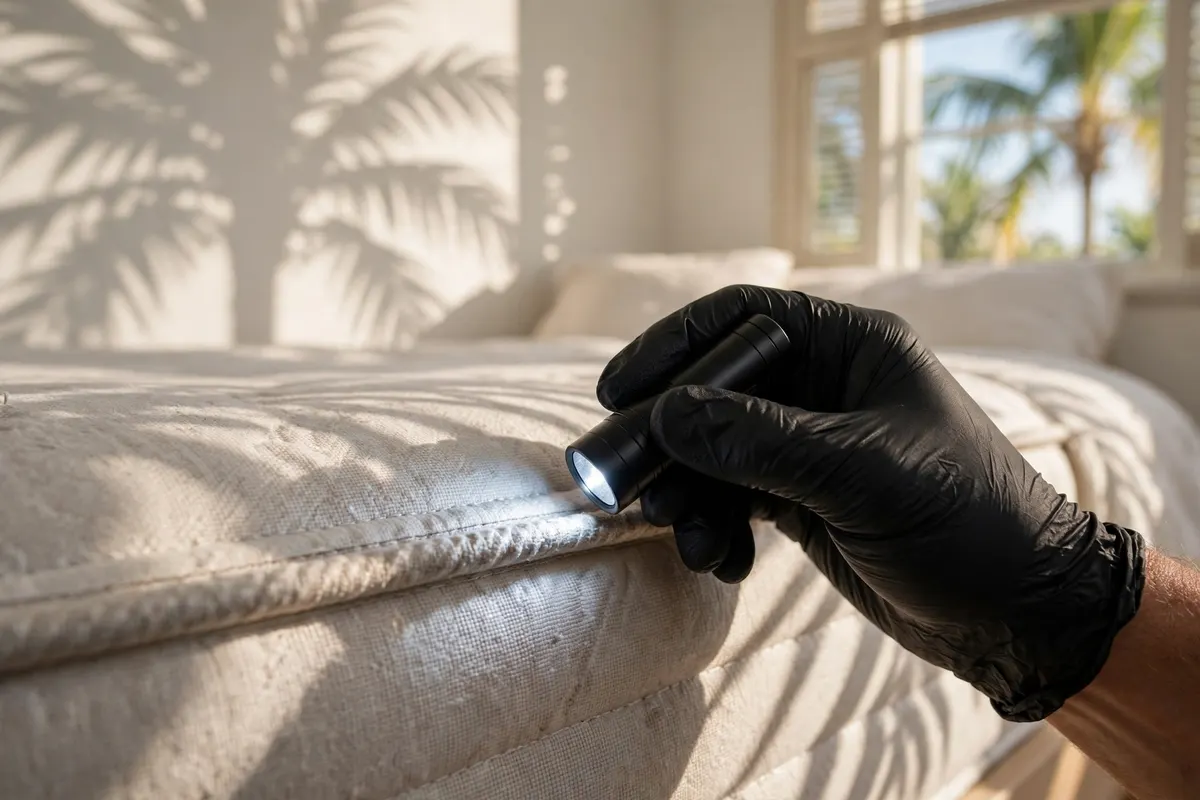
Work through the seams and piping of the mattress, the box spring and the headboard with a torch, looking for live bugs, fecal spots and shed skins. Photograph what you find and save a specimen if one turns up. Do not reach for a fogger or bug bomb — they kill almost nothing in the harborages and scatter live bugs into new hiding places, whichever species you have.
Then call a pro and say plainly that you are in Florida and would like the specimen identified. One free call connects you with a local pro who can inspect, arrange the ID, and build the treatment around what is actually in your home — species included, guesswork excluded.
Terms You Will Hear On The Call
Pros describe the same things this article has been circling, in their own shorthand. A bed bug egg is a millimetre long, pearly white, and glued into a seam or crack where sprays rarely reach.
And the equipment in that shorthand is standard: A passive monitor tucked at the head of the bed gives wandering bugs a harbourage that can be checked in seconds. K9 scent detection can sweep a room in minutes, the dog's nose finding what eyes miss in clutter. Everything starts with a visual inspection — seams, screw holes, headboard backs and the joints of the frame.