Is It Normal To See Live Bugs Right After Treatment?
Often, yes — briefly. Chemical programs are built on the fact that eggs survive sprays: follow-up visits are timed so newly hatched nymphs cross the residual and die. A few live bugs in the first days, especially sluggish ones near treated areas, are part of the design working, not proof it failed.
What a pro watches is the trend, not a single insect. Numbers should fall week by week, activity should stay centred where it started, and trap counts should drop toward zero. One bug on day two inside that pattern is a data point; a rising count in week three is a different sentence entirely.
Keep perspective on the timeline too: bed bug eggs hatch in roughly six to ten days, so a program is only judgeable across at least one full hatch cycle. The follow-up visit on your paperwork — usually inside a fortnight — is timed to exactly that biology.
Why Do Bugs Appear More Visible After Treatment?
Residual insecticide needs contact and time, so bugs flushed from harbourages by treatment may wander visibly before they die — and a dying bug moves oddly, out in the open, in daylight, which looks alarming precisely because healthy bed bugs never behave that way. Dead bugs accumulating in the days after treatment are the program's receipt.
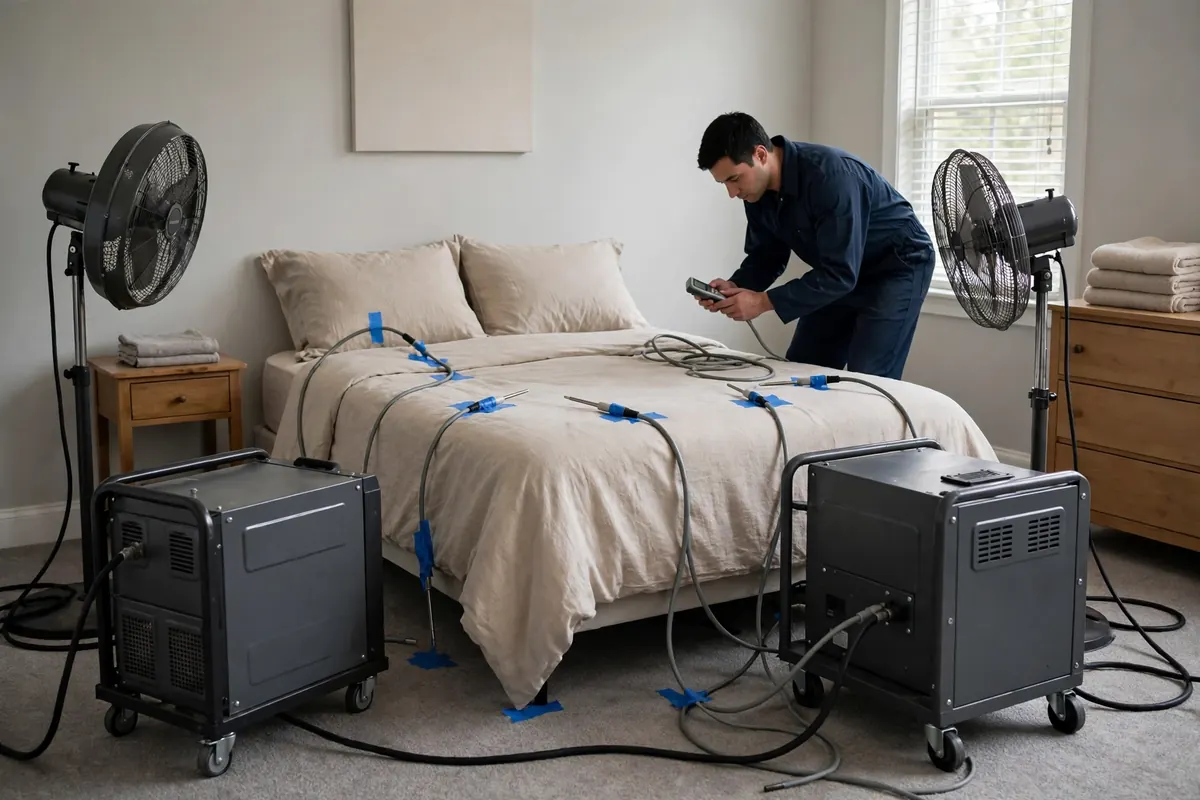
Heat treatments show a different version: a bug that surfaces afterwards usually means a cold spot sheltered it, or it arrived in something returned to the room too soon. One survivor after heat is worth reporting promptly, because heat leaves no residual to catch what it missed — the follow-up inspection carries the whole safety net.
Either way, photograph and note what you see, with the date. Your pro's next decision is made from that record, not from anyone's memory of a stressful fortnight.
What Should You Do When You See One?
Keep sleeping in the bed, keep the traps in place, and write down what you find — date, room, alive or dead, and roughly how many. Do not spray anything yourself: over-the-counter products can scatter survivors into new harbourages and can interfere with the residual your program depends on. And do not move rooms.
Moving to the sofa remains the classic own goal, even mid-program: hungry survivors follow the food and colonise a second room, converting a finishing job into a new front. The treated bed, with its interceptors and residual around it, is the trap the whole program is built around — your presence in it is part of the mechanism.
Bag and hot-dry any item you are told to, report sightings between visits if the numbers jump, and otherwise let the schedule run. Restraint is an active contribution, not passivity.
Need Bed Bug Treatment Help Near You?
One free call connects you with a local pro who can arrive in 30–60 minutes.
Call (800) 555-0100Free Call · Answered 24/7 · Local Pros Near You
When Is It Time To Call The Pro Back?
Call when the trend breaks: live bugs increasing after the second week, activity appearing in rooms that were clear, fresh clusters with eggs and shed skins, or bites resuming strongly after they had stopped. Also call if your follow-up visit was never scheduled — a program without one is unfinished by design.
A good company wants this call, and most programs include re-treatment of surviving activity inside a service window — ask what yours covers before you need it. Bring the log and photos; a specific report ('six live ones this week, all at the head of the bed') gets a targeted response, while 'they are back' gets a general one.
Call sooner rather than later if you suspect an untreated source: a neighbouring flat, a piece of furniture that arrived mid-program, a car or luggage from a trip. Programs fail more often from a continuing supply of new bugs than from products that stopped working.
Why Am I Still Getting Bitten If The Bugs Are Dying?
Sometimes habit, sometimes biology. Skin reacts on a delay, and old bites can flare days after they were fed; different people in the same bed also react completely differently — one covered, one untouched. Bites alone, the EPA notes, are a poor indicator of infestation, and that cuts both ways after treatment too.
Judge the program by physical evidence: trap counts falling, dead bugs, inspections coming up clean. If bites continue but every physical measure says the population is collapsing, you are most likely reading your skin's lag, not the bugs' recovery. If bites continue AND traps keep catching, that pairing is worth the call back.
Persistent itching that will not settle deserves a pharmacist or doctor in its own right — skin has its own story, and not every welt in month two belongs to the infestation.
How Will You Know The Program Actually Worked?
Judge it at the follow-up inspection, not by the worst night of week one. A working program shows: falling trap counts, sightings shrinking toward the original harbourage, no new rooms involved, and a confirmation inspection with no live activity. Anything less is not failure yet — it is the point where the pro adjusts the plan.
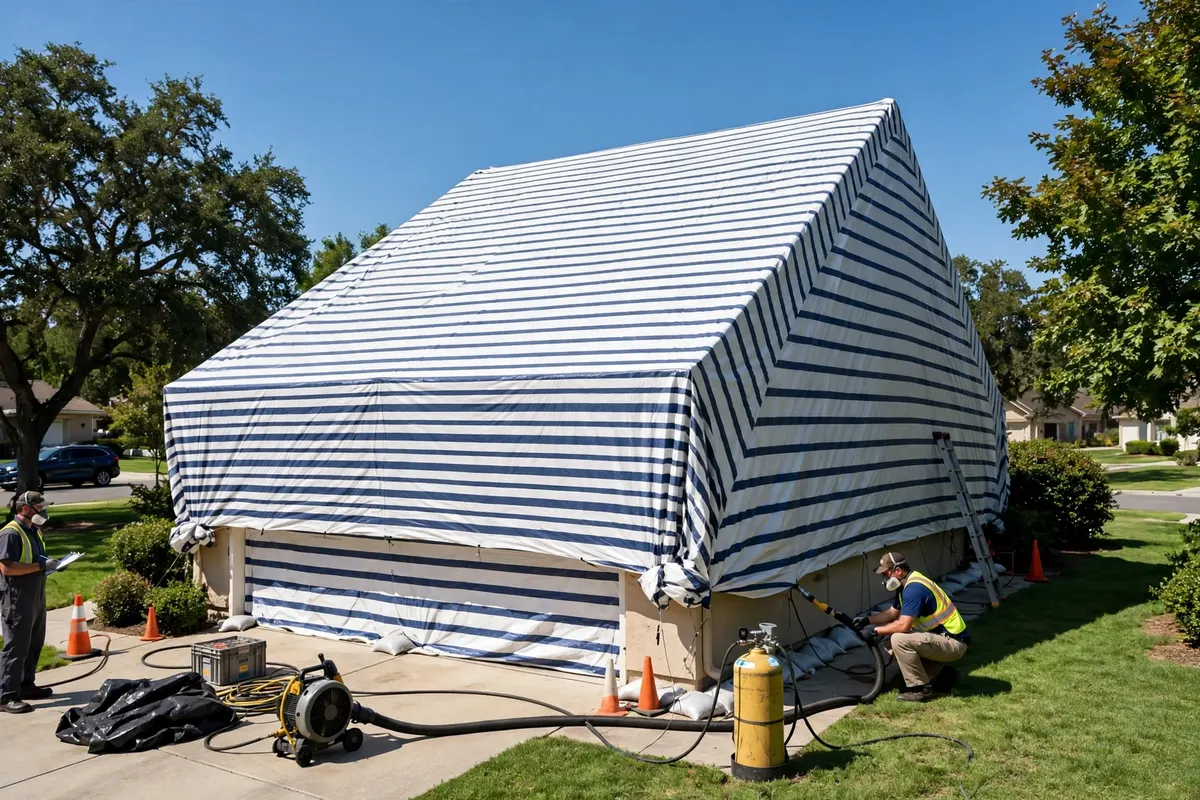
Adjustments are normal tools, not admissions: an added visit, a different product where resistance is suspected, steam or freezing for a harbourage the sprays cannot reach, dusts in wall voids. Bed bug work is iterative by nature — eggs, harbourages and human habits all take more than one pass.
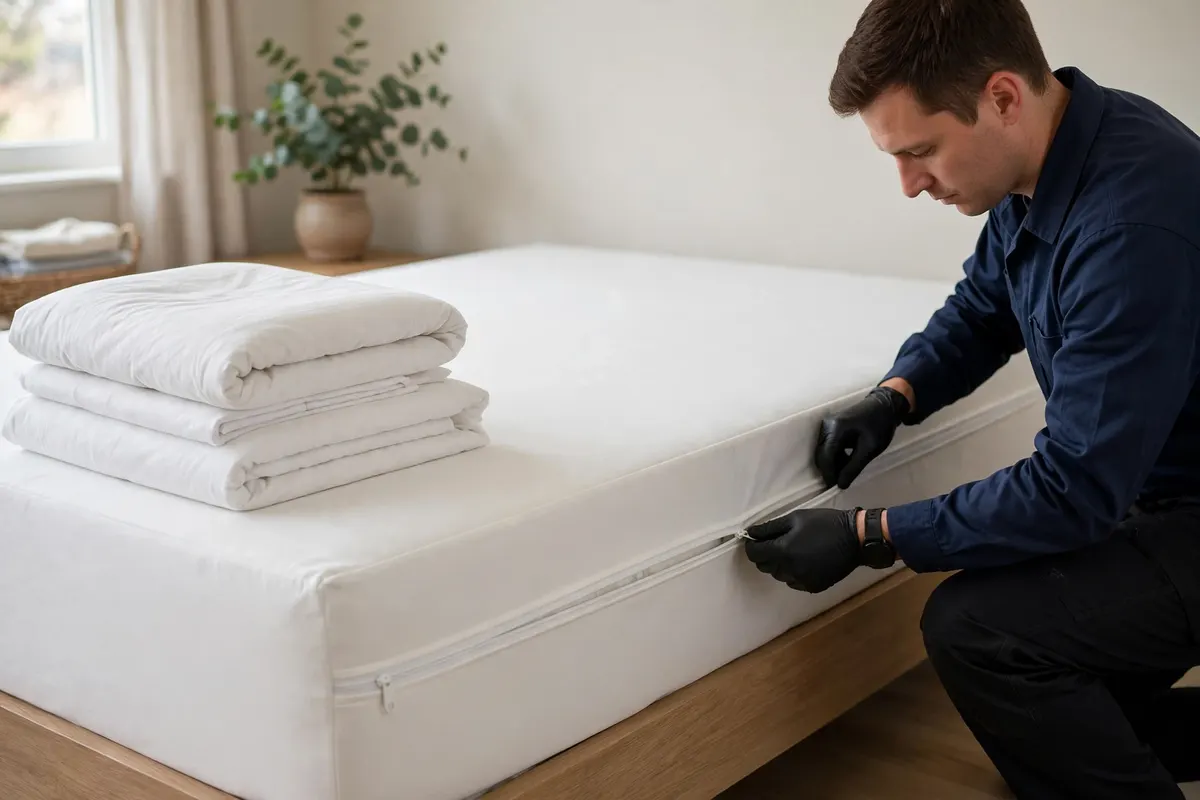
And hold the ending loosely for a while. Keep encasements on and interceptors down for some months after the all-clear; they are cheap, silent proof that the story is over — and on the rare occasion it is not quite over, they are how you find out in week one, not month three.
After treatment, do not judge by the bug you saw. Judge by the trend the traps are telling you — falling numbers mean the program is winning.
What If The Treatment Really Did Fail?
Occasionally, and the honest answer is that diagnosis comes first. A program that truly fails usually fails for a findable reason: an untreated adjoining unit, a harbourage nobody could reach, heavy clutter shielding a core colony, resistance to the product in use, or a fresh supply arriving with travel and visitors. Each has a different fix.
That is why the follow-up conversation matters more than the follow-up spray. Ask directly: what do you think is sustaining this, and what changes in the plan because of it? A pro who can answer that is solving your problem; one who simply repeats the same application is renting you the same fortnight again.
If confidence is gone, a second company's inspection is money well spent — fresh eyes find missed harbourages. Bring the first program's paperwork; a new pro who knows what was applied, and where, starts several steps ahead.
If the follow-ups are not settling it, a second opinion costs one free call — Bed Bug Treatment Alachua, FL, Bed Bug Treatment Albany, NY and Bed Bug Treatment Abilene, TX all connect you with a local pro.
A Short Field Glossary
A few terms run through every inspection report and treatment plan. The species behind nearly every case is Cimex lectularius, the common bed bug. A bed bug nymph moults five times before it can breed, and it needs a blood meal at every stage. Pros call the colony's daytime hiding place a harborage — a seam, crack or void within reach of the bed. Fecal spots, tiny black dots of digested blood, gather on the seams and frame where the colony rests. Rusty stains on bedding come from crushed, blood-fed bugs rolled on in the night.
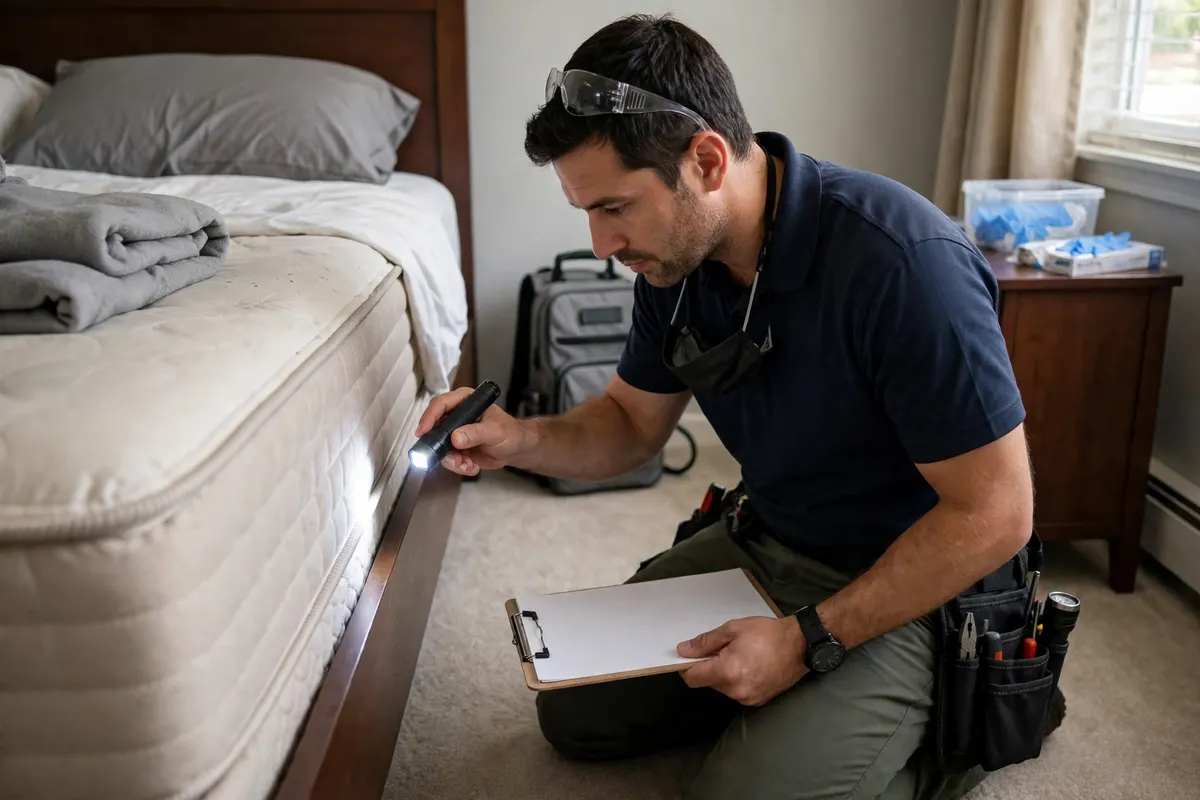
The tools behind the terms are just as plain: Interceptor traps under the bed legs catch climbers in both directions and show whether any remain. A passive monitor tucked at the head of the bed gives wandering bugs a harbourage that can be checked in seconds. A mattress encasement seals the bed itself, so nothing can hide in its seams or tufts. A box-spring encasement does the same for the base, whose torn fabric and staples hide colonies well. K9 scent detection can sweep a room in minutes, the dog's nose finding what eyes miss in clutter. Everything starts with a visual inspection — seams, screw holes, headboard backs and the joints of the frame. Thermal heat remediation raises the whole room to a lethal temperature and holds it there until every stage is dead.