What Is A K9 Bed Bug Inspection?
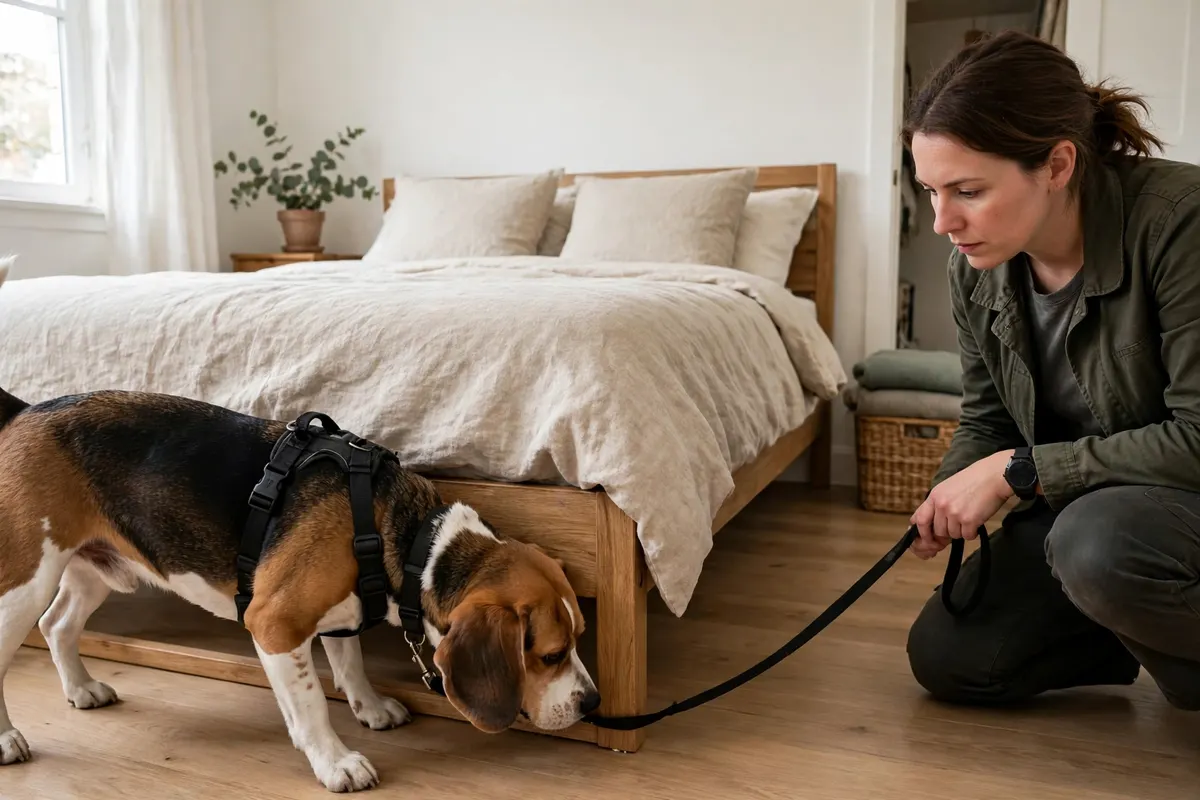
A K9 bed bug inspection is a search of your rooms by a trained scent-detection dog and its handler. The dog is taught one target scent — live bed bugs and viable eggs — and works the room systematically, indicating where the scent is strongest.
The dog is not a pet doing a trick; it is a working detection animal, trained the way narcotics and explosives dogs are trained, on a single odour with a trained indication — typically sitting or freezing and staring at the source. The handler's job is navigation and interpretation: working the dog along bed bases, sofas, baseboards and luggage zones in a pattern that covers the room, then reading and verifying what the dog reports.
Its place in the toolkit is precise. A visual inspection finds what can be seen — and a young infestation behind a headboard or inside a sofa frame may show an experienced inspector literally nothing. K9 scent detection searches the space eyes cannot reach, which is why it appears in hotel programs, multi-unit sweeps and verification visits across Bed Bug Treatment Astoria, NY and the rest of the country.
How Does The Dog Actually Find Them?
By smell, at a sensitivity no instrument in the van matches. The dog works scent cones in the room's air currents, following the odour of live bugs and viable eggs to its source, and indicates — then the handler confirms the find visually wherever that is physically possible.
A room takes minutes, not the better part of an hour a thorough visual strip-down needs. The dog checks the bed first — seams, base and headboard zone — then upholstered furniture, then the room's edges and any stored luggage. Where the dog indicates, the handler slows down, works the dog again from another angle, and then gets eyes or a torch on the spot: the professional standard is an alert backed, wherever access allows, by a bug, an egg cluster or cast evidence found at the location.
The phrase 'viable eggs' is doing real work in the definition. A properly trained bed bug dog is taught to alert only on live bugs and eggs that can still hatch — not on the debris of an old, dead infestation: the shed skins, fecal spots and carcasses that linger after treatment. That selectivity is what makes a dog useful after treatment, when a room is full of yesterday's evidence.
What Happens During The Visit?
You will usually be asked to remove other pets from the search area, tidy the floors so the dog can work the edges, and keep people out of the room being swept. The handler may run the dog through a second time or rest it between rooms — a working dog's nose is a shift worker, and honest teams schedule around that rather than pushing through a tired animal.
K9 Inspection Vs Visual Inspection: How Do They Compare?
They are near-mirror tools: the human is slow, thorough and conclusive where bugs can be seen; the dog is fast, wide-ranging and able to flag what cannot be seen — but its alert is a pointer that still asks for proof.
Need Bed Bug Treatment Help Near You?
One free call connects you with a local pro who can arrive in 30–60 minutes.
Call (800) 555-0100Free Call · Answered 24/7 · Local Pros Near You
How Accurate Are The Dogs — Honestly?
A good team is very good — and the honest caveat is that quality varies. The dog's alert is evidence, not proof: the professional standard is a visual confirmation at the alert site, and a team that will not look for one is telling you something.
Ask about certification before you ask about price. Independent, third-party certification — bodies such as NESDCA and the World Detector Dog Organization exist to test dog-and-handler teams against blind standards — separates working teams from a pet with a vest. Serious handlers also train daily with live scent samples and keep records; ask how the dog is calibrated and what happens after an alert, and listen for the word 'verify'.
Understand the false-alert question with clear eyes. A dog can indicate on scent that has drifted or pooled, and a handler under pressure to 'find something' can read hope into a pause. That is why the alert triggers a search, not a treatment plan. It is also why a no-alert result is genuinely useful in the other direction — a trained dog finding nothing, in a room where evidence was feared, is real information, the kind landlords and hotels around Bed Bug Treatment Anna Maria, FL rely on between guests.
The dog finds the scent. The handler's job is to prove it — the alert is the beginning of the inspection, not the end of one.
When Is A K9 Inspection Worth It?
Where the bug's location is the expensive unknown: big properties, many rooms, low-level or hidden infestations, and any situation where treating everything 'just in case' would cost far more than finding it precisely.
Hotels and vacation rentals are the classic case — a dog sweeps rooms between guests at a speed no visual team can match, and documents diligence while doing it. Multi-unit housing is next: when one flat reports bugs, a K9 sweep of the surrounding units maps the true extent in an afternoon instead of a month of complaints. Then the private versions of the same problem: bites continuing with no evidence ever found, a large house where the source room is unknown, and pre-move or pre-purchase checks where the answer changes a decision.
Verification after treatment may be the highest-value use of all. When interceptor traps and seams look clean but the stakes of being wrong are high — a nursery, a rental re-let, a hotel floor — a trained dog's sweep is the strongest practical all-clear short of waiting months. Programs in Bed Bug Help In New York build that sweep into the follow-up for exactly this reason.
When Is A Visual check Enough?
When the infestation is in plain sight. If live bugs are walking the seams and fecal spots mark the headboard, you do not need a dog to tell you where the problem is — you need treatment, and the visual check that maps it is already part of that visit.
The same holds for a single, small, well-evidenced room: a studio flat with one bed, visible signs and no neighbouring mysteries. Money spent on scent work there is money not spent on the heat, residual and encasements that will actually end the problem. A straight-talking pro will tell you which side of the line your situation sits on — that triage is part of what the initial call is for.
Where the two methods meet is the mature pattern: visual check maps the known, K9 sweeps the unknown, monitors verify the afterwards. Most serious infestations use all three before they are declared finished.
How Do You Prepare For A K9 Visit?
Very little, and mostly dog logistics: remove your own pets from the search rooms, clear the floor edges, and be ready to tell the handler where evidence was found and which rooms matter most.
Keep the rooms as they are otherwise — do not deep-clean, spray or fog before a scent inspection, since you would be disturbing exactly the evidence the dog is reading, and never set off a fogger beforehand: besides scattering bugs, it contaminates the scent picture. Fans and strong air fresheners are switched off during the sweep, on the handler's direction.
Expect the visit to be businesslike and quick, with the real conversation at the end: where the dog indicated, what was verified, what was not, and what the map means for treatment. Homes preparing for sweeps in Bed Bug Treatment Austin, TX hear the same closing advice — write those answers down, because the treatment plan is built from them.
The Words Pros Use For All Of This
Guides like this one translate as they go, but on a call you will hear the trade's own terms. The species behind nearly every case is Cimex lectularius, the common bed bug. A bed bug egg is a millimetre long, pearly white, and glued into a seam or crack where sprays rarely reach. A bed bug nymph moults five times before it can breed, and it needs a blood meal at every stage. Pros call the colony's daytime hiding place a harborage — a seam, crack or void within reach of the bed. Rusty stains on bedding come from crushed, blood-fed bugs rolled on in the night.
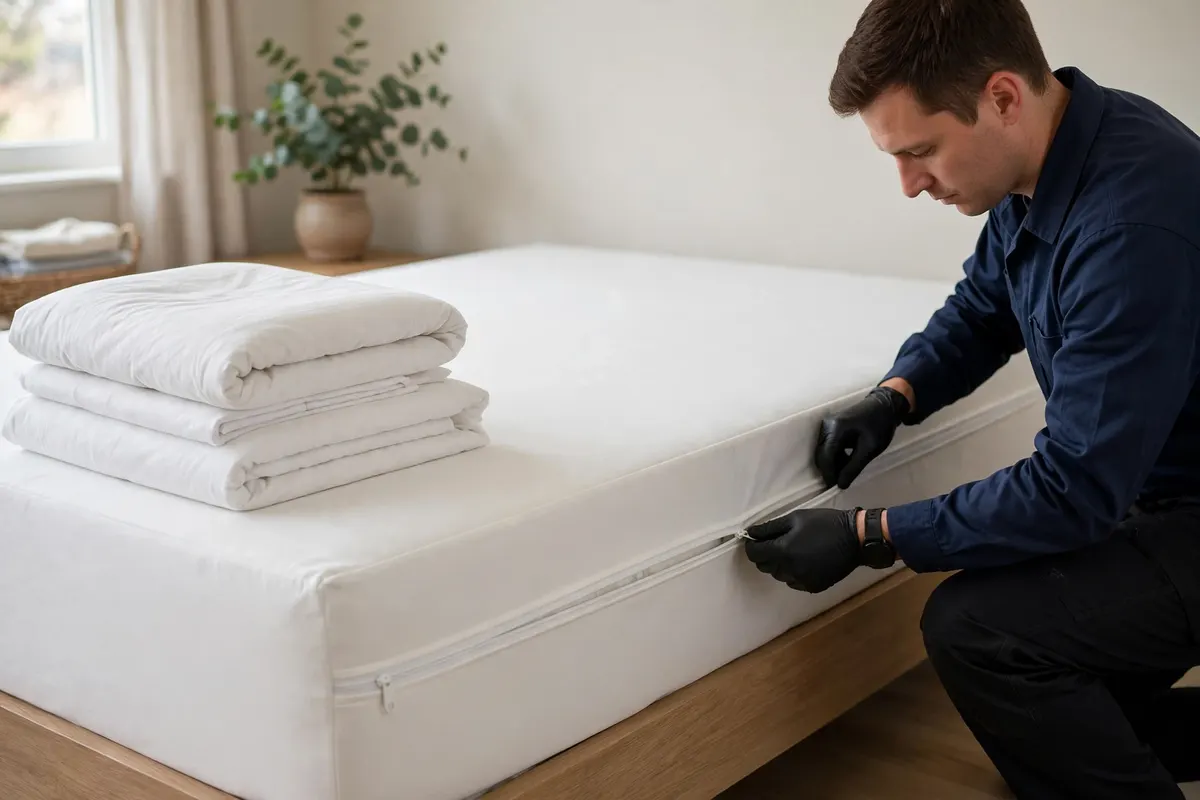
The kit those terms describe is simple: A passive monitor tucked at the head of the bed gives wandering bugs a harbourage that can be checked in seconds. A mattress encasement seals the bed itself, so nothing can hide in its seams or tufts. A box-spring encasement does the same for the base, whose torn fabric and staples hide colonies well. Thermal heat remediation raises the whole room to a lethal temperature and holds it there until every stage is dead.