What Is The Point Of Heat Treatment Preparation?
Two instincts to fight: do not strip the room bare, and do not spread its contents around the house. Heat needs the furniture, bedding and belongings in place so it can kill the bugs where they live. Your job is removing what heat would damage, opening what heat must enter, and keeping everything else put.
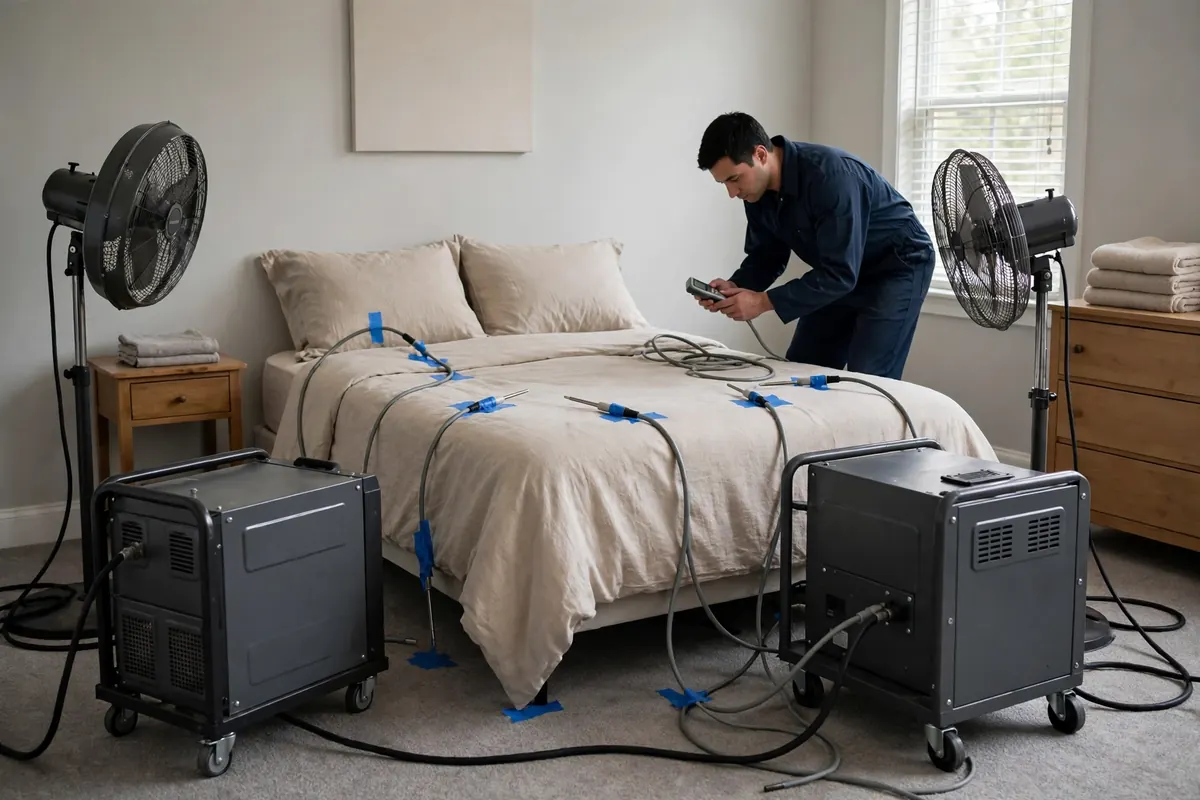
A heat treatment raises the room to lethal temperature — above about 113°F at every harbourage, typically much higher in the open room — and holds it for hours while fans move the hot air and sensors watch the cold spots. Preparation is how you make sure there are no cold spots left for the heat to miss: no sealed suitcase insulating a family of bugs, no drawer shut tight, no pile so dense its centre stays cool.
Your own pro's list always wins over any general guide, including this one — equipment and protocols vary. But the categories below are the ones on nearly every professional list, and they are what the crew will check first when they arrive.
What Must Come Out Of The Room?
Anything heat can melt, burst, spoil or ruin: candles and wax, aerosols and pressurised cans, medicines and vitamins, cosmetics and lipsticks, chocolate and meltable foods, vinyl records, crayons, glue, batteries where your pro advises it, houseplants, and musical instruments if your pro flags them. Pets and fish leave for the day, without exception.
Think of the room as an oven set far above a summer day and walk it with that eye: what would slump, leak, pop or perish? Medicines and supplements go because potency does not survive the day, even when containers look fine. Pressurised cans — hairspray, spray paint, air horns — come out because heat raises pressure in sealed cans to bursting point, which is the day's one real safety hazard.
Where do they go? Into bags or boxes in a room that is NOT being treated, or out to a car or garage if your pro agrees — never into other bedrooms' beds or sofas. Anything that has been living beside the infestation should travel in sealed bags, so the preparation does not do the bugs' travelling for them.
What Should Stay Exactly Where It Is?
Almost everything else. The bed, mattress, sofa, furniture and rugs are the treatment targets, not obstacles. Clothing and bedding mostly stay too — loosened, hung or spread so hot air moves through them, rather than packed tight. Electronics are commonly left in place powered down, but follow your pro: their list rules on TVs, computers and game consoles.
The single biggest preparation mistake is the heroic clear-out: dragging the bedroom's contents to the spare room, the sofa and the car. Every moved item is a possible ride for bugs and eggs into a new room, and the heat crew arrives to find the harbourages empty and the infestation relocated. If it lives in the room, it stays in the room, unless it is on the removal list.
Leave the mattress and box spring in place as well. Stripping the bed to 'help' just moves the problem to the laundry room. Bedding that will be laundered can go through a hot dryer cycle instead — but on the crew's timing, which is usually as part of the day, not the night before.
Need Bed Bug Treatment Help Near You?
One free call connects you with a local pro who can arrive in 30–60 minutes.
Call (800) 555-0100Free Call · Answered 24/7 · Local Pros Near You
How Should You Arrange What Stays?
Spread and open. Pull furniture a hand's width from walls where you can, stand cushions so air reaches their seams, open every drawer and wardrobe, unzip suitcases, loosen piles of clothing and books, and lift clutter off the floor into open arrangements. Dense, sealed and stacked is what shields bugs; loose and open is what kills them.
Fans will do heavy lifting on the day, pushing hot air into corners — preparation gives that air somewhere to go. Books packed tight on a shelf are a classic cold core; fanning them or standing them loosely changes their temperature story completely. The same applies to the ottoman full of blankets and the under-bed storage boxes: open them, loosen them, or expect them on the crew's rework list.
You do not need to deep-clean. Vacuuming seams and edges beforehand is genuinely useful — it removes some bugs and eggs and the dust that insulates them — but bag and bin the vacuum contents outside straight away, and do not let cleaning become a reason to carry items around the house.
What About Laundry Before The Day?
Through the dryer, not the wash: 30 minutes on the highest heat kills all life stages in clothing and bedding, and your pro will usually name the loads that matter — the bedding, the clothes from the treated rooms — rather than your whole wardrobe. Carry them in sealed bags and keep treated items bagged until the room is cleared.
Timing is the subtle part. Laundering everything the night before and returning it to the still-infested room just re-exposes it; laundering it and storing it in a treated or clean space keeps it safe. Ask your pro which they prefer — many coordinate the big dryer loads with the treatment day itself, when the rooms are being cleared anyway.
Freeze instead of bake for the delicate exceptions: items that cannot take dryer heat but must be treated can go the sealed-bag freezer route — 0°F for about four days — or wait for the crew's advice on the day.
What Happens On The Day Itself?
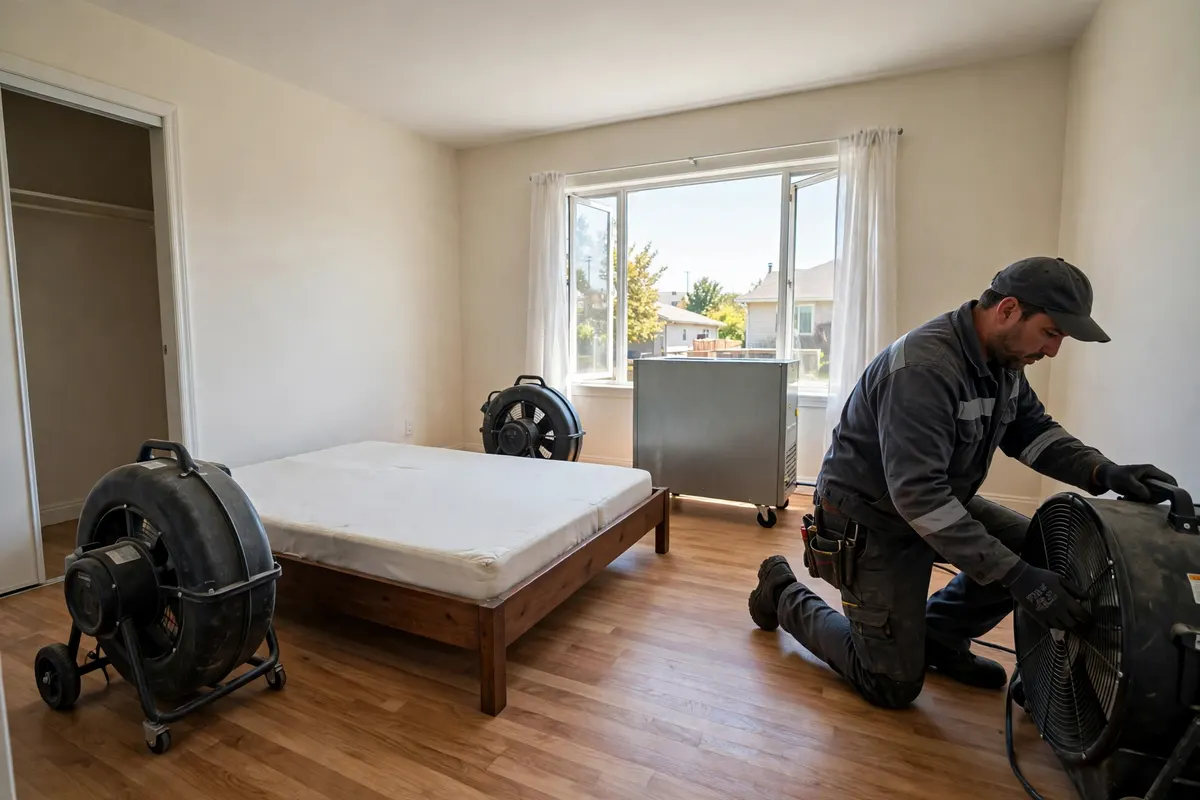
A plan, not a scramble. People and pets are out for the whole session — commonly most of a day for a home's treated rooms — and windows and doors stay shut while the heaters run. Line up somewhere to be, take the removed items and the day's essentials with you in the morning, and let the crew cook the rooms in peace.
When you return — only when the crew says so — the rooms will be hot and will need airing. Belongings can feel alarming (everything is warm, some things will have shifted in the fans' wind) but the arrangement work you did beforehand is exactly what let the sensors confirm lethal temperatures everywhere they were placed.
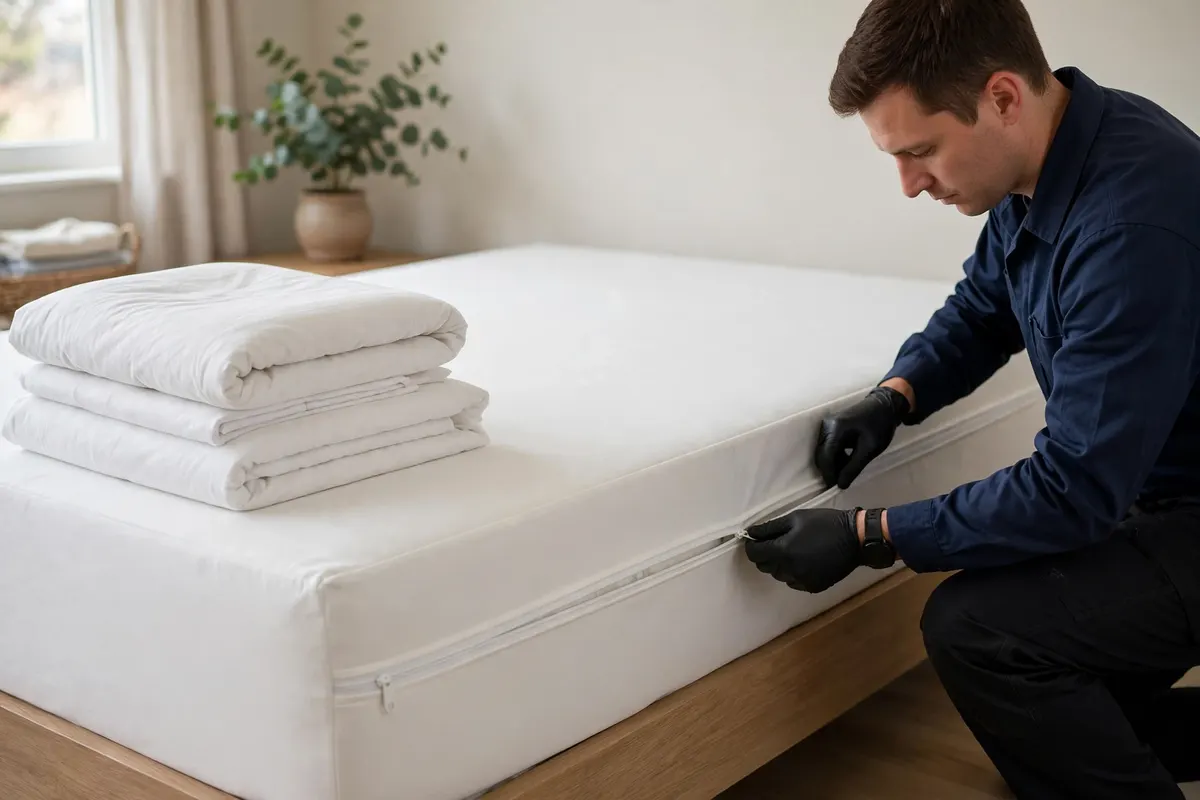
Keep the encasements on and any interceptors in place afterwards. Heat leaves no residual, so the follow-up inspection the crew schedules is how 'the heat reached everything' becomes a verified fact rather than a hope — our still-seeing-bugs-after-treatment guide explains the following fortnight.
What Should You Never Do Before A Heat Treatment?
The forbidden moves are consistent across every professional list: no foggers or bug bombs in the days before (they scatter bugs into walls where heat planning cannot see them), no last-minute mattress disposal, no moving infested items to other rooms or to relatives' houses, and no sealing belongings in airtight bags or boxes inside the treated room — sealed containers insulate their contents against the heat.
Also tell the crew the unvarnished truth: what you have sprayed, what you have already thrown away, and which rooms you suspect. Heat plans are built from the inspection map; a hidden DIY spraying campaign changes where the bugs are hiding on the day.
Honesty extends to the heat-sensitive list. If you know the room holds something unusual — a cello, a server rack, a collection of anything delicate — raise it at booking, not at the door. Pros have answers for most of it, but only with notice.
Once the preparation is done, the rest is the crew's work — bookings start at Bed Bug Treatment Austin, TX and Bed Bug Treatment Abilene, TX, with arrival windows explained on our Bed Bug Help In Texas page.
Terms You Will Hear On The Call
Pros describe the same things this article has been circling, in their own shorthand. The species behind nearly every case is Cimex lectularius, the common bed bug. A bed bug egg is a millimetre long, pearly white, and glued into a seam or crack where sprays rarely reach. A bed bug nymph moults five times before it can breed, and it needs a blood meal at every stage. Pros call the colony's daytime hiding place a harborage — a seam, crack or void within reach of the bed. Fecal spots, tiny black dots of digested blood, gather on the seams and frame where the colony rests. Shed skins (exuviae) are the papery shells left behind at each moult, and they collect beside the seams where the colony rests. Rusty stains on bedding come from crushed, blood-fed bugs rolled on in the night.
And the equipment in that shorthand is standard: Interceptor traps under the bed legs catch climbers in both directions and show whether any remain. A passive monitor tucked at the head of the bed gives wandering bugs a harbourage that can be checked in seconds. A mattress encasement seals the bed itself, so nothing can hide in its seams or tufts. A box-spring encasement does the same for the base, whose torn fabric and staples hide colonies well. K9 scent detection can sweep a room in minutes, the dog's nose finding what eyes miss in clutter. Everything starts with a visual inspection — seams, screw holes, headboard backs and the joints of the frame. Thermal heat remediation raises the whole room to a lethal temperature and holds it there until every stage is dead.
Heat preparation looks backwards to most people: the room should look lived-in, not emptied. You are not clearing the stage — you are opening every hiding place to the heat.