How Long Do Bed Bug Eggs Take To Hatch?
About six to ten days in a normal heated room. That single number shapes everything about bed bug treatment, because almost every egg already in your home when a spray dries will still hatch on schedule.
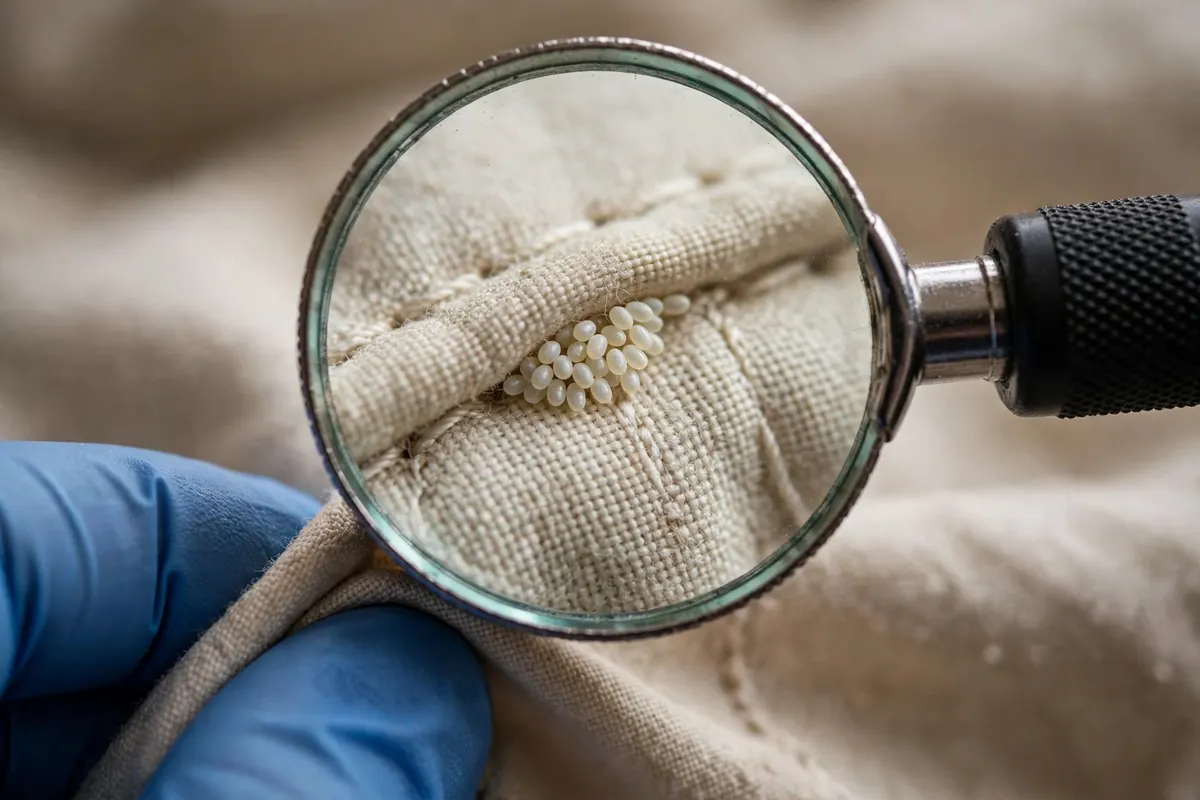
A egg is tiny — about 1mm long, pearl-white, roughly the size of a pinhead — and the female glues it in place inside a harborage: mattress piping, a bed frame joint, behind a loose piece of wallpaper, deep in a baseboard crack. Glued down and sheltered, eggs are the most protected stage of the insect's life. They do not need feeding, they do not move, and they simply wait out whatever happens in the room around them.
At typical indoor temperatures the wait is short. Hatching at six to ten days means an egg laid the night before your treatment can produce a hungry nymph more than a week after the pro has packed up — in homes using Bed Bug Treatment Alachua, FL exactly as in homes using Bed Bug Treatment Abilene, TX. The timeline, not laziness or weak products, is why treatment plans are built the way they are. It is also why finding eggs during an inspection changes the conversation: eggs mean the infestation is established and breeding, not a single hitchhiker passing through, and the plan has to be sized for a population with a next generation already scheduled.
What Changes The Hatching Time?
Temperature. Warm rooms speed development; cool rooms slow it down, sometimes a lot. An egg's clock runs fastest in the same warm, occupied bedroom that suits the adults.
Bed bugs are cold-blooded in the practical sense: every stage of their development runs on the room's temperature, not their own. The heated bedroom where a family sleeps every night is close to the insect's preferred conditions, which is why the six-to-ten-day figure is the one to plan around in a lived-in home. A room kept cool, a property standing empty with the heating off, a suitcase stored in a cold garage — all of these stretch the same egg's timeline out, unpredictably, and some of the eggs simply wait for warmth to return before finishing development.
Why Do Eggs Survive A Spray Treatment?
Because the egg's shell protects it. Most insecticides are poor at penetrating the egg casing, and the developing nymph inside has almost no contact with treated surfaces until the moment it hatches.
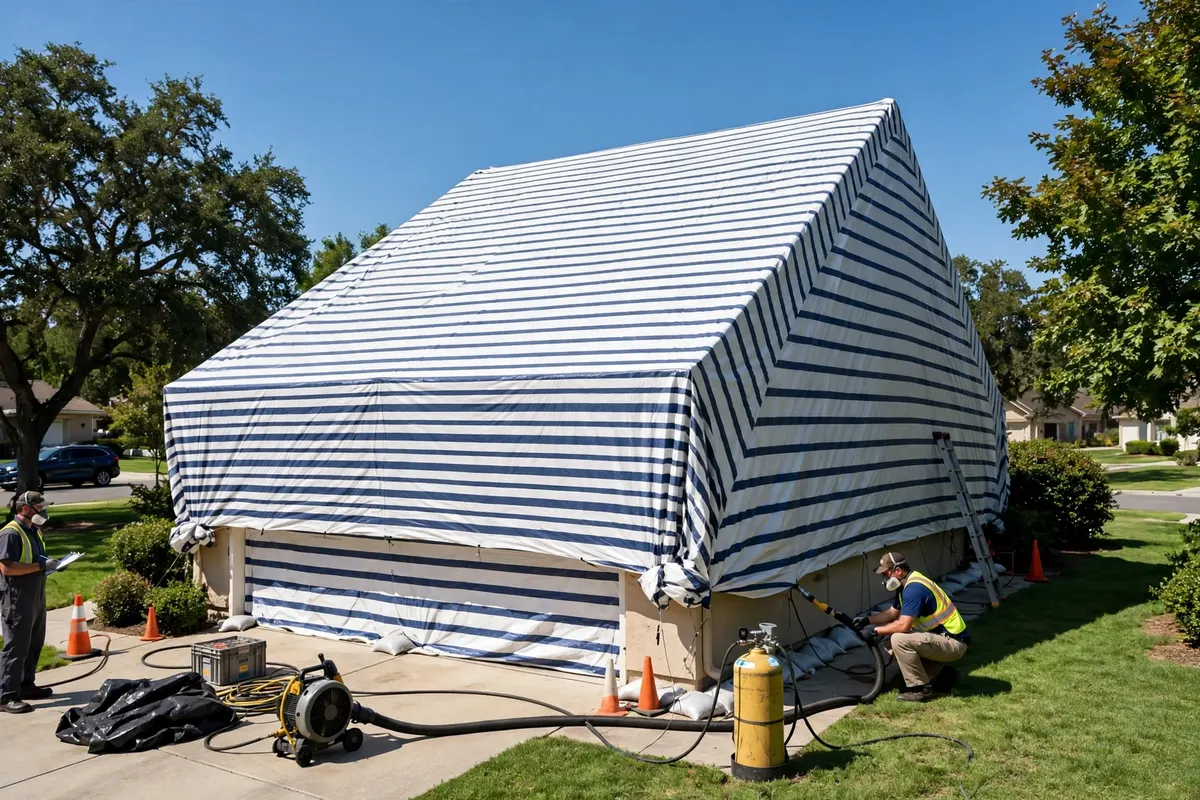
This is the fact that surprises people most, so it is worth being blunt: a chemical treatment that kills every visible bug in the room can still leave a full generation of eggs untouched. The products are not fake and the pro is not careless — the eggs are simply armoured against them. That is why a proper chemical program is never sold as one visit. The residual left in seams and travel routes is there for the nymphs that emerge afterwards, and the follow-up visit is timed so those nymphs meet fresh product before they can mature.
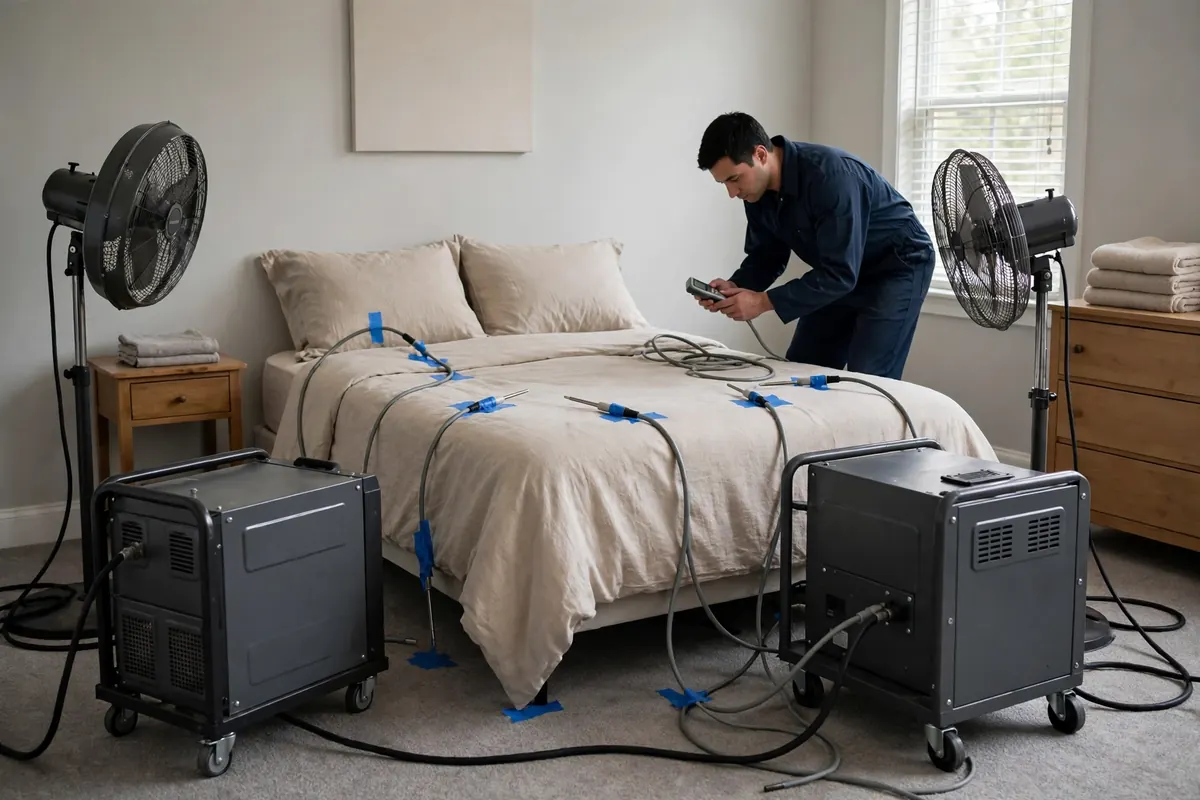
Heat is the exception to the whole problem, which is why thermal heat remediation is often chosen for established infestations. Properly monitored heat does not care about the shell: once the harborage itself passes the thermal death point, egg, nymph and adult die together, and the six-to-ten-day clock never gets to run.
Every bed bug plan is really a plan about eggs. The adults are the easy part.
Need Bed Bug Treatment Help Near You?
One free call connects you with a local pro who can arrive in 30–60 minutes.
Call (800) 555-0100Free Call · Answered 24/7 · Local Pros Near You
Can Eggs Be Removed Or Killed Before They Hatch?
Some of them, yes — vacuuming and steam genuinely reduce the egg load, and they are standard parts of a professional visit. Neither reaches every egg glued deep in a crack, which is why they support a plan rather than replace one.
A slow pass with a HEPA vacuum's crevice tool along seams, piping and frame joints physically pulls out eggs along with bugs and shed skins — eggs are glued down, but loosely enough that determined suction on the surfaces where they sit removes a meaningful share of them. Steam aimed directly into a seam kills on contact, egg included, because it is heat delivered at point-blank range. Pros use both, methodically, bed by bed, because every egg removed is a nymph the follow-up never has to meet.
What does not work is hoping household routines reach the rest. Eggs sit in places a duster never touches — inside the screw holes of a frame, behind a headboard's fixing, under a lifted corner of flooring — and they are laid across several harbourages rather than one findable cluster. That spread is the practical reason the timeline still rules even a well-vacuumed home: assume some eggs remain, and let the follow-up visit and the monitors deal with the generation they produce.
What Happens Right After An Egg Hatches?
A nymph emerges about the size of a poppy seed, almost translucent, and it must feed before it can grow. It will feed, shed its skin, and repeat that cycle five times before it becomes an egg-laying adult.
That first blood meal is the nymph's deadline. A newly hatched bed bug cannot molt to its next stage without feeding — a detail in the life cycle that treatment plans quietly rely on. A hungry nymph must leave the harborage and travel to a sleeping host, which means crossing the seams, baseboards and leg traps where residual products and interceptor traps are waiting. Timed well, the follow-up catches the new generation in that window: old enough to have emerged, too young to reproduce.
Given regular meals and warm conditions, a nymph develops through its five stages over a matter of weeks, and the new adults start the cycle again — a female lays a few eggs each day, tucked into the same kind of harbourages. This is the compounding arithmetic behind Bed Bug Help In Florida: leave one generation's hatching unopposed and the population does not grow back to what it was — it grows past it.
So When Is The Follow-Up Visit Booked?
Usually a follow-up about two weeks after the first visit — after most eggs present at the first treatment have hatched, and before the new nymphs are old enough to lay eggs of their own.
The exact interval is the pro's judgement call, shaped by the products used and how warm the rooms are kept, but the logic never changes: too early and eggs are still unhatched behind their shells; too late and the follow-up generation is already breeding. If a quote you receive has no follow-up visit and no monitoring in it, the missing piece is this timeline — ask what the plan is for the eggs, and judge the answer. A plan with no answer to that question is not a cheaper plan; it is an unfinished one.
Between visits, interceptor traps under the bed legs and a passive monitor do the quiet work of proof. Newly hatched nymphs caught in a trap tell the pro the hatch happened and the residual is being met; empty traps plus no new fecal spots or shed skins across the hatching window is real evidence the population is gone, the standard readers checking Bed Bug Treatment Albany, NY hear as well.
Terms You Will Hear On The Call
Pros describe the same things this article has been circling, in their own shorthand. The species behind nearly every case is Cimex lectularius, the common bed bug. A bed bug nymph moults five times before it can breed, and it needs a blood meal at every stage. Rusty stains on bedding come from crushed, blood-fed bugs rolled on in the night.
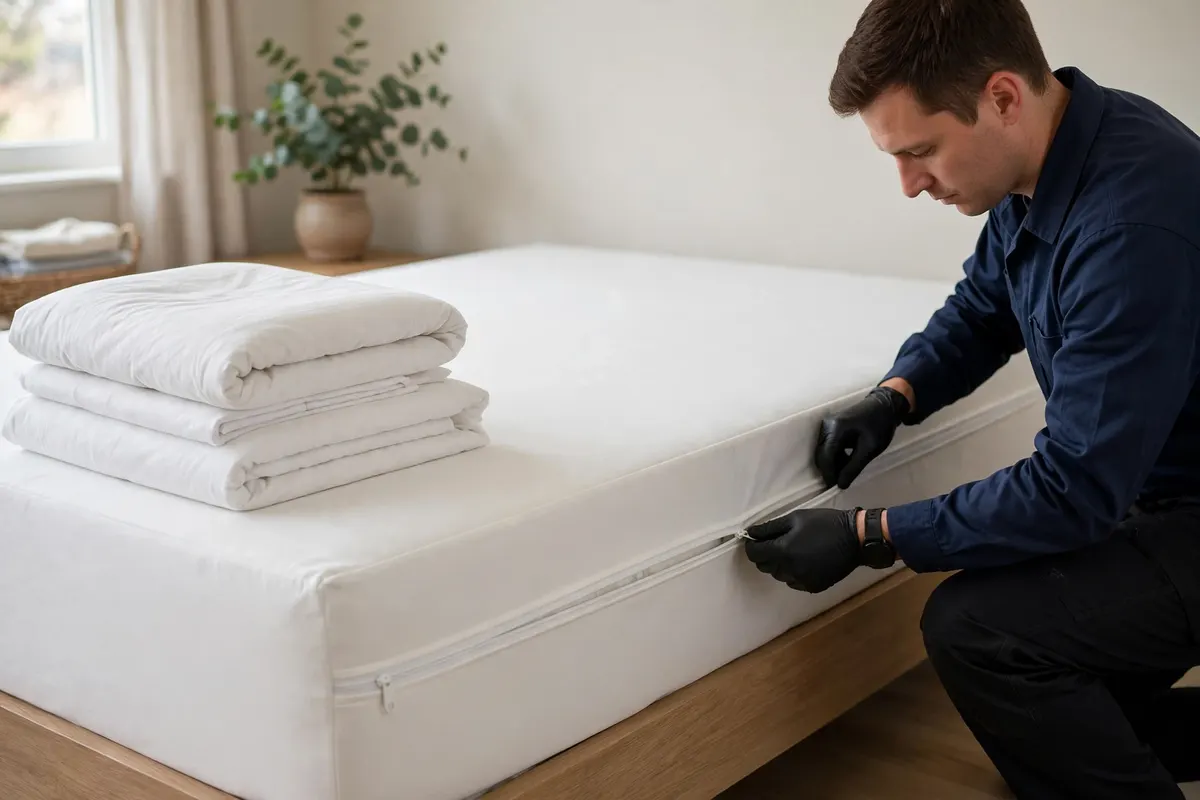
And the equipment in that shorthand is standard: A mattress encasement seals the bed itself, so nothing can hide in its seams or tufts. A box-spring encasement does the same for the base, whose torn fabric and staples hide colonies well. K9 scent detection can sweep a room in minutes, the dog's nose finding what eyes miss in clutter. Everything starts with a visual inspection — seams, screw holes, headboard backs and the joints of the frame.