What Is The Core Difference Between Bed Bugs And Scabies?
Location. A bed bug infestation lives in your room — in the mattress seams, box spring and bed frame — and visits you at night. Scabies lives on you: it is a microscopic mite, Sarcoptes scabiei, that burrows into the skin itself and stays there.
That single difference decides everything downstream. A room problem is confirmed by physical evidence in the room and solved by treating the room. A skin problem is confirmed by a clinician examining skin and solved by medical treatment of the person — and usually their close contacts. Any article, checker or neighbour that tries to settle the question from the look of your bites alone is guessing, because bites are where the two problems overlap most and prove the least.
This guide will not diagnose you, and neither will a pest control visit. What it can do is show you the evidence each problem genuinely leaves, so your next step — a room inspection, a clinician, or calmly both — is based on something firmer than a search result at 2 a.m.
What Is Scabies, In Plain Terms?
Scabies is an infestation of the skin by a mite too small to see. The mites burrow into the outer layer of skin, lay eggs there, and the itching is largely the body's allergic reaction to them.
The itch of scabies is typically intense and often worse at night, which is exactly why it gets confused with bed bugs. It commonly shows in the places mites favour — the webs between fingers, wrists, waistline, elbows and other warm folds — though the pattern varies and only an examination can weigh it. Scabies spreads mainly through prolonged skin-to-skin contact with an infested person; it is a condition of people and close contact, not of rooms, which is why it travels through households, dorms and care settings.
Treatment is medical: prescription creams or other medicines a clinician directs, usually applied by the patient and their close contacts at the same time, with laundry of bedding and clothing in hot water as the supporting step. No pest control product treats scabies, and no pest controller should pretend otherwise. If your evidence trail points to skin rather than seams, a doctor or dermatologist is your professional — full stop.
What Evidence Points To Bed Bugs Instead?
An infestation that can be photographed. Live bugs in the seams, fecal spots that bleed into fabric like a marker, pale shed skins, and rusty stains on bedding — the EPA's list of physical signs.
Run the check with a torch before you conclude anything. Work along the mattress seams and piping, into the box spring, behind the headboard and through the bed frame joints. Bed bugs are apple-seed sized, flat, oval and reddish-brown; each nymph sheds a pale skin at every molt, and a fed colony leaves dark spotting where it hides. Find two of those signs together and the room has told you its story — the question of species or scale is then one for the pro's visual inspection, sometimes backed by K9 scent detection.
Find nothing, and be careful about what that means. A young infestation can hide well, and interceptor traps under the bed legs plus a passive monitor give you a week of evidence instead of one evening's search. Crews checking homes in Bed Bug Treatment Altamonte Springs, FL run exactly this sequence before anyone utters a verdict.
Need Bed Bug Treatment Help Near You?
One free call connects you with a local pro who can arrive in 30–60 minutes.
Call (800) 555-0100Free Call · Answered 24/7 · Local Pros Near You
Bed Bugs Vs Scabies: The Working Differences
By what each one leaves behind and who can confirm it. One is an insect living in your furniture; the other is a mite living in skin — so the evidence trails, the professionals and the fixes are completely different.
Why Can't Bites Tell You Which One It Is?
Because skin is an unreliable witness. The EPA says it plainly: bites on the skin are a poor indicator of a bed bug infestation — they can look like mosquito or chigger bites, rashes or hives, and some people do not react to bed bug bites at all.
Now add the other direction: scabies itching is characteristically worse at night, in bed, in the warmth — precisely when and where bed bug bites appear. 'It itches at night' is true of both suspects, which makes it evidence for neither. Even the famous 'three bites in a row' pattern is folklore-grade reasoning: it happens with bed bugs sometimes, with other causes sometimes, and proves nothing on its own.
The honest tools are the ones in the table. Rooms can be inspected; skin can be examined. Guessing wrong has a real cost — weeks of treating a room for a skin condition, or weeks of creams for a room that is quietly breeding bugs behind the headboard.
What Should You Do This Week?
Run both evidence trails in parallel, because they do not interfere with each other: inspect the room or call a pro for it, and book a clinician for the skin. A week of doing both beats a month of guessing.
At home, the safe steps serve either verdict: wash bedding and affected clothing hot and tumble dry on high heat, vacuum the mattress seams carefully, declutter around the bed, and set interceptor traps so the room starts generating data. Do not fog the room 'just in case' — if it is scabies, you have poisoned a bedroom for nothing; if it is bed bugs, you have scattered them deeper.
Then make the two calls the evidence points to. A pest pro who finds no signs will tell you so — that negative is valuable, and it strengthens the medical trail. A clinician who suspects scabies will treat the person and advise on contacts and laundry. Readers in Bed Bug Help In Florida and the other state pages get the same advice, because the logic does not change by state.
Rooms can be inspected and skin can be examined. The mistake is asking either one to answer for the other.
Can You Have Both Problems At The Same Time?
Yes — shared housing and travel can deliver both at once, which is one more reason the parallel-track approach beats choosing a favourite theory early.
A dorm room, a hostel bunk, a crowded rental: the same circumstances that move bed bugs between rooms move scabies between people. Treating only the room leaves the itching — and the mite — untouched; treating only the people leaves the room reseeding the story. If both evidence trails come back positive, run both solutions, in the order the professionals set: medical treatment on its schedule, room treatment on its own, with the hot laundry serving both.
Whatever the verdicts, one free call connects you with a local pro for the room half of the question — the half that can be answered with a torch, a trap and evidence, in Bed Bug Treatment Albany, NY, Bed Bug Treatment Allen, TX or wherever the bed in question sits.
Terms You Will Hear On The Call
Pros describe the same things this article has been circling, in their own shorthand. The species behind nearly every case is Cimex lectularius, the common bed bug. A bed bug egg is a millimetre long, pearly white, and glued into a seam or crack where sprays rarely reach. A bed bug nymph moults five times before it can breed, and it needs a blood meal at every stage. Pros call the colony's daytime hiding place a harborage — a seam, crack or void within reach of the bed.
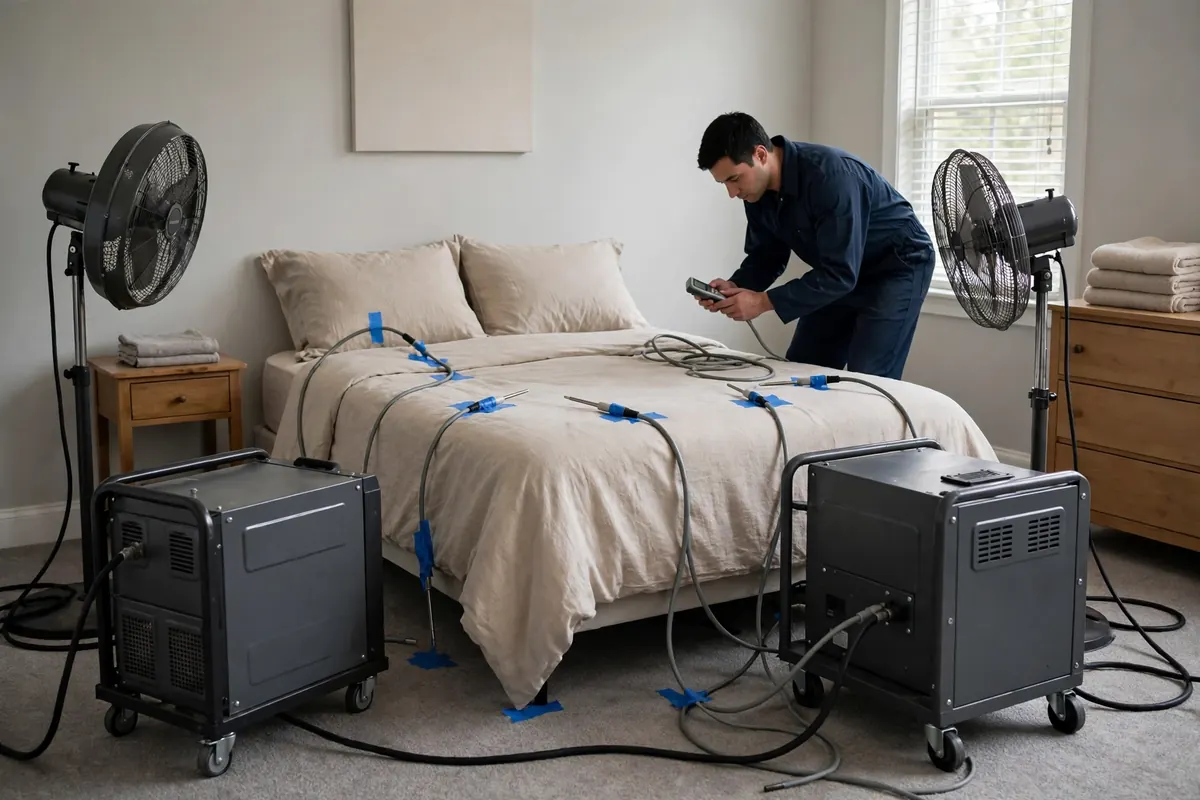
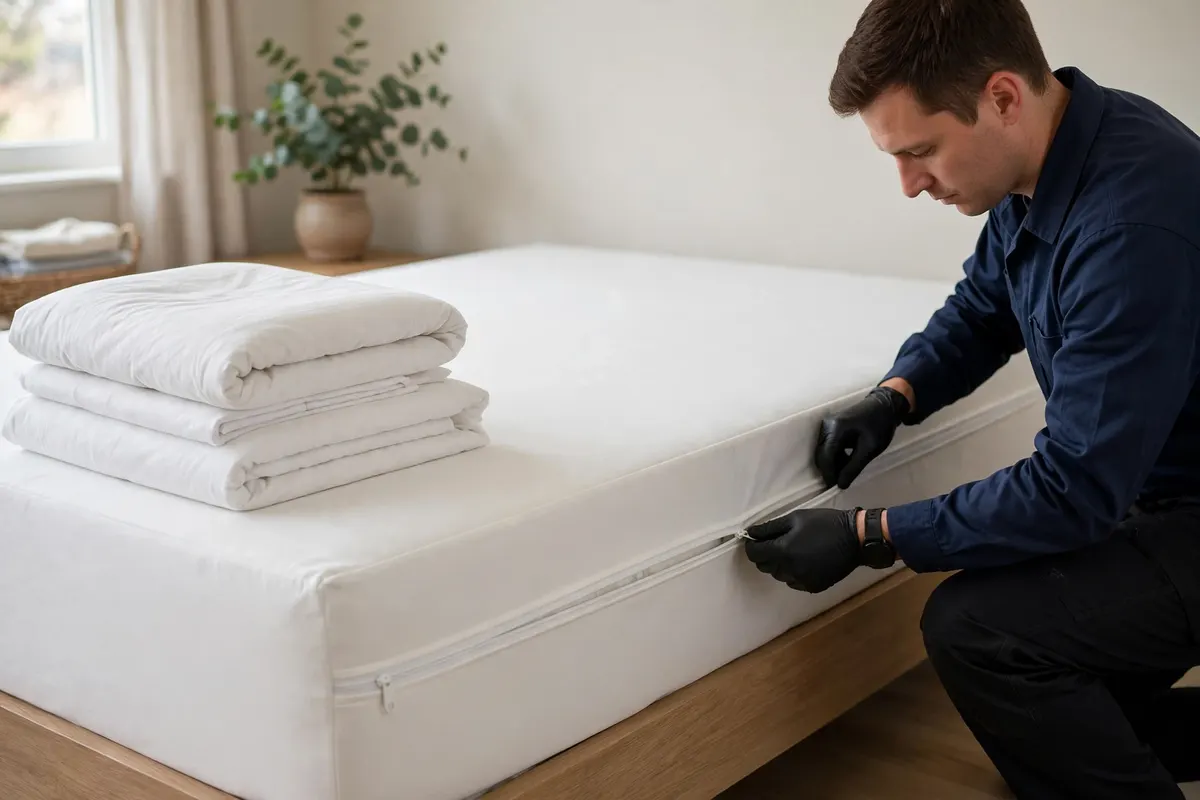
And the equipment in that shorthand is standard: A mattress encasement seals the bed itself, so nothing can hide in its seams or tufts. A box-spring encasement does the same for the base, whose torn fabric and staples hide colonies well. Thermal heat remediation raises the whole room to a lethal temperature and holds it there until every stage is dead.