Can One Second-Hand Sofa Really Start An Infestation?
Yes — used furniture is one of the classic routes in. A single fertilised female hidden in a sofa seam can found a whole infestation, and eggs ride along invisibly.
Bed bugs do not fly or jump, and they do not travel well on their own between homes. They move when we move their furniture. Kerbside pieces, thrift-store sofas, second-hand bed frames and pre-owned mattresses are how they cross town: the bug's whole survival strategy is to hide in a seam, stay still all day, and let the furniture be carried somewhere new. Rental and resale turnover in areas like Bed Bug Treatment Altamonte Springs, FL keeps this route busy year-round.
The numbers are small at first — a few bugs, a cluster of eggs in a screw hole. The problem is that the new home rarely knows. By the time bites or signs appear weeks later, the piece has been lived on, the harbourage is established, and the source looks like a complete mystery. Inspection before the piece comes inside is not paranoia; it is the cheapest treatment there is.
Know the sources in order of risk. Mattresses and sofas from kerbs, alleys and 'free if you collect' listings carry no history at all. Estate sales and house clearances mix clean and problem homes without labels. Storage-unit furniture has sat undisturbed — ideal for harbourages — sometimes for many months. Charity and thrift shops vary widely in whether stock is inspected at all. None of this makes second-hand furniture a mistake; it makes the ten-minute inspection the price of the bargain, whatever the source.
What Should You Check Before You Buy Or Accept A Piece?
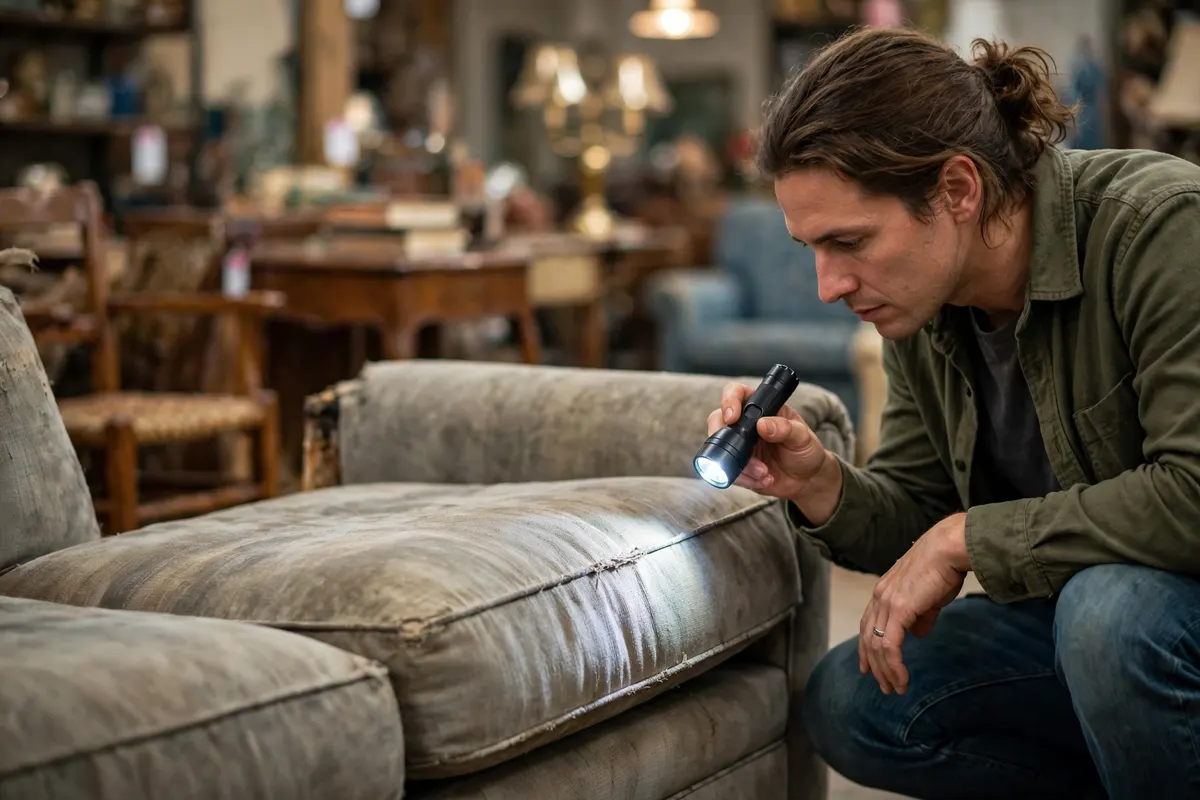
Before money changes hands, in good light, with a torch: seams, piping, folds, screw holes and joints, looking for live bugs, fecal spots, shed skins and eggs.
Start where bugs start: the seams. Run a thin card or fingernail along mattress piping, sofa seam lines and cushion zips, and watch for anything that moves or any dark spotting that smears. Fecal spots — tiny dark marks like a pen dot that may bleed into fabric — gather exactly there. Shed skins, pale and papery, collect underneath cushions and along the dust cover under a sofa. On wooden and metal frames, unscrew nothing yet: shine the torch into screw holes, joint corners, slat supports and the inside of hollow legs, where eggs are laid in clusters.
Check the surroundings the seller shows you, too: spots on nearby walls, a mattress already stripped, a strong sweet-musty smell in a closed room. Any single confirmed sign — one live bug, one cluster of fecal spots — ends the inspection. Walk away from the piece, however good the price. In student and rental areas served by Bed Bug Treatment Akron, NY, pros trace a steady share of new cases to exactly this decision going the wrong way.
The cheapest bed bug treatment is the infested sofa you never carried through your own front door.
Which Second-Hand Items Carry The Most Risk?
Upholstered and sleeping furniture carries the most risk; solid, wipeable, joint-free pieces carry the least.
Need Bed Bug Treatment Help Near You?
One free call connects you with a local pro who can arrive in 30–60 minutes.
Call (800) 555-0100Free Call · Answered 24/7 · Local Pros Near You
Should An Uninspected Piece Ever Come Straight Indoors?
Never — not even 'just for a few nights', not even in a spare room. An unchecked piece inside the home is an infestation waiting for its first feed.
The rule that prevents almost every furniture-borne case is simple: inspection happens outside, in a garage, on a drive or a balcony, before the piece crosses the threshold, or at the shop before you commit. Once inside, bugs that leave the piece at night are in your home's harbourages, and the piece is no longer the whole problem. Keep the item out of bedrooms and away from your own upholstered furniture until it has passed inspection and, ideally, a treatment step as well.
Delivery day deserves the same discipline. If a second-hand piece is being delivered, inspect it on the drive or in the doorway before it is carried in, and be ready to refuse it — a returned sofa is an awkward phone call, an accepted infested one is a season of treatment. If you collected it yourself, it stays in the vehicle or the garage until the inspection is done. The threshold is the border: everything gets checked on the outside of it, every time, however reputable the seller.
If a piece is already inside and you now suspect it, do not panic-drag it through the house. Inspect it in place, photograph signs, and read the quarantine steps below — moving infested furniture room to room is how one problem becomes three, in Bed Bug Treatment Addison, TX as in every area we cover.
How Do You Quarantine And Clear A Piece You Keep?
Quarantine first: keep the piece isolated, then use heat, steam or cold where the material allows — and encase what can be encased.
Isolation means a garage, a sealed storage area or a wrapped piece away from sleeping and sitting areas — not a corner of the bedroom. Steam is the home user's most useful tool: a steamer run slowly along seams, piping and folds kills bugs and eggs on contact where the steam reaches, so move slowly and work every seam twice. Small removable items — cushion covers, throws — can be bagged and laundered hot, then tumble-dried on the highest heat the fabric tolerates, because sustained dryer heat is lethal.
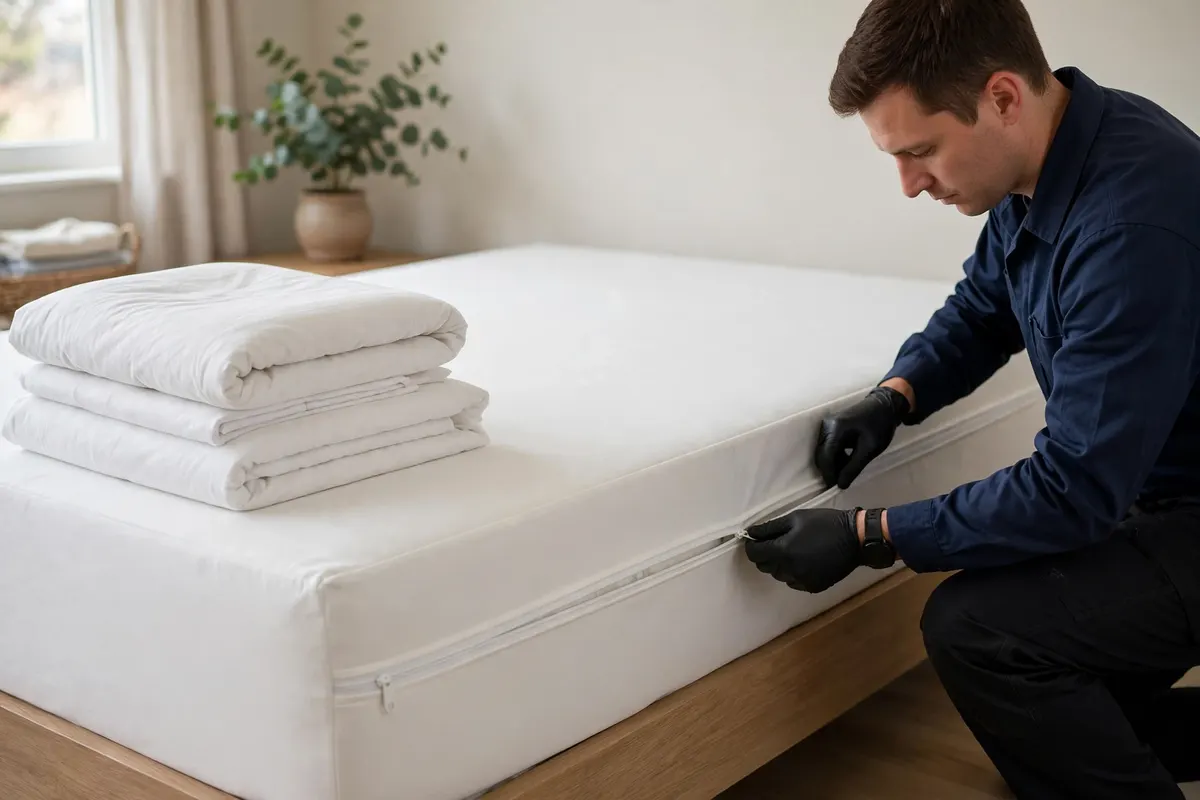
For a kept mattress or box spring, the finishing step is a zippered encasement, sealed and left on: anything trapped inside cannot get out to feed, and the smooth cover removes the seam harbourages. Be honest about limits, though. Deep in a sofa's frame voids are places no home steam reaches. If signs were confirmed on the piece, the realistic options are professional treatment of the item or letting it go — a free sofa that needs a full home treatment was never free.
What If The Seller Insists The Piece Is Bug-Free?
Proof means nobody can honestly give it. What a careful seller can show is a clean inspection, and what a shop should allow is time and light to do one.
Treat assurances as conversation, not evidence. Most private sellers genuinely do not know what is in the seams of their sofa — infestations are commonly discovered weeks after the first bugs settle, and a piece can be given away in complete innocence by someone who never reacted to bites. Shops and refurbishers vary: some inspect and treat stock, many do not. Either way, your inspection is the only one you control, and a seller who refuses you ten minutes with a torch has answered the question for you.
If you have already brought a piece home and signs appear — or you find evidence on the piece itself — skip the home remedies and get the room inspected before the problem roots in. A pro can tell you whether you are looking at a contained item problem or the start of a room infestation, and treat the right thing. State-level guidance for Florida readers is at Bed Bug Help In Florida. One free call connects you with a local pro who can arrive in 30–60 minutes.
A Short Field Glossary
A few terms run through every inspection report and treatment plan. The species behind nearly every case is Cimex lectularius, the common bed bug. A bed bug egg is a millimetre long, pearly white, and glued into a seam or crack where sprays rarely reach. A bed bug nymph moults five times before it can breed, and it needs a blood meal at every stage. Pros call the colony's daytime hiding place a harborage — a seam, crack or void within reach of the bed. Rusty stains on bedding come from crushed, blood-fed bugs rolled on in the night.
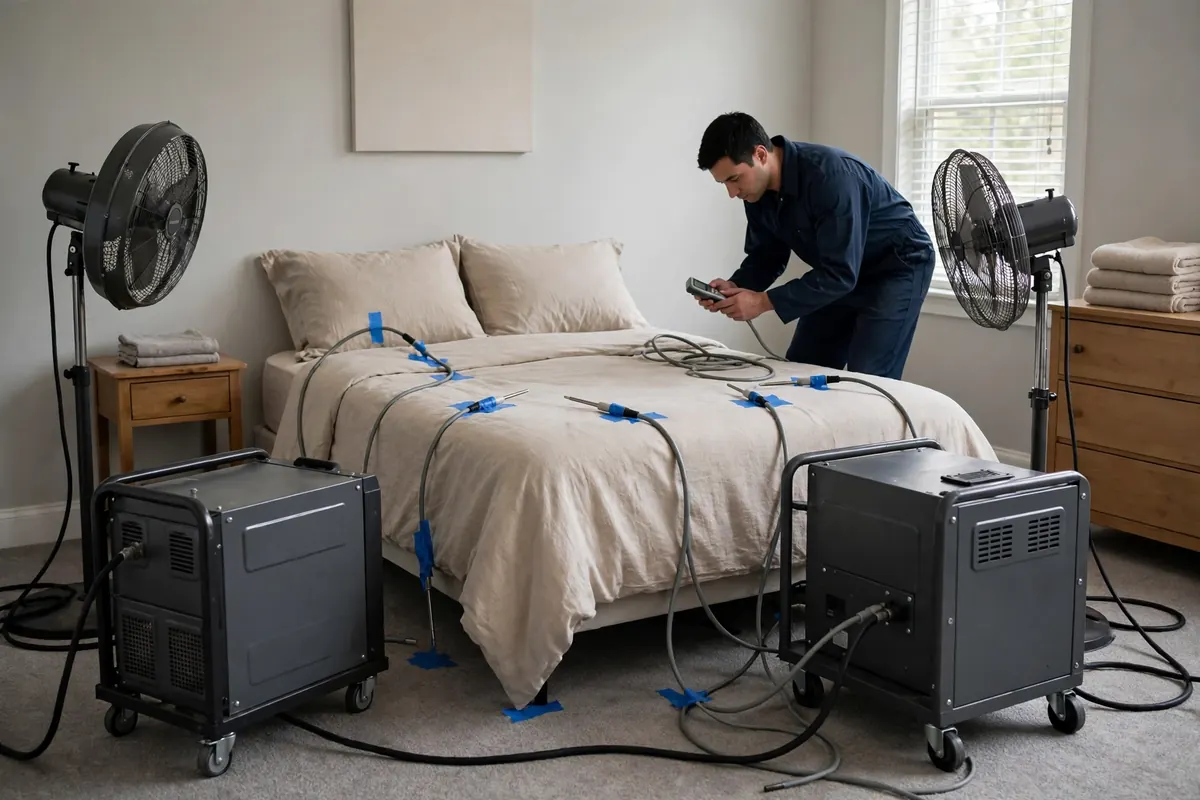
The tools behind the terms are just as plain: Interceptor traps under the bed legs catch climbers in both directions and show whether any remain. A passive monitor tucked at the head of the bed gives wandering bugs a harbourage that can be checked in seconds. A mattress encasement seals the bed itself, so nothing can hide in its seams or tufts. A box-spring encasement does the same for the base, whose torn fabric and staples hide colonies well. K9 scent detection can sweep a room in minutes, the dog's nose finding what eyes miss in clutter. Everything starts with a visual inspection — seams, screw holes, headboard backs and the joints of the frame. Thermal heat remediation raises the whole room to a lethal temperature and holds it there until every stage is dead.