What Should You Do In The First Hour After A Report?
Take the report seriously, move the guest well away from the room, and lock the room out of service exactly as it stands. Speed matters, but so does not disturbing the evidence.
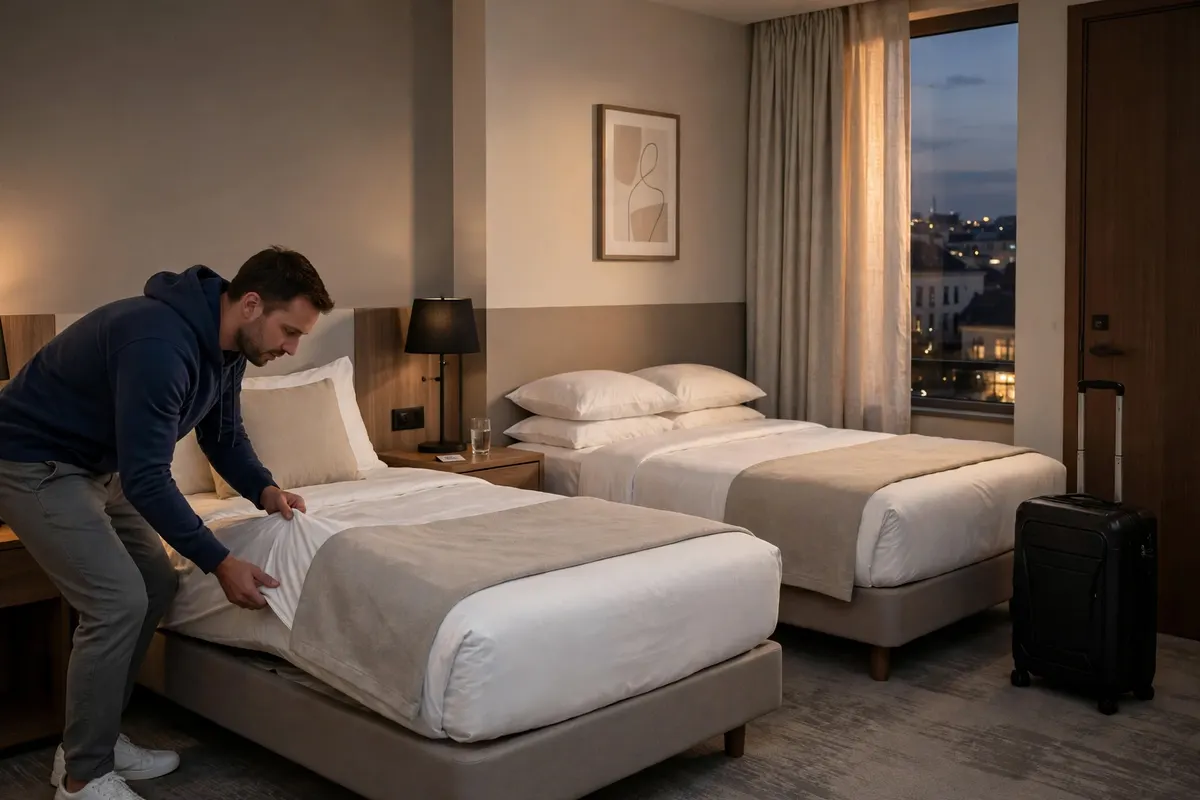
Thank the guest and move them to a room that does not share a wall with the reported one — moving them next door is the classic mistake, because bed bugs travel through wall voids and along pipe runs. Their luggage should be inspected before it settles into the new room, and ideally kept off the bed and floor in the meantime. Offer what your policy allows — a room move at minimum, laundry help for their clothing where you can — without arguing about whether the report is 'real' before anyone has looked.
Then close the reported room. Do not let housekeeping strip it: bedding dragged down a corridor, or a vacuumed mattress emptied into a general bin, is how a one-room problem seeds other rooms. Nobody sleeps there, nobody stores anything there, and nothing leaves it until an inspector has been in. The same disciplined first hour is what pros ask of properties using Bed Bug Treatment Austin, TX and Bed Bug Treatment Albany, NY — contain first, treat second.
How Do You Confirm It Is Actually Bed Bugs?
Only physical evidence confirms bed bugs. A professional inspection looks for live bugs, fecal spots, shed skins and eggs in the seams, frame and headboard — bites on a guest prove nothing either way.
The EPA is direct about this: bites on the skin are a poor indicator of a bed bug infestation. Guests react differently, some not at all, and bites from other causes look similar. What inspectors trust is what the bugs leave behind — flat, apple-seed-sized insects in mattress piping and bed frame cracks, tiny dark fecal spots that bleed into fabric like a marker dot, rusty stains from crushed bugs, and pale shed skins as nymphs grow. Photograph what is found, note the room and date, and keep the record with the incident file.
Where a visual inspection is inconclusive — a very early problem, a cluttered room — a K9 scent detection team can search the room and its neighbours in a fraction of the time, and interceptor traps or a passive monitor left in place can settle the question over the following days. What you must not do is spray first and inspect later: a fogger or room spray before inspection scatters bugs deeper and into adjoining rooms, and destroys the evidence the treatment plan depends on.
In hospitality, the report is never the problem. The delay is. A room locked down in the first hour is a treatment; a room argued about for a week is an infestation.
Which Other Rooms Need Checking?
At minimum, the rooms on both sides, the room above and the room below. Bed bugs move between units through wall voids, plumbing and electrical runs, and housekeeping routes.
A guest report usually means the bugs have been feeding for a while — people often do not react to the first bites, and a room can host a growing population through several stays before anyone complains. So the inspection should treat the reported room as the centre of a small map, not the whole map. Adjoining rooms get at least a visual check of beds, headboards and upholstered furniture, and any room with evidence joins the treatment plan.
This is exactly the pattern behind Bed Bug Help In Texas multi-unit cases: the visible room is where the guest happened to be, not necessarily where the population started. Catching the neighbouring rooms in the same visit is far cheaper than a second report, in a second room, a month later.
Need Bed Bug Treatment Help Near You?
One free call connects you with a local pro who can arrive in 30–60 minutes.
Call (800) 555-0100Free Call · Answered 24/7 · Local Pros Near You
What Should Happen To The Room Itself?
It stays closed and untouched until inspection, then it is treated by a professional — usually with heat or a targeted chemical program — and soft items are handled inside the room, not carried through the property.
How Will A Pro Treat A Hotel Or Rental Room?
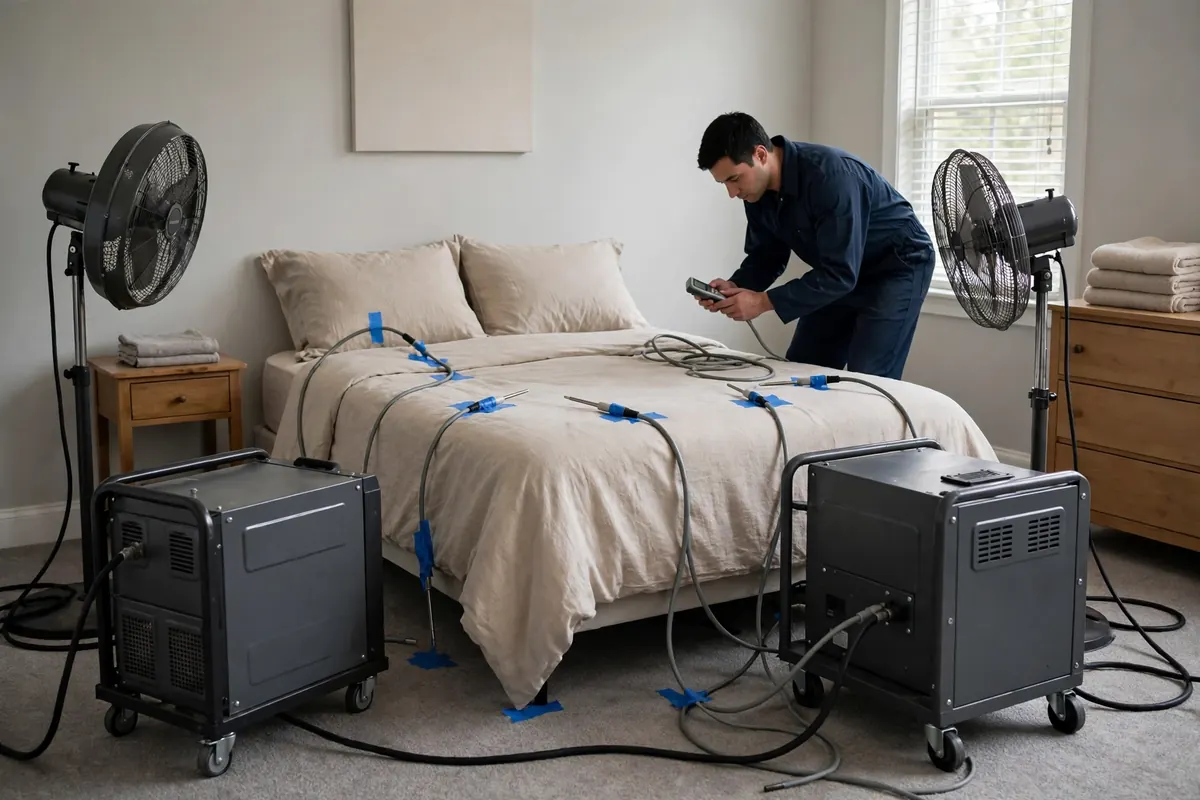
Most hospitality work combines methods: heat treatment for the room itself — it kills every life stage, eggs included, in one visit — with targeted chemical residual work, encasements and monitoring afterwards.
Heat is popular in hotels for a practical reason: a properly monitored thermal heat remediation brings the room back the same day, and it ends the egg problem that sprays leave behind, because bed bug eggs die at the same 113°F (45°C) thermal death point as adults. Chemical programs still have a place — residual products in seams, frame joints and baseboards keep intercepting bugs between visits — but they need follow-up visits timed to egg hatch, which is harder to schedule around bookings.
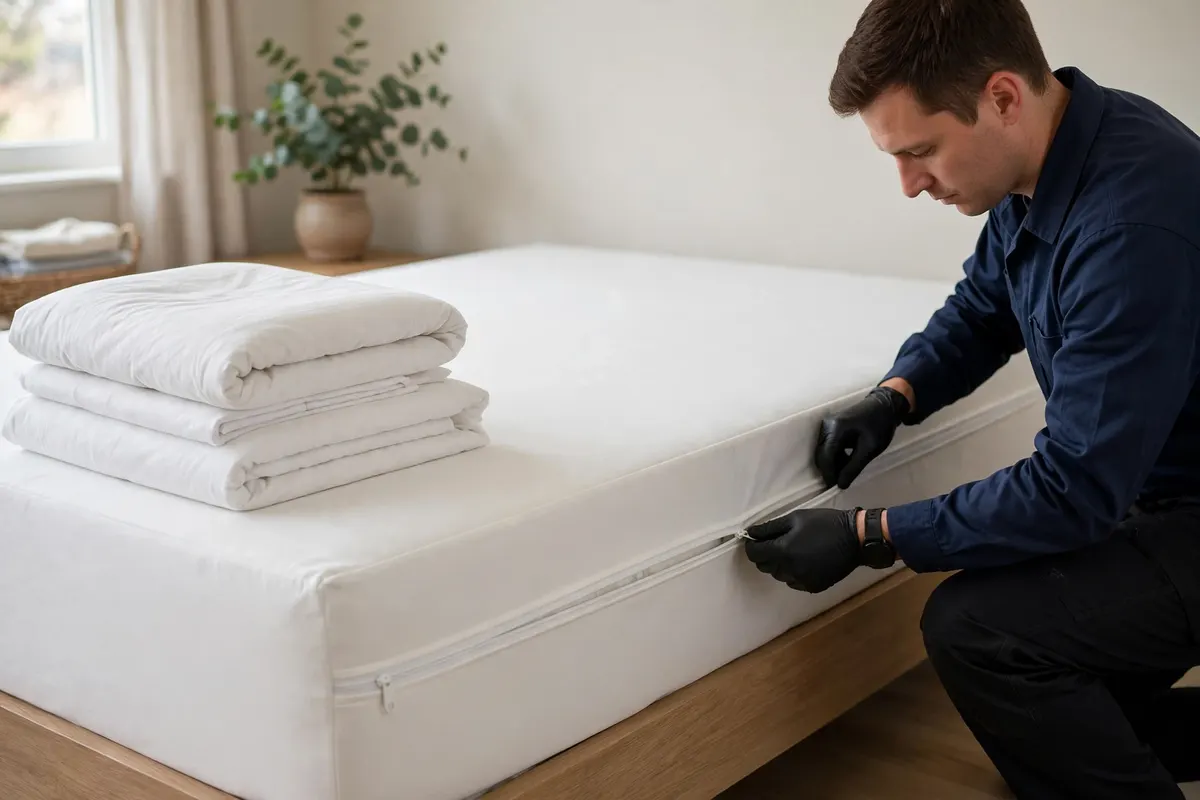
Either way, mattress and box-spring encasements go back on after treatment, interceptor traps go under the bed legs, and the room's file stays open until monitoring says it is over. A single treatment with no verification step is a hope, not a result — the standard a property near Bed Bug Treatment Altamonte Springs, FL is held to is the same as anywhere: evidence first, treatment second, proof afterwards.
When Can The Room Go Back Into Service?
After treatment is complete and monitoring shows no activity — interceptors empty, no new fecal spots or shed skins, and a follow-up inspection clear. Not simply because the treatment day has passed.
The temptation to reopen quickly is strongest exactly when it is most dangerous: straight after a chemical visit, while eggs that survived are still due to hatch at roughly a week to ten days. A sensible property keeps the room closed until the pro's verification step — a re-inspection, a monitor check, or a K9 sweep — says the room is clear, and only then returns it to inventory. For a vacation rental, that may mean blocking dates; explain it to yourself as insurance, because one more guest report costs far more than a few dark nights.
If the room was heat-treated, the timetable is shorter — heat leaves no unhatched eggs behind — but monitoring still applies, because the risk that remains is reintroduction from an adjoining room that was never checked.
How Is A Vacation Rental Different From A Hotel?
The biology is identical; the operation is harder. There is no front desk, cleaning is outsourced or rushed between guests, and the person who finds the evidence is often a cleaner on a tight turnaround.
Give your cleaners a one-page protocol: what the signs look like, what to photograph, and a hard rule — if you see it, stop, close the room and call, do not strip the bed. A cleaner who shakes bedding out and moves on can spread a problem through the whole property in one changeover. Keep spare encasements on site, log every report with the dates of the stays either side of it, and tell the incoming guest honestly if a treatment has had to move their booking; guests forgive a moved stay far more readily than a night with bed bugs.
Whichever kind of property you run, the chain is the same: report, contain, inspect, treat, verify. One free call connects you with a local pro who handles hospitality cases and can inspect the room — and its neighbours — before the next check-in.
Terms You Will Hear On The Call
Pros describe the same things this article has been circling, in their own shorthand. The species behind nearly every case is Cimex lectularius, the common bed bug. A bed bug nymph moults five times before it can breed, and it needs a blood meal at every stage. Pros call the colony's daytime hiding place a harborage — a seam, crack or void within reach of the bed. Rusty stains on bedding come from crushed, blood-fed bugs rolled on in the night.
And the equipment in that shorthand is standard: A mattress encasement seals the bed itself, so nothing can hide in its seams or tufts.