What Should You Do The Moment You Suspect Bed Bugs In A Dorm?
Report it to your housing office or resident director straight away — before you treat anything, move anything or sleep anywhere else. In university housing, the school arranges and coordinates treatment, and your report is what starts that clock.
While you wait, do the small things that help and none of the big things that spread. Photograph anything you find — a live bug, dark fecal spots along the mattress seams, pale shed skins near the headboard — and keep one specimen in a sealed container if you can. Leave your belongings where they are. The single most common way a one-room dorm problem becomes a three-room problem is a student carrying bedding and clothes down the hall within hours of finding the first bug.
If it is the middle of the night, the report can still be made — most housing offices run an emergency duty line, and a note through the maintenance portal with your photos creates the record. Students in dorms around Bed Bug Treatment Austin, TX and every other college town follow the same first step, because the building, not the bedroom, is the unit the response works on.
What Should You Definitely Not Do?
Do not fog the room, do not drag your mattress into the corridor, and do not move into a friend's room with your pillow and laundry bag. Each of those spreads the infestation further than the bugs would ever travel alone.
Foggers and bug bombs sit at the top of the list. They barely reach the harborages — the seams, piping and frame joints where bed bugs actually live — and their repellent effect pushes surviving bugs deeper into walls and neighbouring rooms. Many housing contracts ban them outright, which can leave the student who used one responsible for the consequences. The EPA's guidance is blunt: a fogger should never be the only method, and in a dorm it should not be a method at all.
Second, skip the midnight purge. Throwing soft furnishings out of a window, abandoning a mattress in a stairwell or giving away a suspect rug moves live bugs through shared spaces and into other students' rooms. Anything that does need to leave a room during treatment goes out sealed in plastic, labelled, and through the route the housing team sets.
How Do You Check A Dorm Room Properly?
Check the places bed bugs actually hide, and look for the physical evidence rather than relying on bites: live bugs in the seams, fecal spots, shed skins and rusty stains on bedding.
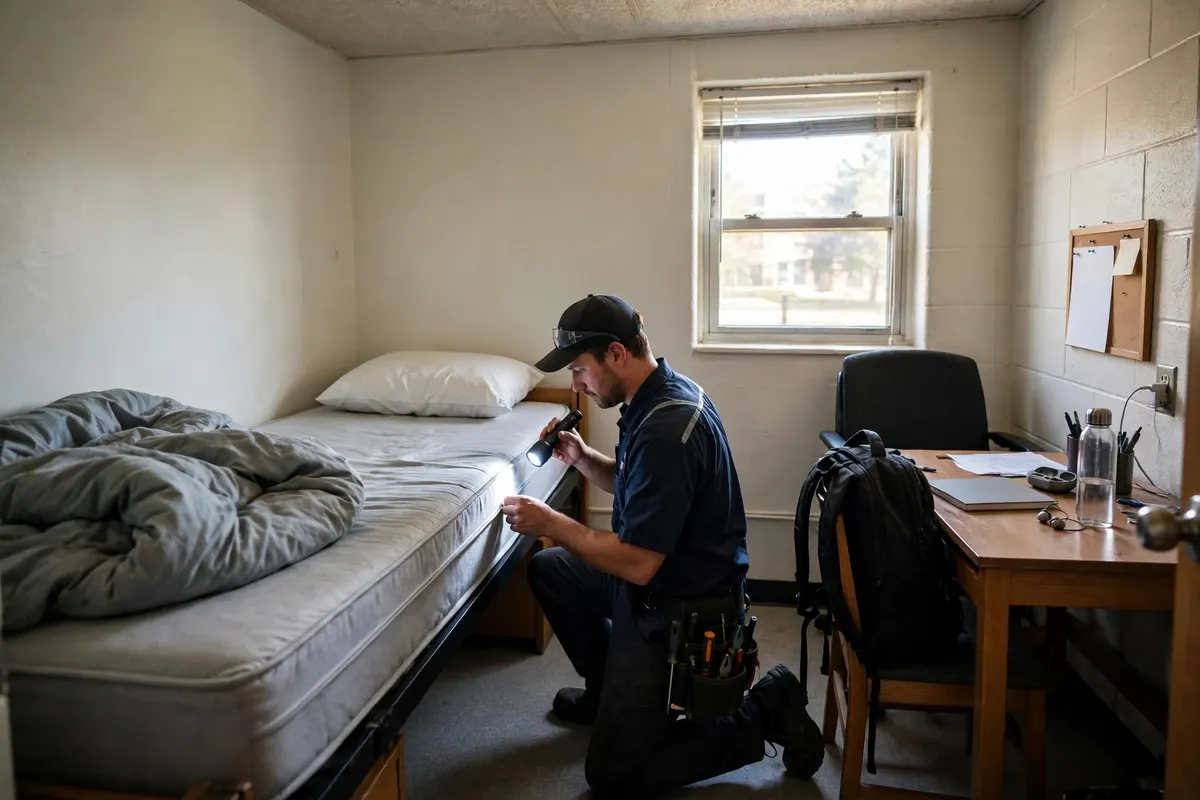
Work slowly with your phone torch. Start with the mattress seams and piping, then the box spring or bed base, the bed frame joints and the back of the headboard fixed to the wall. Look in the nightstand drawer joints and along the baseboards nearest the bed. Bed bugs are apple-seed sized, flat, oval and reddish-brown; their eggs are about 1mm and pale, glued into those same cracks.
Hold your verdict loosely either way. The EPA states directly that bites on skin are a poor indicator of an infestation — they mimic mosquito bites and rashes, and some people do not react at all. Rows of itchy bites with zero physical evidence, or clear evidence with no bites, are both common. That is why the check matters: it produces something a housing team and a pro can act on.
Need Bed Bug Treatment Help Near You?
One free call connects you with a local pro who can arrive in 30–60 minutes.
Call (800) 555-0100Free Call · Answered 24/7 · Local Pros Near You
Who Is Responsible — And Who Pays?
In most university housing, the institution is responsible for arranging professional treatment of an affected room — it is their building, their contractor and usually their cost. Your housing agreement is the document that settles it, so read the pest clause.
What the school will (rightly) expect from you is cooperation: prompt reporting, access on treatment days, and the preparation work — bagging laundry, clearing the floor and bed area, and being out of the room for the labelled re-entry interval after any application. Where a student imported an obvious source — say, an infested used sofa collected from a kerb — policies on costs can differ, which is another reason the agreement is worth ten minutes.
One part is never the student's job to arrange alone: neighbouring rooms. Bed bugs move through wall voids and along pipe runs in multi-unit housing, so the rooms either side, above and below normally need inspection too. Students in residences served by Bed Bug Treatment Albany, NY see the same building-wide pattern — the contractor treats a cluster, not a single mattress.
How Does Dorm Treatment Usually Run?
A pro inspects, then treats the room and any affected neighbours, usually with preparation by the student, a treatment visit, and follow-ups timed to egg hatch over the following weeks.
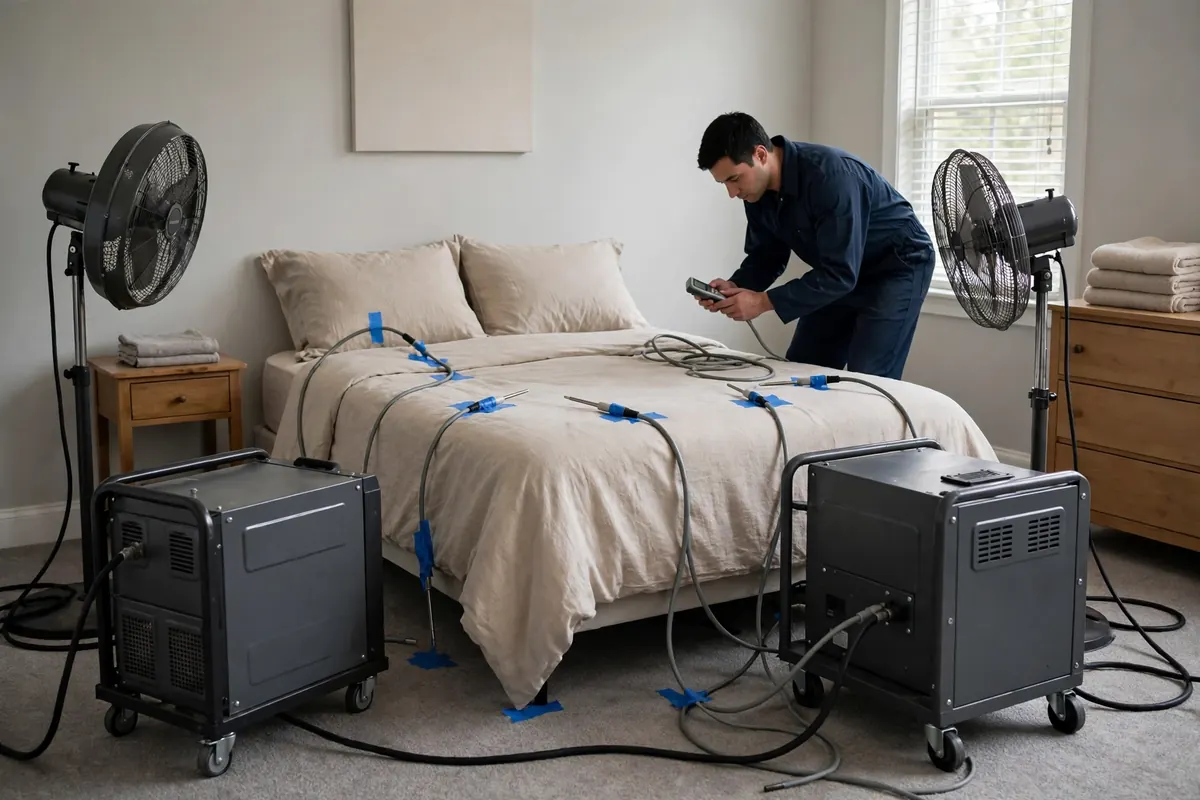
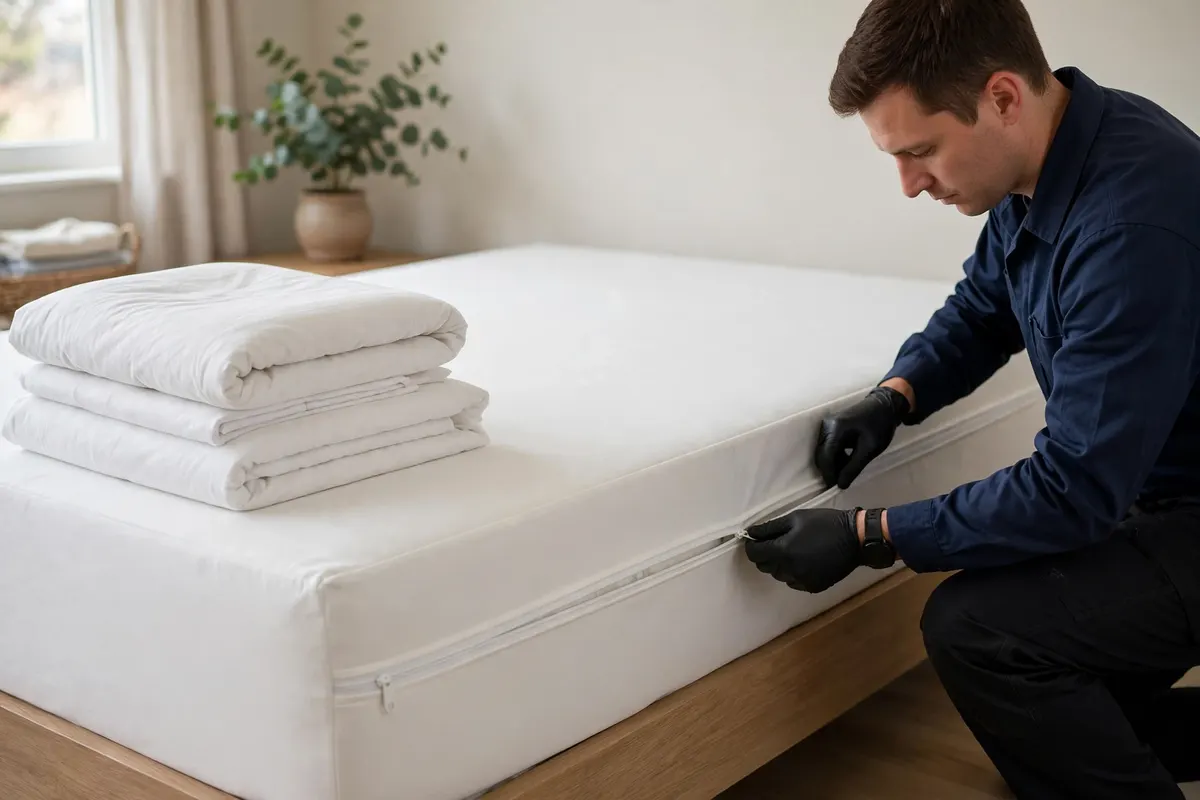
The details flex with what the inspection finds. A light, early room might get targeted chemical residual treatment in seams, frames and baseboards, plus a mattress encasement and box-spring encasement fitted and interceptor traps under the bed legs. A heavier room, or one where insecticide resistance is suspected, might get thermal heat remediation — a day of monitored heating that kills every life stage at once. Steam treatment and HEPA vacuuming handle seams and upholstered items in either plan.
Expect it to take more than one visit, and expect that to be normal rather than a failure. Bed bug eggs survive most sprays, so the follow-up visit is scheduled for the hatch, about a week to ten days later, when nymphs must feed and will cross the treated routes. Between visits, the interceptors are your early-warning system — check them, and report anything caught.
How Do You Keep Bed Bugs Out Of Your Room?
Treat luggage and shared spaces as the border crossings they are: keep your suitcase off the bed, run the hot dryer routine after every trip home, and think twice before adopting second-hand upholstered furniture.
Most dorm infestations arrive the way home infestations do — in luggage and overnight bags after travel, or in used furniture. The habits that block them are boring and effective: inspect any second-hand bed frame or sofa before it crosses your threshold, keep bags on the rack or in the bath while travelling rather than on the bed, and when you get back, send travel clothes straight through a hot wash and a high-heat dryer cycle.
Shared lounges and laundry rooms deserve the same calm attention. Do not leave laundry sitting on communal sofas, and do not borrow a hallmate's blanket during an active case in the building. None of this needs anxiety — bed bugs do not jump or fly, they walk and hitchhike, and both routes are slow enough for simple habits to beat.
In a dorm, bed bugs spread at carrying speed, not crawling speed. What students move matters more than what bugs do.
Parents: How Do You Stop Dorm Bugs Coming Home?
With a break-day protocol: sealed bags, a hot wash and a long high-heat dryer cycle before anything enters a bedroom, and luggage that stays in the garage, porch or bath until it has been checked.
Agree the routine before pickup day, especially if the dorm has had a case. Clothes come home in sealed plastic bags — not loose in the car boot — and go directly into the wash at the hottest setting the fabrics allow, followed by the dryer on high heat, which is lethal to every life stage. The suitcase itself gets inspected over a bath or outside, seams and pockets first, and sleeps in the garage until it is cleared.
Resist the rescue mission, too. Driving down with fresh bedding and driving back with the old bedding, cushions and a suspect rug is exactly how a dorm case becomes a family-home case in Bed Bug Treatment Alachua, FL or anywhere else. If something cannot be heat-treated or confidently inspected, it is cheaper to replace it than to treat a house. For the home-side picture, the national guidance in Bed Bug Help In Florida and the other state pages applies word for word.
The Words Pros Use For All Of This
Guides like this one translate as they go, but on a call you will hear the trade's own terms. The species behind nearly every case is Cimex lectularius, the common bed bug. A bed bug nymph moults five times before it can breed, and it needs a blood meal at every stage.
The kit those terms describe is simple: A passive monitor tucked at the head of the bed gives wandering bugs a harbourage that can be checked in seconds. K9 scent detection can sweep a room in minutes, the dog's nose finding what eyes miss in clutter. Everything starts with a visual inspection — seams, screw holes, headboard backs and the joints of the frame.