How Do Bed Bugs Get Into A Car?
Almost always as passengers. Bed bugs do not infest cars the way they infest bedrooms — they are carried in, in luggage and overnight bags, in boxes of belongings moved from an infested home, or in second-hand items riding in the boot.
Picture the typical routes. A suitcase spends three nights on a hotel floor, then rides home in your boot. A student is moved out of a dorm with a confirmed case, and everything they own travels in the family car. A bargain sofa is collected in a hatchback. Someone whose home is mid-treatment drives themselves and their laundry to a relative's house every day for a week. The CDC's account of how bed bugs spread is precisely this: they hitchhike in the seams and folds of bags and belongings.
A car then becomes a quiet waiting room. One or two bugs in a seat seam can survive there for a long time — bed bugs can live for months without a blood meal — and every future passenger, bag of shopping or overnight guest's luggage that shares the car becomes a possible onward ticket. That is why pros ask about the car during home cases around Bed Bug Treatment Arlington, TX instead of treating it as an afterthought. The same conversation happens on visits in Bed Bug Treatment Athens, TX — college move-outs and holiday road trips are the two calendars that fill cars with other people's luggage.
Where Do Bed Bugs Hide In A Vehicle?
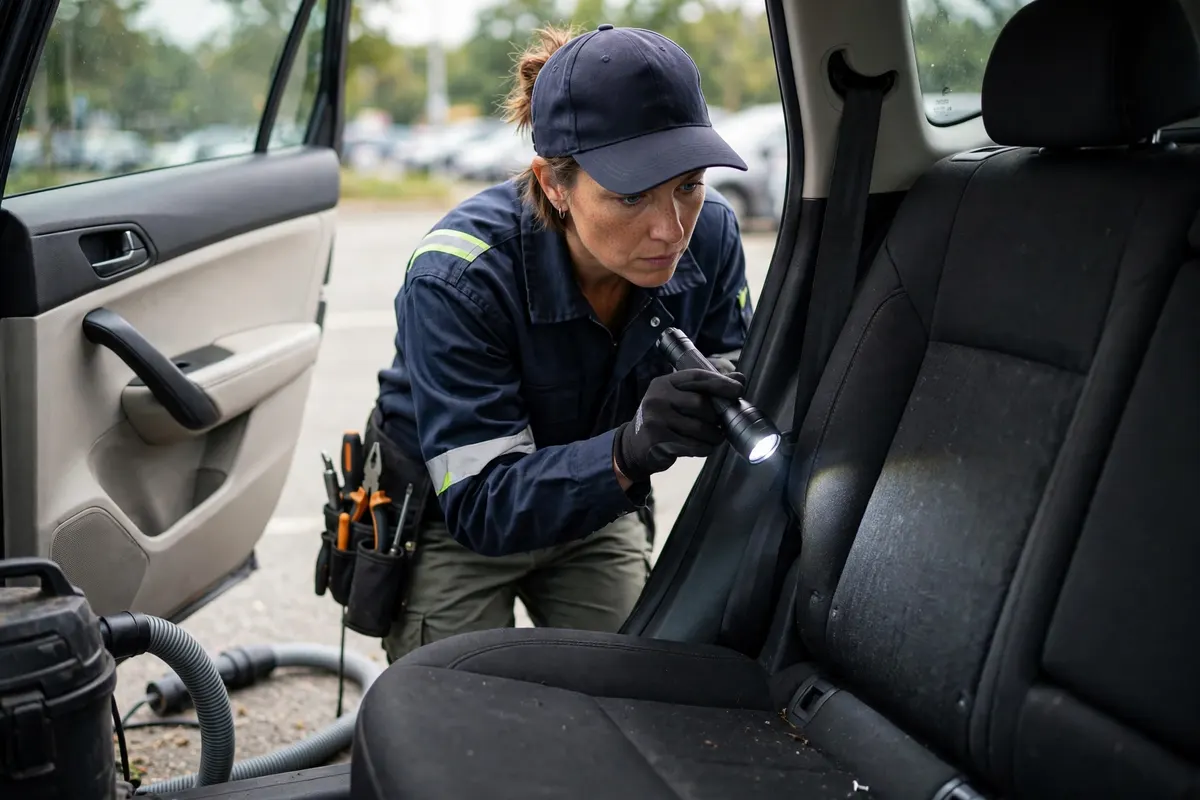
In the seams and structures nearest to where people and luggage sit: seat upholstery seams, seatbelt anchors and retractor slots, the carpet edges in the boot, and the folds and frames of child seats.
Work the way an inspector works. The driver's and front passenger seats get the closest attention, because they carry people — and, during a home infestation, people who may have bugs in their clothing. Check the stitching lines, the junction where seat back meets seat base, and the belt anchor points. Then the rear seats, which carry the luggage, the guests and the kids. Child seats deserve a full strip-down check: their padding, harness slots and hollow frames are excellent harborage, inches from a warm passenger.
The boot is the second front. Carpet edges, the spare-wheel well and any stored blankets, gym bags or tools with fabric parts can shelter bugs for months. The signs to look for are the indoor signs, scaled down: tiny dark fecal spots on seams, pale shed skins in crevices, rusty stains where a bug was crushed — and occasionally a live bug, flat, oval and reddish-brown, about apple-seed size.
Can A Hot Parked Car Kill Them By Itself?
Not reliably. A closed car in strong sun can push cabin air temperature well past the thermal death point — but bed bugs die by body temperature, not air temperature on the dashboard, and the insulated places they hide are the last to heat and the fastest to cool.
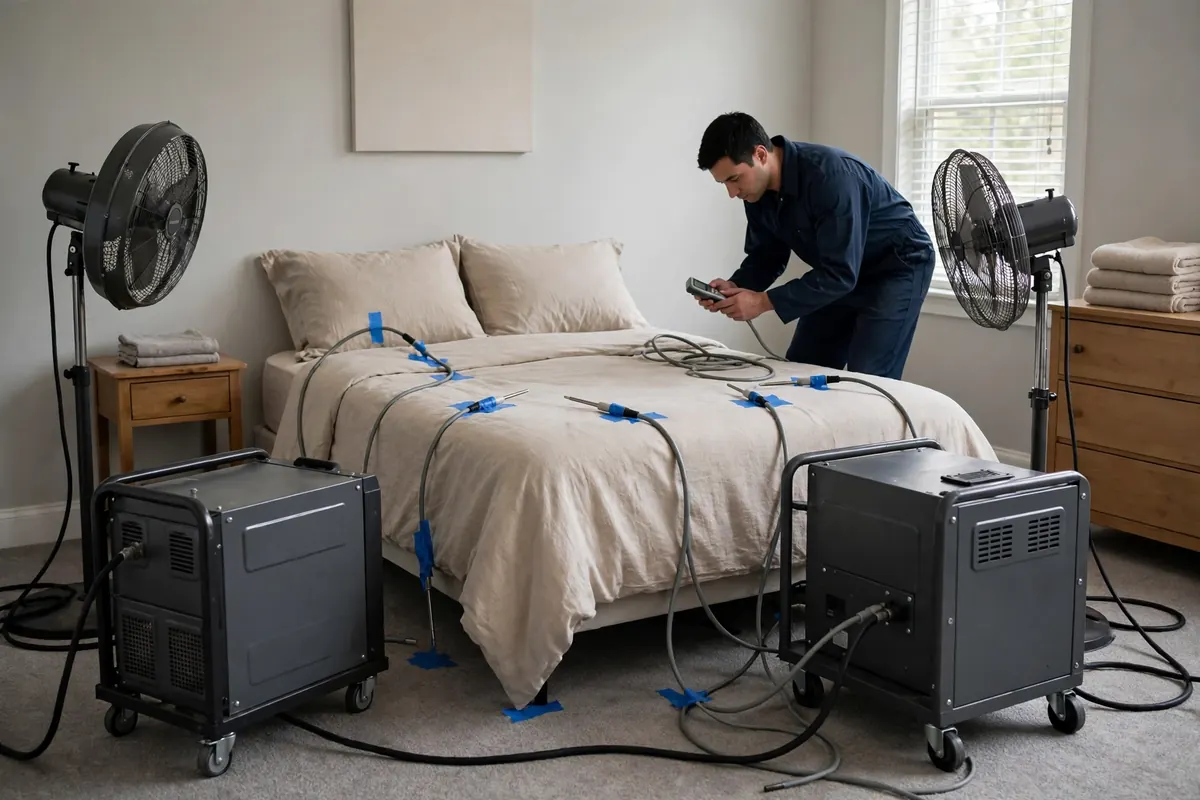
Think about where the bugs are sitting: inside seat padding, under carpet, inside a belt retractor housing. Those microclimates lag far behind the cabin peak, and a cloud, a shaded hour or a cooler day breaks the hold long before every hiding place reaches lethal temperature for long enough. Professional thermal heat remediation works because sensors are placed in the cold spots and the heat is held until those sensors prove the job — a parked car gives you neither measurement nor any promise.
Leaving the car in the sun is not harmful as a supplement, and in Florida and Texas summers it very likely kills exposed bugs. But 'very likely' is not a clearance standard, and it should never be the whole plan — especially when the same car keeps visiting the home being treated, the pattern pros see from Bed Bug Treatment Arcadia, FL to anywhere else with a driveway.
Need Bed Bug Treatment Help Near You?
One free call connects you with a local pro who can arrive in 30–60 minutes.
Call (800) 555-0100Free Call · Answered 24/7 · Local Pros Near You
How Does A Pro Treat A Car?
Methodically, and with the same logic as a room: physical removal first, targeted killing second, verification after. A typical vehicle job combines a detailed HEPA vacuum of every seam, steam treatment to upholstery and crevices, and labelled products only where vehicle use permits.
Steam is the vehicle's strongest tool — it kills on contact, reaches into seams and belt slots, and leaves nothing behind in a space you sit in daily. The vacuum pass with a crevice tool physically removes live bugs, eggs and debris from the stitching and carpet edges before any product is considered. Where a residual is used at all, it is targeted into cracks and voids per its label, never broadcast across seats. Some pros add monitored heating for the vehicle as a contained space; the constant is measurement and a follow-up check, not a single hopeful blast.
Child seats, boot contents and anything removable are handled outside the car — inspected, vacuumed, steamed or hot-laundered where the item allows, and kept out until the car is cleared. Expect the pro to ask you to arrive with the car emptied of clutter: every stored item is both a hiding place and something that has to be cleared individually.
What Should You Never Do In A Car?
Never set off a fogger or bug bomb in a car. It is the one intervention that is genuinely dangerous in a sealed vehicle cabin, and it does not work anyway.
A total-release fogger fills an enclosed space with flammable aerosol and insecticide that settles on every surface you touch — seats, wheel, child seat — while barely penetrating the seams the bugs are inside. Extension and EPA guidance against foggers as a bed bug method applies indoors; in a cabin of two cubic metres it applies with emphasis. The surviving bugs simply retreat deeper into the trim.
Almost as unhelpful: spraying household insecticide across the seats. It is unlikely to be labelled for that use, it can stain and damage upholstery, it leaves residues where skin and children's hands rest — and a repellent spray is a reliable way to push bugs from the seats into the boot lining and door voids, enlarging the map.
How Do You Stop It Happening Again?
Run the car like a clean border crossing while any connected infestation is active: luggage in the boot rather than on seats, suspect items sealed in bins, and a seams check after every trip that involved an infested or unknown sleeping place.
After travel, the same luggage routine that protects the house protects the car: bags stay out of bedrooms, clothes go through the hot wash and high-heat dryer, and the case itself is inspected before it is stored. If your home is being treated, tell the pro the car exists — crews plan for vehicles routinely in cases from Bed Bug Help In Texas to New York, and a car checked on visit one is a loose end closed, not discovered on visit three.
And hold the long view. A car with one or two hitchhikers is a small, solvable problem on the day it is spotted. It becomes expensive only when it spends months ferrying bugs between the two places you most need clear — which is a scheduling failure, not a catastrophe.
Terms You Will Hear On The Call
Pros describe the same things this article has been circling, in their own shorthand. The species behind nearly every case is Cimex lectularius, the common bed bug. A bed bug egg is a millimetre long, pearly white, and glued into a seam or crack where sprays rarely reach. A bed bug nymph moults five times before it can breed, and it needs a blood meal at every stage. Rusty stains on bedding come from crushed, blood-fed bugs rolled on in the night.
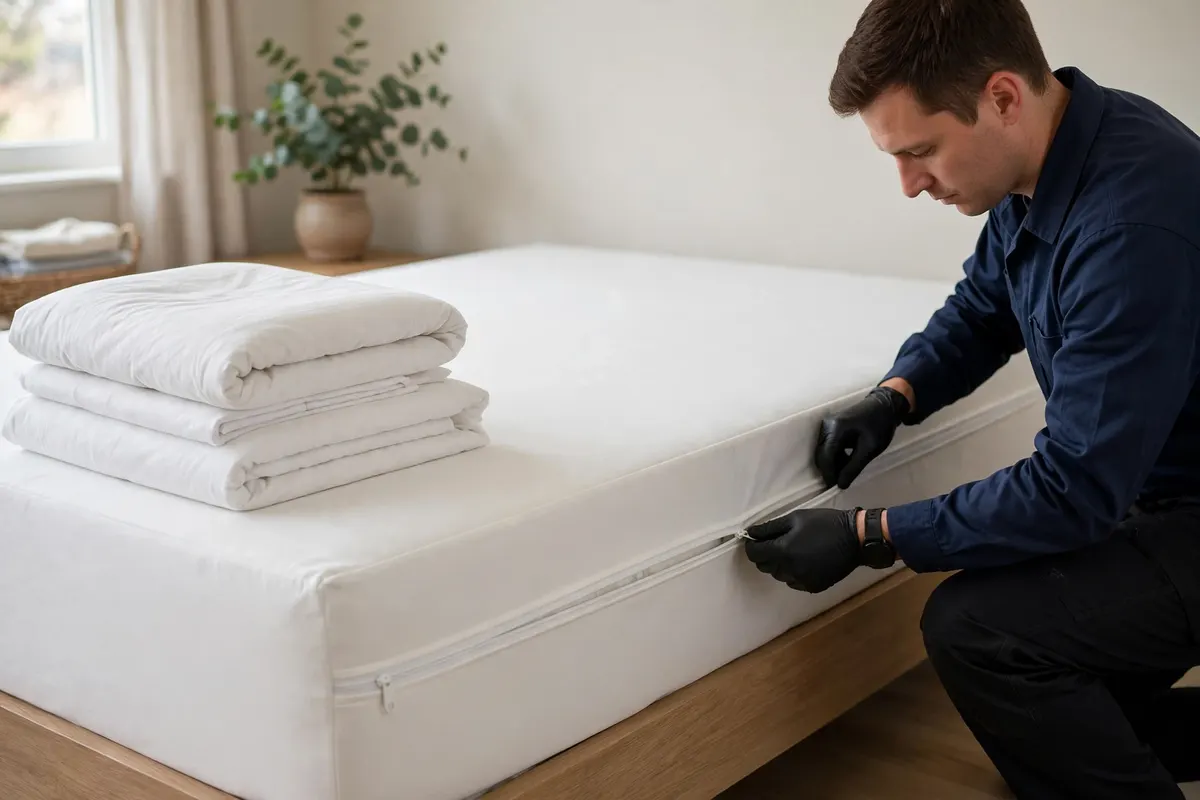
And the equipment in that shorthand is standard: Interceptor traps under the bed legs catch climbers in both directions and show whether any remain. A passive monitor tucked at the head of the bed gives wandering bugs a harbourage that can be checked in seconds. A mattress encasement seals the bed itself, so nothing can hide in its seams or tufts. A box-spring encasement does the same for the base, whose torn fabric and staples hide colonies well. K9 scent detection can sweep a room in minutes, the dog's nose finding what eyes miss in clutter. Everything starts with a visual inspection — seams, screw holes, headboard backs and the joints of the frame.
The car is rarely the source of an infestation. It is the bridge — and bridges are where you stop things travelling.