Can You Really Carry Bed Bugs Home From Work Or School?
Yes, but rarely, and almost always on belongings — a bag, coat or scarf that spent the day resting against infested upholstery. Bed bugs are hitchhikers: they do not live on people or pets, they hide near where people sit still for long periods and climb into seams and folds that travel.
Public-health guidance is consistent on the mechanism: the risk is not the building being 'contaminated', it is an item spending hours in contact with a harborage — the seam of an office sofa, a cushion in a reading corner, a coat pile — and then coming home to rest beside your bed. That is a narrow, manageable route, and most people exposed at work or school never carry a single bug home.
Context helps calm the maths: bed bugs need a blood meal to grow and reproduce, and a workplace with no sleeping hosts rarely sustains a large population. Findings in offices and schools are usually a handful of hitchhikers from someone's home infestation — which is also why the response focuses on the item and the spot, not on fumigating a life.
Where Do Bed Bugs Hide In An Office Or Classroom?
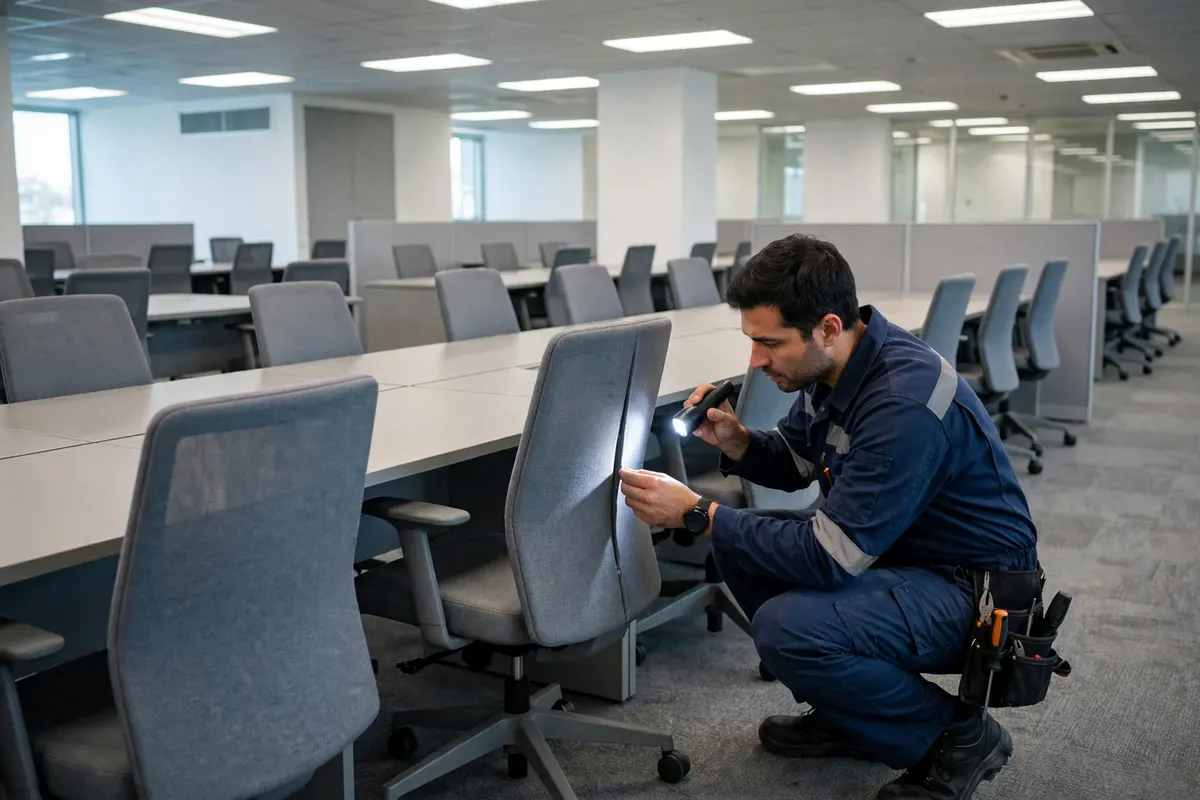
Anywhere people sit or rest still for a long time: upholstered chairs and sofas, staff-room couches, cushions and soft seating in classrooms, coat-and-bag storage areas, and the seams of shared seating in waiting areas. Hard desks, tables and floors are poor hiding places and rarely involved.
A proper inspection of a workplace or classroom is mostly an inspection of soft furniture. Seams, piping, zips and the underside of cushions are where a pro looks, along with the joints of bag storage. If you are checking your own child's cubby or your desk chair, those are the spots — you are looking for the same physical signs as at home: a live bug, rusty spots, tiny dark marks or shed skins.
One caution from the EPA applies double at work: bites are a poor indicator. A colleague's itchy arm is not evidence of an office infestation, and treating a building on bites alone wastes everyone's money.
What Habits Protect Your Home?
Keep your bag off upholstery, store coats and bags on hooks rather than in piles, and make the front door your checkpoint: a thirty-second seam check of the bag that travelled, and anything soft and suspect goes into a hot dryer cycle — 30 minutes on high heat kills every life stage.
You do not need to change clothes in the garage or treat your family like a biohazard. Households that get through a school or workplace incident without a home problem almost always did three ordinary things: belongings stored off soft furniture, one inspection habit at the door, and the dryer used early and without drama.
If a specific item is genuinely suspect — it sat all week on an infested sofa — seal it in a bag at the door, dryer-treat what can take heat, and isolate the rest in the sealed bag until you can deal with it. Do not carry it through the home to the bedroom 'for later'.
Need Bed Bug Treatment Help Near You?
One free call connects you with a local pro who can arrive in 30–60 minutes.
Call (800) 555-0100Free Call · Answered 24/7 · Local Pros Near You
What Should Happen When Bugs Are Found At Work Or School?
Quietly and factually. Tell facilities or the school office what was found and where — a photograph helps enormously. A proper response is targeted: inspection of the affected seating and storage, treatment of the spots involved, and monitoring. Whole-building panic, fogging and binning everyone's belongings are not part of a competent plan.
Employers and schools sometimes hesitate over reputation, but bed bugs carry no hygiene verdict — the CDC notes they turn up in clean and dirty places alike, arriving with luggage and furniture. The reputational risk runs the other way: a problem whispered about for weeks while nothing is inspected.
If your workplace brings in a pest company, ask the same two questions you would at home: what is the plan for the eggs, and when is the follow-up check? Offices and classrooms are re-checked on the same egg-hatch logic as bedrooms.
What If It Is Your Child's School?
Schools usually ask that a child with an active home infestation keeps bags and coats checked and, during treatment at home, that soft items are dryer-treated before coming in — reasonable, low-drama measures. Children are not sent home for bed bugs in most districts, because the bugs are not living on the child. Keep the school's letter, follow its checklist, and treat your own home promptly: the classroom problem almost always started as someone's home problem.
Do You Need To Shower And Change When You Get Home?
No — bed bugs do not live on bodies or clothing being worn, the way lice or fleas do. A shower does nothing a hook and a dryer do not do better, because the risk rides on the bag and coat, not on you. Change out of work clothes if it helps you relax, but put the effort into the items.
The honest exception is peace of mind: many people feel better with a door routine — shoes off, bag checked and hung in the hall, work clothes into the wash basket rather than onto the bed. As long as the routine stays proportionate, keep it. The goal is a habit you will actually maintain for the few weeks it matters.
What you should not do is start sleeping elsewhere, laundering the whole house nightly, or treating your own spotless home 'just in case' with sprays. Unnecessary pesticide use is the main health risk in most bed bug stories — the bugs themselves are not known to spread disease.
When Should You Get Your Own Home Inspected?
When there is something to find at home: live bugs in your own seams, rusty stains, dark spots or shed skins — the same EPA signs as anywhere. A workplace incident alone, with no signs at home, calls for habits, not treatment. Treating a home with no evidence wastes money and can scatter a problem that is not there.
Do a calm, thorough check of your bed, your children's beds and the sofa, in daylight, seams first. If the check is clean, set interceptor traps under the bed legs and look again in a week — traps turn worry into evidence. If you find the physical signs, that is the moment for a professional inspection.
Start with our guide to the first night if the signs are unmistakable; if the exposure is at your rental and the signs are at home, our landlord-and-tenant guide explains how responsibility usually works.
For a workplace or a school, the first call is the same as at home — start from Bed Bug Treatment Albany, NY or Bed Bug Treatment Austin, TX, and facilities teams can read the state position on our Bed Bug Help In Florida page.
A Short Field Glossary
A few terms run through every inspection report and treatment plan. The species behind nearly every case is Cimex lectularius, the common bed bug. A bed bug egg is a millimetre long, pearly white, and glued into a seam or crack where sprays rarely reach. A bed bug nymph moults five times before it can breed, and it needs a blood meal at every stage. Fecal spots, tiny black dots of digested blood, gather on the seams and frame where the colony rests. Rusty stains on bedding come from crushed, blood-fed bugs rolled on in the night.
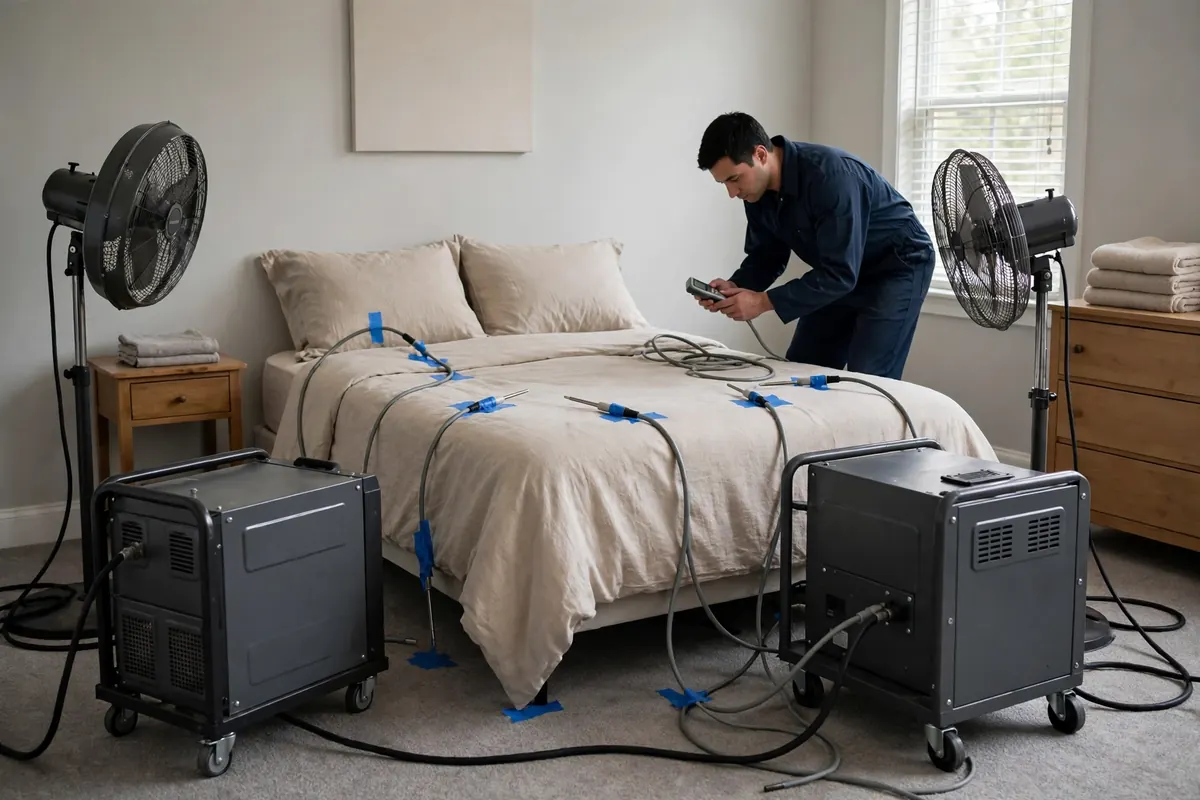
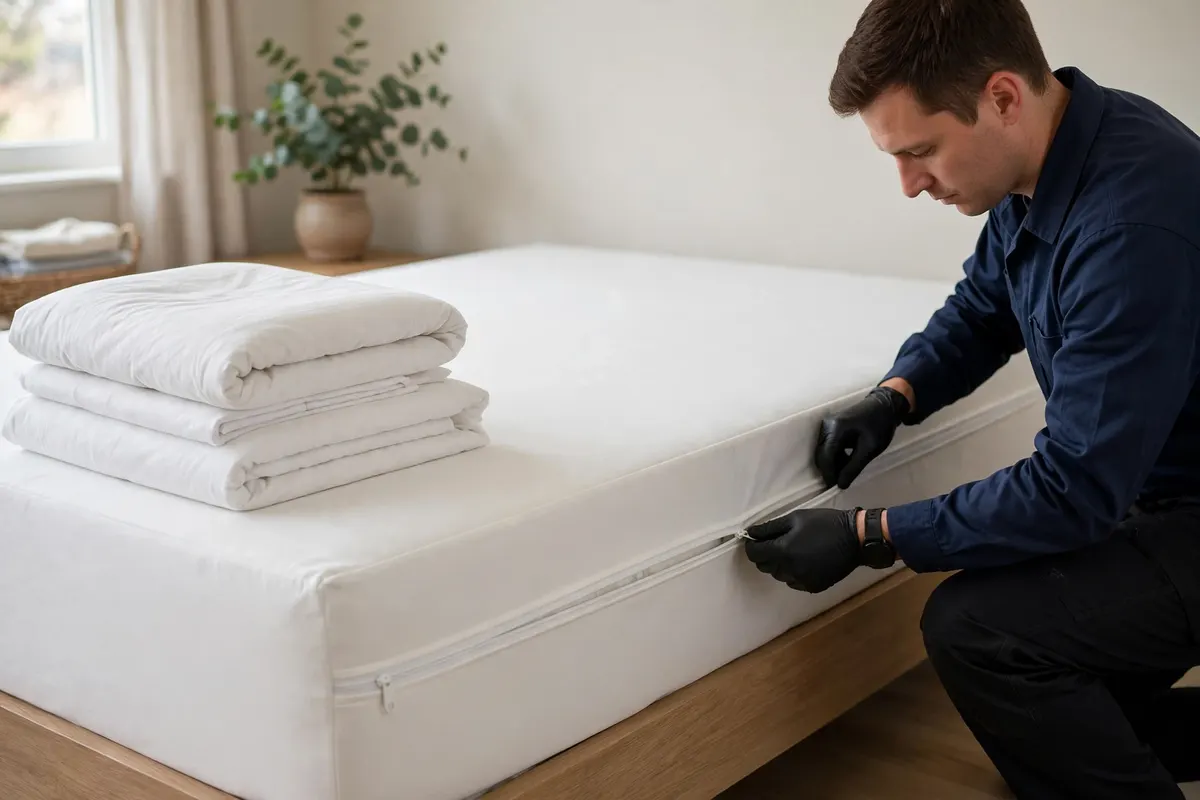
The tools behind the terms are just as plain: A passive monitor tucked at the head of the bed gives wandering bugs a harbourage that can be checked in seconds. A mattress encasement seals the bed itself, so nothing can hide in its seams or tufts. A box-spring encasement does the same for the base, whose torn fabric and staples hide colonies well. K9 scent detection can sweep a room in minutes, the dog's nose finding what eyes miss in clutter. Everything starts with a visual inspection — seams, screw holes, headboard backs and the joints of the frame. Thermal heat remediation raises the whole room to a lethal temperature and holds it there until every stage is dead.
Bed bugs travel on things, not on people. Guard the bag, the coat and the front door, and a workplace problem stays a workplace problem.