Why Do Bed Bugs Wreck Your Sleep So Completely?
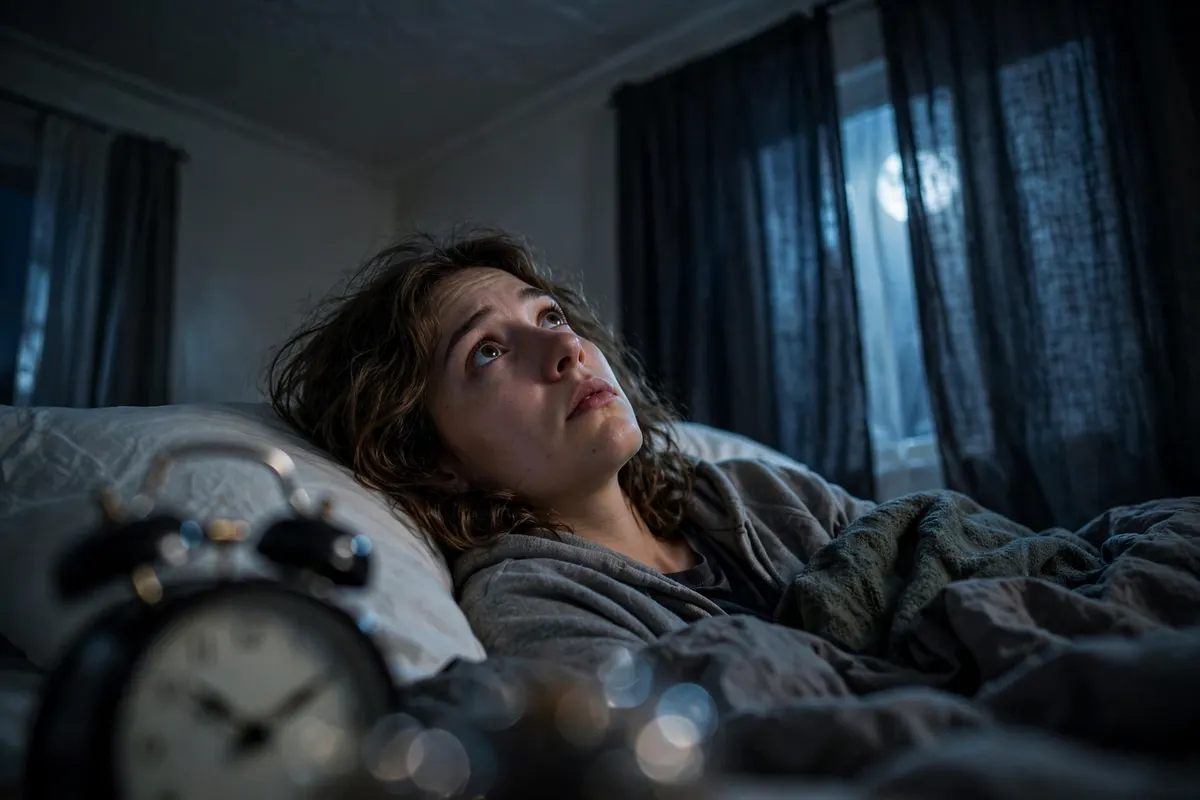
Because the threat lives exactly where you are meant to switch off. Bed bugs feed at night, hide in the bed itself, and are hard to see — so the brain keeps watch. Add itching, worry about the children, and embarrassment, and light, broken sleep is the predictable result.
Public-health researchers who interview affected households hear the same pattern again and again: people wake repeatedly, scan the bedding with a phone torch, and feel their skin crawl at every stray sensation. Many describe dreading bedtime itself. None of that is an overreaction — it is a normal stress response to an intruder in the one place you cannot avoid.
It also is not a verdict on your home. The CDC is clear that bed bugs are hitchhikers found in spotless and cluttered homes alike, spread by travel and moved furniture. Shame keeps people silent and awake; the facts are a better companion at 3 a.m.
How Long Does The Sleepless Stretch Usually Last?
For most people it tracks the treatment, not the calendar: worst between discovery and the first treatment, easing as traps come up empty and bites stop appearing, and largely gone once a pro confirms the activity has ended. Chemical programs take weeks by design, and sleep usually improves in steps with them.
Knowing the shape of the process helps. Eggs hatch over days, follow-up visits are timed to that hatch, and a few live bugs can still appear early in a program without meaning it failed — our guide to still seeing bed bugs after treatment explains what is normal and what is not. Uncertainty is the enemy of sleep; a timeline you understand is half a sedative.
If weeks pass with no improvement in the infestation — rising trap counts, new rooms affected — the right move is calling the pro back, not lying awake longer. And if the bugs are confirmed gone but your sleep and mood stay poor, treat that as its own problem and talk to your doctor about it.
What Proof Of Progress Can You Give Yourself?
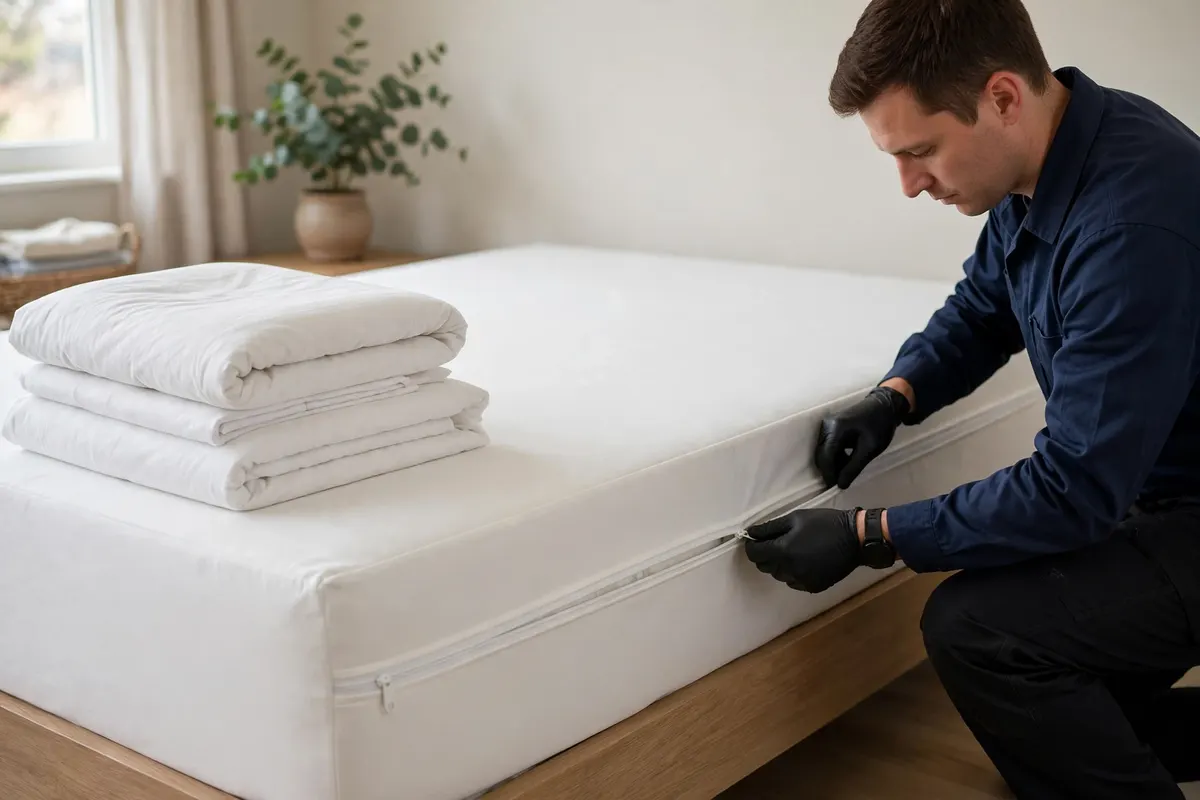
Visible, countable evidence. Interceptor traps under the bed legs turn 'I think it is working' into numbers. Encasements remove the mattress as a hiding place and make every inspection take seconds. A short written log — date, trap counts, new bites — replaces 3 a.m. guessing with a record.
Check the traps once a week, on a set day, in daylight. Write the numbers down. A falling count is the single most reassuring artefact of a treatment program, and a rising one is useful information for your pro — either way the log wins over memory, which stress edits badly.
Keep the bed an island while the program runs: pulled slightly from the wall, bedding tucked off the floor, traps in place. Every element you can see doing its job is one less thing your mind has to patrol at night.
Need Bed Bug Treatment Help Near You?
One free call connects you with a local pro who can arrive in 30–60 minutes.
Call (800) 555-0100Free Call · Answered 24/7 · Local Pros Near You
What Night Routine Actually Helps?
A short, fixed one. Give checking a slot — ten minutes with the torch before bed, then the torch goes away. Shower or change into sleep clothes dried on high heat, keep the room cool and dark, and leave the phone out of the bed. Routine tells your brain the watch is over.
The checking slot matters because unbounded checking is what fragments the night. If you wake at 3 a.m., a dim light and a drink of water beat a full seam inspection: you already know the traps will tell you the truth on Saturday. Wind-down habits that worked before the infestation — reading, a podcast, white noise — are worth deliberately restoring.
Go easy on caffeine after midday and on long daytime naps, however tempting after a broken night; both make the next night shallower. Regular wake time, even after a bad night, resets sleep faster than lie-ins do.
How Do You Help Children Through It?
With calm facts and the same routine. Children take their cues from the adults: a matter-of-fact explanation — small bugs that bite, a specialist is fixing it, here is your job (keep your bed things on your bed) — prevents both fear and the spread that comes from sleepovers and swapped bedding.
Keep their sleep arrangements unchanged where you can; moving children between rooms spreads risk and unsettles them more than the original bed does. School bags and sleepover kits should stay out of the affected rooms, and anything that travels should go through a hot dryer cycle first.
If a child is very distressed or their sleep falls apart for more than a couple of weeks, mention it to their doctor or school nurse. That is ordinary healthcare, and it is what those services are for.
When Should Worry Prompt A Different Kind Of Call?
When it stops tracking the bugs. If sleeplessness, low mood or constant alertness continue for weeks after the infestation is confirmed over — or if they are stopping you working, eating or coping day to day at any point — talk to your own doctor. That is not a bed bug question anymore, and it deserves its own support.
We connect callers with pest control pros, and this page is practical guidance, not medical advice. Doctors and sleep services deal with stress-related insomnia every day, including after infestations; there is no prize for white-knuckling it, and effective help for sleep problems exists.
The same goes for money stress. If treatment costs are part of the spiral, ask the pro about the plan in stages — inspection first, the highest-traffic rooms prioritised — rather than lying awake over the worst-case version of the bill.
You do not have to feel calm about bed bugs. You only need a plan you trust, proof it is working, and a time of night when checking is finished.
What Does 'Back To Normal' Look Like?
Gradual, then sudden. Trap counts hit zero and stay there, the follow-up inspection confirms no activity, and one night you realise you slept through. Most households keep the encasements and interceptors for months afterwards — cheap insurance that doubles as peace of mind.
Keep the travel habits that prevent a repeat: luggage checked and heat-dried after trips, second-hand furniture inspected before it comes in. Prevention routines are the long-term cure for the anxiety as much as for the bugs — they turn 'it could happen again' into 'I know what I do now'.
And if tonight is night one for you — you have just found them and sleep feels impossible — start with our first-night guide. It was written for exactly this hour.
You do not have to sit with it alone while you decide: Bed Bug Treatment Austin, TX, Bed Bug Treatment Albany, NY and Bed Bug Treatment Apollo Beach, FL all start with one free call, day or night.
The Words Pros Use For All Of This
Guides like this one translate as they go, but on a call you will hear the trade's own terms. The species behind nearly every case is Cimex lectularius, the common bed bug. A bed bug egg is a millimetre long, pearly white, and glued into a seam or crack where sprays rarely reach. A bed bug nymph moults five times before it can breed, and it needs a blood meal at every stage. Pros call the colony's daytime hiding place a harborage — a seam, crack or void within reach of the bed. Fecal spots, tiny black dots of digested blood, gather on the seams and frame where the colony rests. Shed skins (exuviae) are the papery shells left behind at each moult, and they collect beside the seams where the colony rests. Rusty stains on bedding come from crushed, blood-fed bugs rolled on in the night.
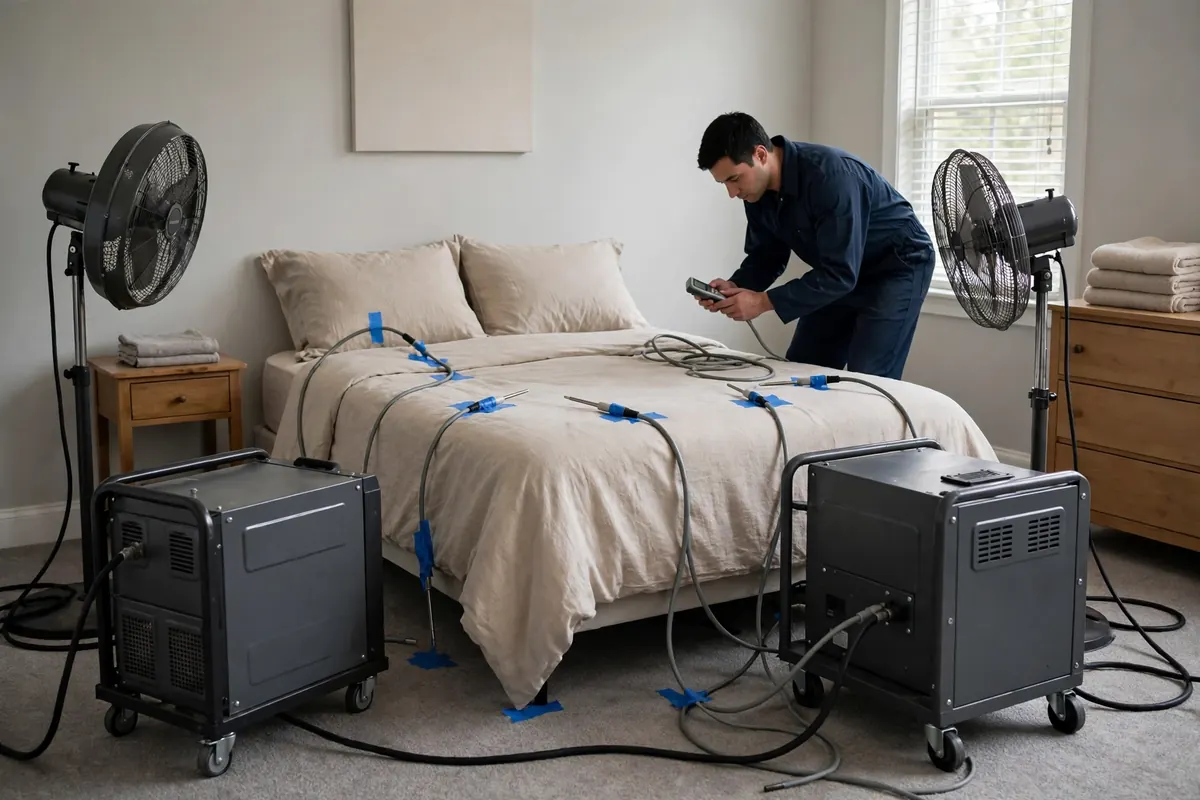
The kit those terms describe is simple: A passive monitor tucked at the head of the bed gives wandering bugs a harbourage that can be checked in seconds. A mattress encasement seals the bed itself, so nothing can hide in its seams or tufts. A box-spring encasement does the same for the base, whose torn fabric and staples hide colonies well. K9 scent detection can sweep a room in minutes, the dog's nose finding what eyes miss in clutter. Everything starts with a visual inspection — seams, screw holes, headboard backs and the joints of the frame. Thermal heat remediation raises the whole room to a lethal temperature and holds it there until every stage is dead.