What Is A Bed Bug Interceptor Trap?
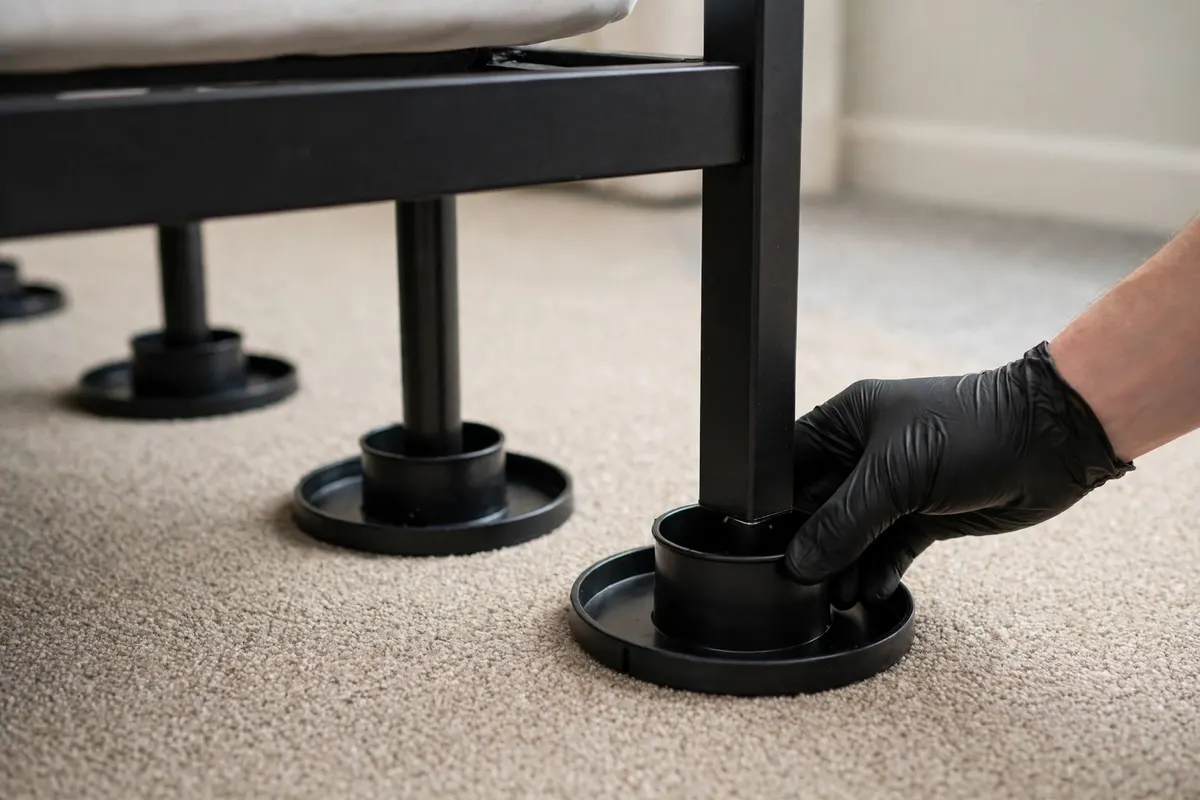
An interceptor is a shallow pitfall cup fitted under each bed leg. Bed bugs climbing toward the bed fall into its smooth-walled moat and cannot climb back out — so the trap both blocks the route and records the traffic.
The design is elegantly simple: an inner cup the bed leg stands in, ringed by an outer well whose walls are too smooth and steep for a bed bug's claws to grip. A bug travelling from the room to the bed — or from the bed outward — crosses that well and is caught in it, alive, identifiable and countable. No bait, no power, no chemistry: the bed's occupants are the lure, which is exactly what makes the device honest. It samples the real traffic between the harborage and the host.
That dual role is why pros fit them during treatment and leave them long after. As barriers they help isolate the bed — combined with pulling the bed away from the wall and keeping bedding off the floor, they make the bed an island bugs cannot reach undetected. As monitors they answer the question every other method leaves hanging, in homes under Bed Bug Treatment Austin, TX and everywhere else: is anything still moving?
They are also, quietly, a test of honesty in the trade. A treatment company confident in its work should welcome interceptors staying in place, because the traps publish the result either way. If a quote you receive treats monitoring as an optional extra — or waves away the question of how success will be proven — that tells you something about how the company expects its treatment to perform. The device costs little; what it really sells is accountability, and that is why it appears in serious programs.
Where Do Interceptors Go?
Under every leg of the bed — all of them, no exceptions — and under the legs of infested sofas and chairs too. A single unprotected leg is a bridge the whole system fails by.
Fit them snugly under each leg, check the leg sits in the inner cup rather than bridging the well, and keep the trap's outer surface clean and dry — dust and debris give claws purchase and defeat the design. Then complete the island: bed pulled a few inches from the wall, bedding tucked so nothing drapes to the floor, nothing stored under the bed touching a leg. Any contact route that bypasses the cups bypasses the monitoring too.
Placement is also diagnostic. Traps under the bed in the affected room tell one story; a trap under the sofa tells another, and pros read the pair of them to judge whether the problem is bed-centred or has a second base in upholstered furniture — the mapping that decides where Bed Bug Treatment Apopka, FL treatments concentrate their second visit.
Do Passive Monitors Do The Same Job?
Related, but not the same. A passive monitor is a small harbourage-style shelter placed by the bed that bugs move into and leave evidence in — fecal traces, shed skins, live insects — and it works even in an empty room where nobody sleeps. Interceptors need a host in the bed to generate traffic; passive monitors need only a bug looking for shelter. In vacant units and guest rooms, passive monitors are often the better witness; in occupied bedrooms, interceptors usually answer faster.
Need Bed Bug Treatment Help Near You?
One free call connects you with a local pro who can arrive in 30–60 minutes.
Call (800) 555-0100Free Call · Answered 24/7 · Local Pros Near You
How Do You Read What The Traps Catch?
Check them weekly. A catch means bugs are still travelling to the bed; a growing catch means act now; a falling catch across the hatching window, then empty traps, is what progress looks like in writing.
Do Empty Traps Prove The Bed Bugs Are Gone?
No — and understanding why is the difference between using traps well and being fooled by them. Interceptors monitor the route between floor and bed; bugs already living in the frame or headboard never make that journey.
This is the trap's one honest limit, and it matters. A bed bug population based inside the bed itself — frame joints, headboard fixings — feeds without ever descending to the floor, so its members may never meet an interceptor. Empty traps tell you nothing is arriving; they cannot tell you nothing is resident. That is why verification pairs traps with physical evidence: no new fecal spots, no shed skins, no live bugs on inspection, across a full egg-hatching window and beyond.
Used with that understanding, traps are the backbone of proof in properties covered by Bed Bug Help In Texas — not because they catch everything, but because they turn 'I think they're gone' into a dated, countable record that two people can look at and agree on.
A trap does not just catch bed bugs. It catches the moment an infestation ends — and writes it down.
How Long Should Traps Stay In Place After Treatment?
At least several weeks of empty traps, spanning an egg-hatching window, alongside clean inspections — most pros want a clear run of checks after the last sign of activity before calling a home finished.
The timeline is set by the biology, not impatience. Eggs hatch at roughly six to ten days at room temperature, and a nymph must feed before it can grow — so a monitoring period that ends before that window closes has not tested the generation most likely to restart the problem. Beyond the hatch, continued empty traps build the case week by week; a single fortnight of nothing is a hope, while a month or more of nothing, with clean seams and no fresh spots, is a conclusion a pro will sign — and one a landlord, a buyer or a letting agent can be shown without argument, because the traps kept the minutes of the whole affair, week by week.
The traps themselves stay useful indefinitely as sentries, checked when you change the sheets. Homes around Bed Bug Treatment Alachua, FL that keep them after clearance catch reintroductions — a traveller's souvenir, a visitor's overnight bag — at the one-bug stage, when the fix is small. One free call connects you with a local pro who can set up monitoring properly if you would rather the record-keeping came with a professional eye.
Terms You Will Hear On The Call
Pros describe the same things this article has been circling, in their own shorthand. The species behind nearly every case is Cimex lectularius, the common bed bug. A bed bug egg is a millimetre long, pearly white, and glued into a seam or crack where sprays rarely reach. A bed bug nymph moults five times before it can breed, and it needs a blood meal at every stage. Rusty stains on bedding come from crushed, blood-fed bugs rolled on in the night.
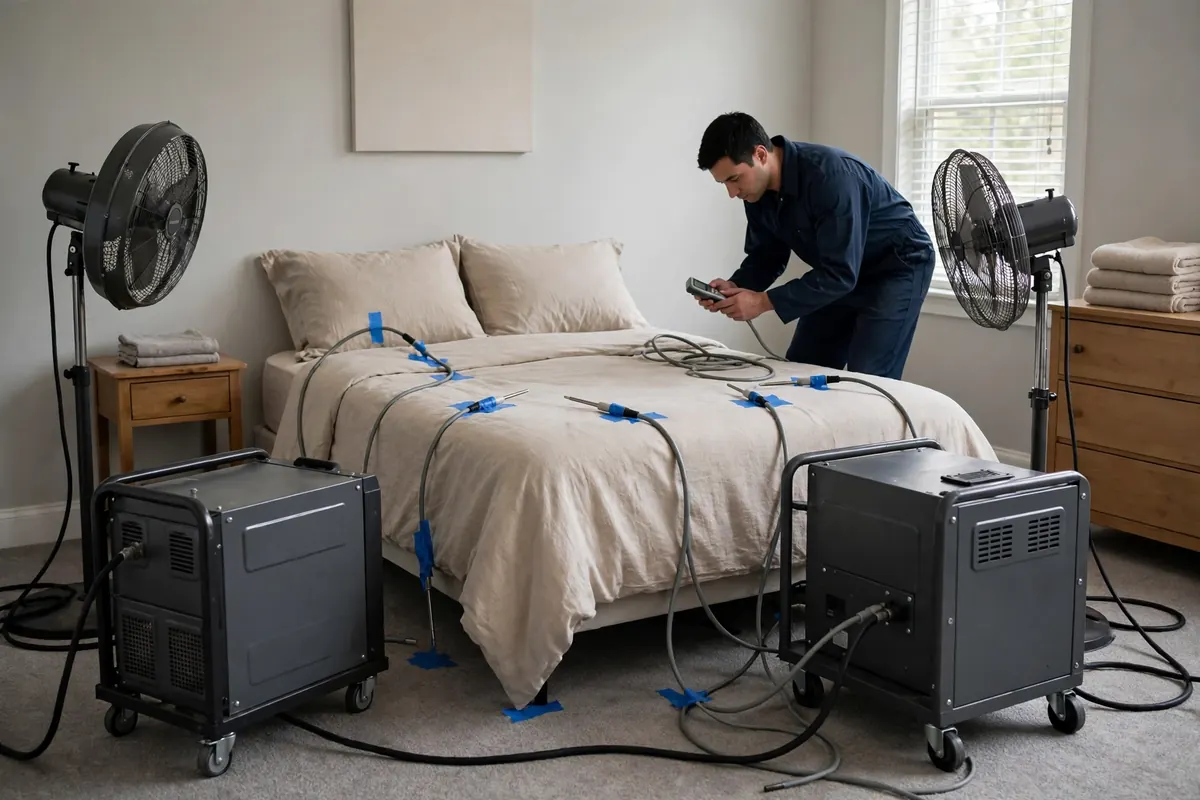
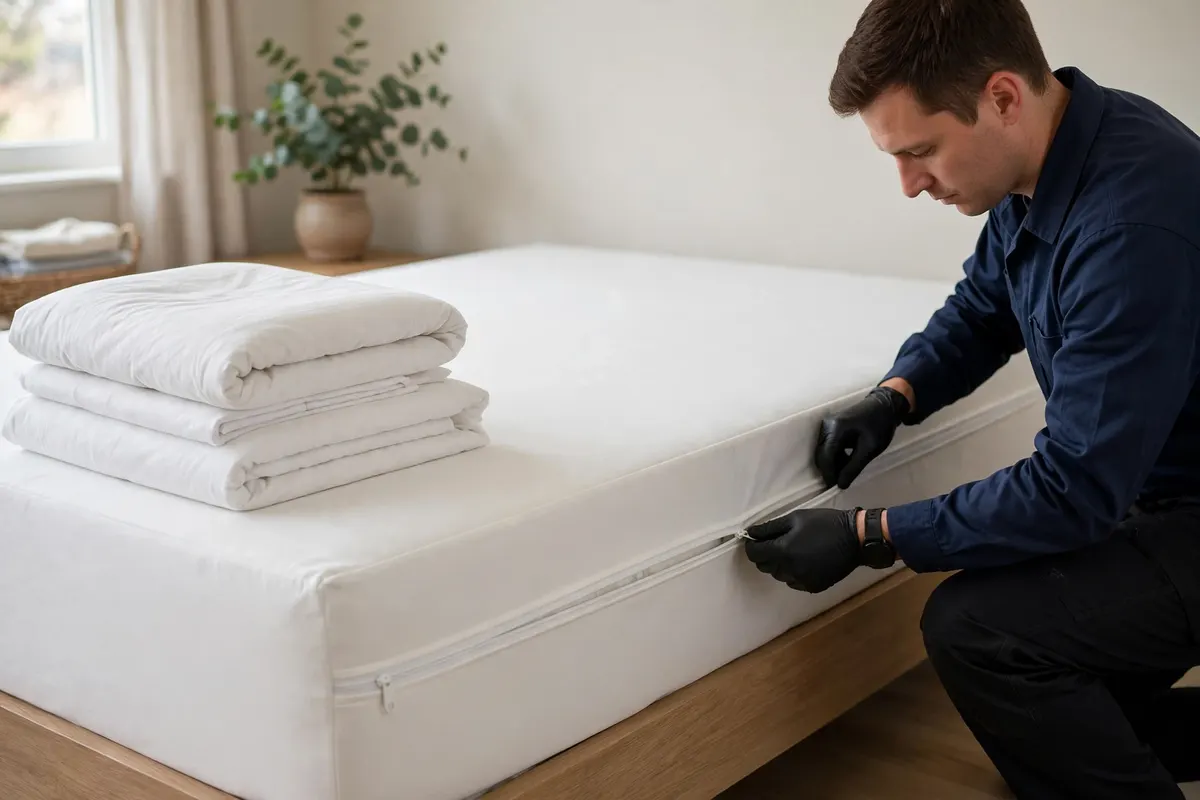
And the equipment in that shorthand is standard: A mattress encasement seals the bed itself, so nothing can hide in its seams or tufts. A box-spring encasement does the same for the base, whose torn fabric and staples hide colonies well. K9 scent detection can sweep a room in minutes, the dog's nose finding what eyes miss in clutter. Everything starts with a visual inspection — seams, screw holes, headboard backs and the joints of the frame. Thermal heat remediation raises the whole room to a lethal temperature and holds it there until every stage is dead.