What Is Insecticide Resistance, In Plain Terms?
Because the bugs changed. Decades of exposure to one family of insecticides — the pyrethroids — selected for bed bugs that survive doses which once killed reliably. The spray is the same; the population is not.
Resistance is inherited, not learned. In any large infestation there are a few bugs with traits that help them survive a treatment — and when the spray kills their susceptible relatives, the survivors are the ones left to breed. Treatment by treatment, home by home, those traits became the population. Researchers who test field-collected bed bugs now routinely find populations that shrug off pyrethroid doses, which is why professionals treat resistance as the starting assumption rather than the exception.
It is worth separating two ideas people blur together. Resistance is genetic and permanent in a population. Treatment failure is much broader: eggs surviving (they survive almost everything), product never reaching harbourages, clutter shielding the bugs, a visit skipped. Most failed treatments pros are called to fix involve failure points they can correct — but where Bed Bug Treatment Amarillo, TX crews and crews everywhere keep meeting true resistance, the answer has to change chemistry, not just effort.
How Do Bed Bugs Resist Insecticides?
Several ways at once, which is why it is so durable: nerve targets that no longer respond to the chemical, a thicker outer shell that slows it getting in, and enzymes that break it down before it can work.
The most studied mechanism is target-site resistance — small genetic changes, often called knockdown resistance, in the nerve channels that pyrethroids attack. The insecticide arrives, but its binding site has changed shape, so the lethal effect never lands. Alongside it, many populations produce more detoxifying enzymes, breaking the chemical down inside the body, and some have a thickened cuticle that buys time for those enzymes by slowing penetration.
Layered defences explain the field pattern: a product may kill some bugs slowly, kill the weakest, and leave the hardest — precisely the ones whose eggs restart the problem on the six-to-ten-day hatching clock. It also explains why simply spraying more, or spraying stronger, is not a plan. Doubling down on a mechanism the population has already defeated selects the survivors even harder.
A resistant population is not a stronger enemy. It is a narrower one — it has spent all its evolution beating one weapon. Change the weapon.
Does Resistance Mean My Spray Never Stood A Chance?
Usually, yes. The honest reading of a failed spray is that the population may be resistant, the eggs were never touched, and the product probably never reached the deepest harbourages — all three commonly true at once.
Before concluding resistance, a pro audits the attempt. Was the product labelled for bed bugs at all? Was it placed into seams and cracks, or misted around the room? Was there a second visit timed to the hatch? Was a fogger involved — the one product class that actively scatters bed bugs into new harbourages and neighbouring rooms? Households using Bed Bug Treatment Apopka, FL hear this audit because most 'product failures' are placement and follow-through failures wearing a product's name.
But when a correctly placed, correctly timed program still leaves live bugs walking across fresh residual, true resistance moves to the top of the list — and a competent pro changes approach instead of scheduling a third identical visit.
Need Bed Bug Treatment Help Near You?
One free call connects you with a local pro who can arrive in 30–60 minutes.
Call (800) 555-0100Free Call · Answered 24/7 · Local Pros Near You
What Do Pros Use When Resistance Is Suspected?
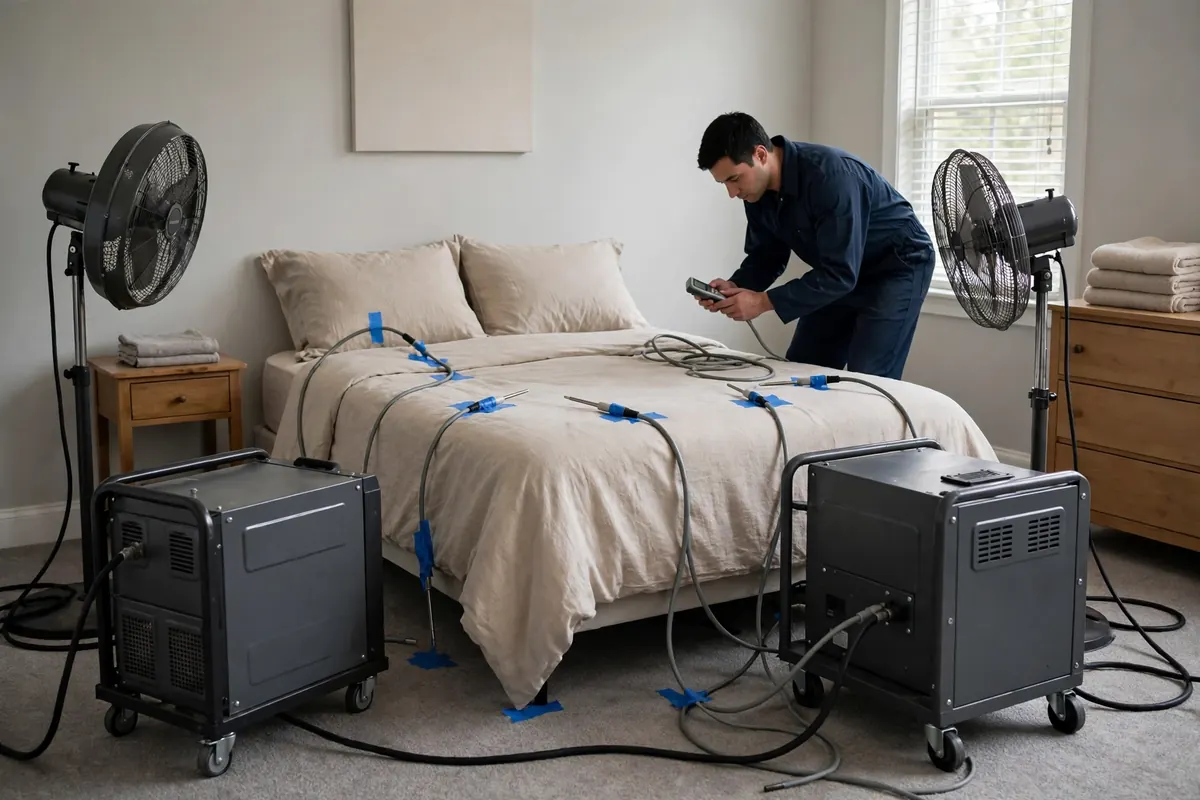
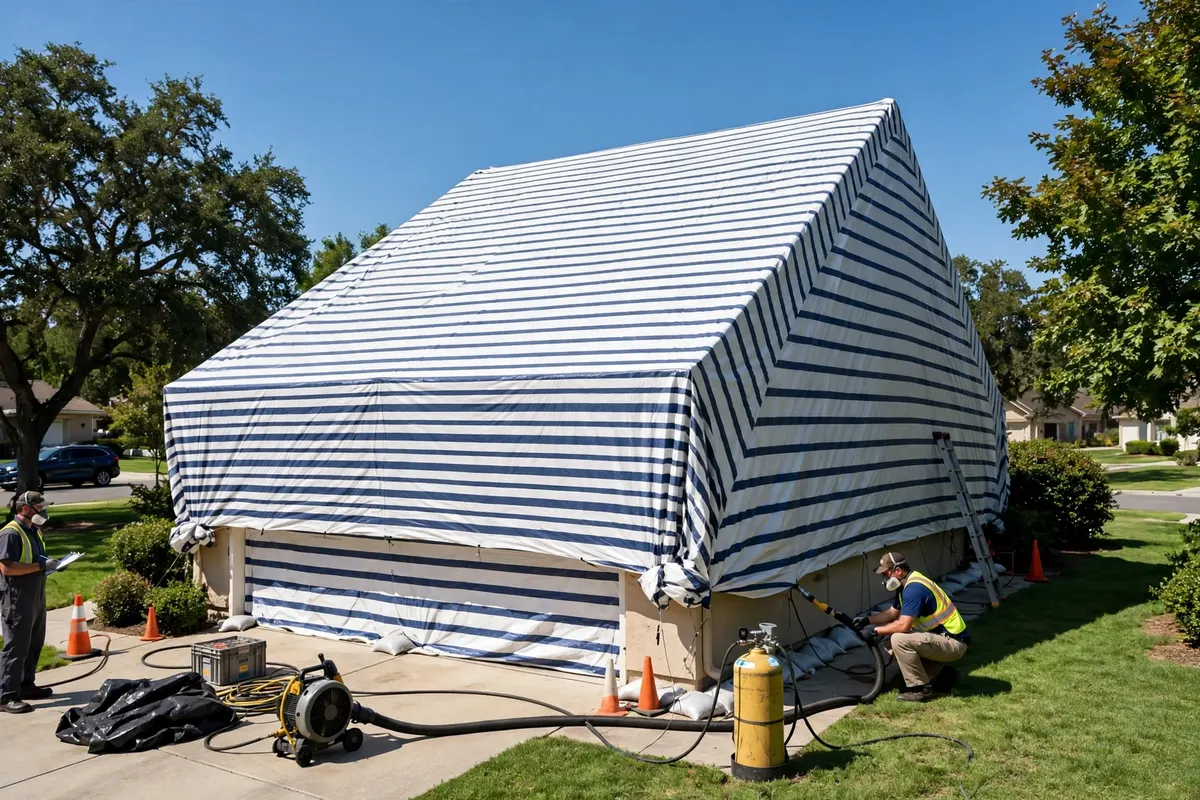
They stop depending on a single chemistry. Modern programs rotate product classes, lean on methods with no chemical target to resist, and treat the harbourages physically as well as chemically.
Why Foggers Are The Worst Answer To Resistance
Foggers fail on every axis at once: the aerosol cannot reach harbourages, it irritates bugs into scattering deeper and wider, and against a resistant population it does not even kill the ones it touches.
If one product embodies the resistance story, it is the bug bomb. Health and environment agencies state plainly that foggers are not effective against bed bugs — and in a resistant population the outcome is worse than nothing: survivors, scattered. Bugs flushed out of a treated sofa turn up in the baseboards, the next room, the adjoining apartment. The call that follows a fogger is reliably harder than the call that would have come before it.
The same logic applies to enthusiastic repeat spraying with a shop-bought pyrethroid. Every light, sub-lethal exposure is another round of selection. If you have already sprayed and seen no effect, stop spraying and get the audit: households around Bed Bug Treatment Albany, TX get told plainly that the can under the sink has done all it can do.
There is a quieter cost to repeated failed spraying: it teaches the household the wrong lesson. Each attempt that 'almost worked' — fewer bugs for a week, then the same problem back — is usually the eggs hatching on schedule and the survivors regrouping, but it reads like progress, so the next attempt is the same product again. Months pass. The infestation that a two-visit professional program would have ended in spring is, by autumn, a multi-room population with a treatment history.
What Actually Works Against A Resistant Population?
An inspection-led, integrated program: confirm the pest, heat or steam where physics wins, place rotated products and desiccant dusts where chemistry still works, encase the beds, and verify with monitors across the hatching window.
Integrated pest management is the professional answer, and resistance is the reason it exists. No single tool carries the job, so no single defence defeats it. A typical plan heats the worst rooms, vacuums and steams the seams, places a non-pyrethroid residual and silica dust in the voids where bugs travel, fits mattress and box-spring encasements, and leaves interceptor traps to prove the result over the following weeks — the structure described across Bed Bug Help In Texas.
Reviewed in that spirit by Hamza, whose specialism pairs thermal heat remediation with integrated chemical barrier protocols — heat first, precisely because temperature ignores resistance, then barriers chosen for the population actually in front of him. One free call connects you with a local pro who can tell you whether you are facing resistant bugs, a failed method, or both — and which plan fits your home.
A Short Field Glossary
A few terms run through every inspection report and treatment plan. The species behind nearly every case is Cimex lectularius, the common bed bug. A bed bug egg is a millimetre long, pearly white, and glued into a seam or crack where sprays rarely reach. A bed bug nymph moults five times before it can breed, and it needs a blood meal at every stage. Pros call the colony's daytime hiding place a harborage — a seam, crack or void within reach of the bed. Fecal spots, tiny black dots of digested blood, gather on the seams and frame where the colony rests. Shed skins (exuviae) are the papery shells left behind at each moult, and they collect beside the seams where the colony rests. Rusty stains on bedding come from crushed, blood-fed bugs rolled on in the night.
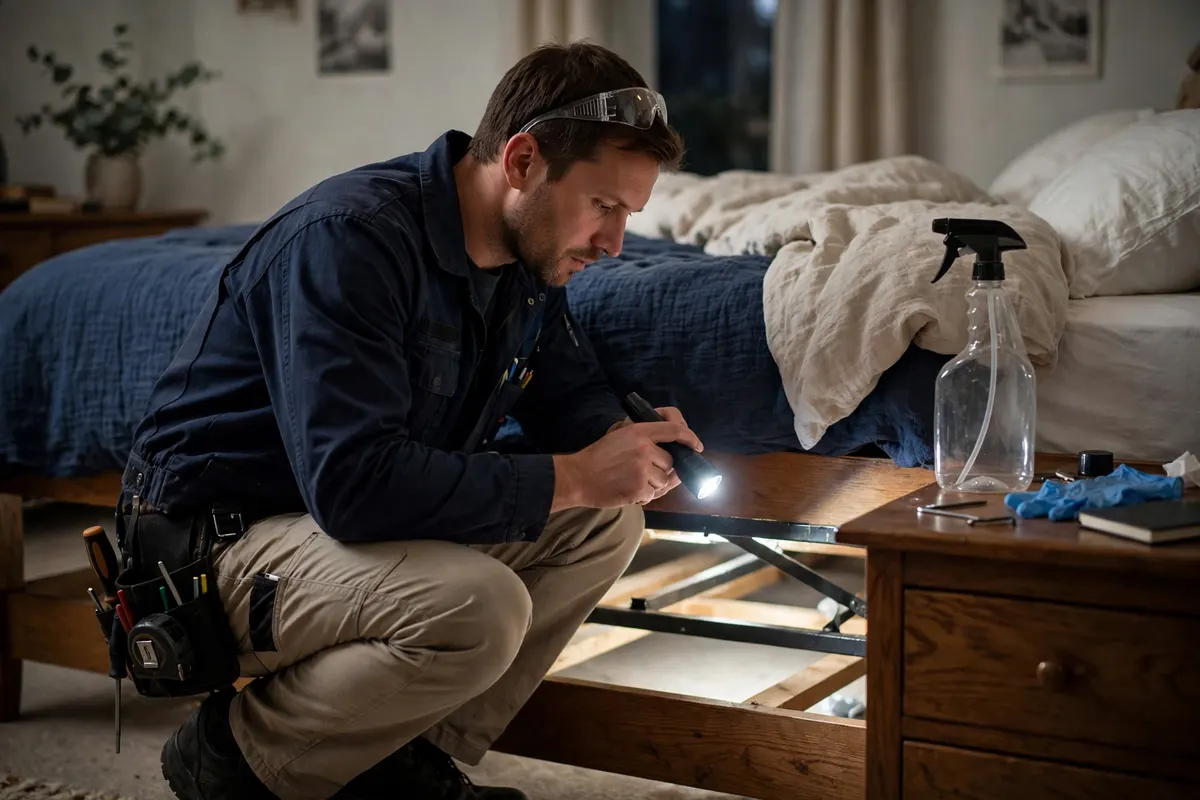
The tools behind the terms are just as plain: A passive monitor tucked at the head of the bed gives wandering bugs a harbourage that can be checked in seconds. A mattress encasement seals the bed itself, so nothing can hide in its seams or tufts. K9 scent detection can sweep a room in minutes, the dog's nose finding what eyes miss in clutter. Everything starts with a visual inspection — seams, screw holes, headboard backs and the joints of the frame.