What Does Freezing Treatment Actually Mean?
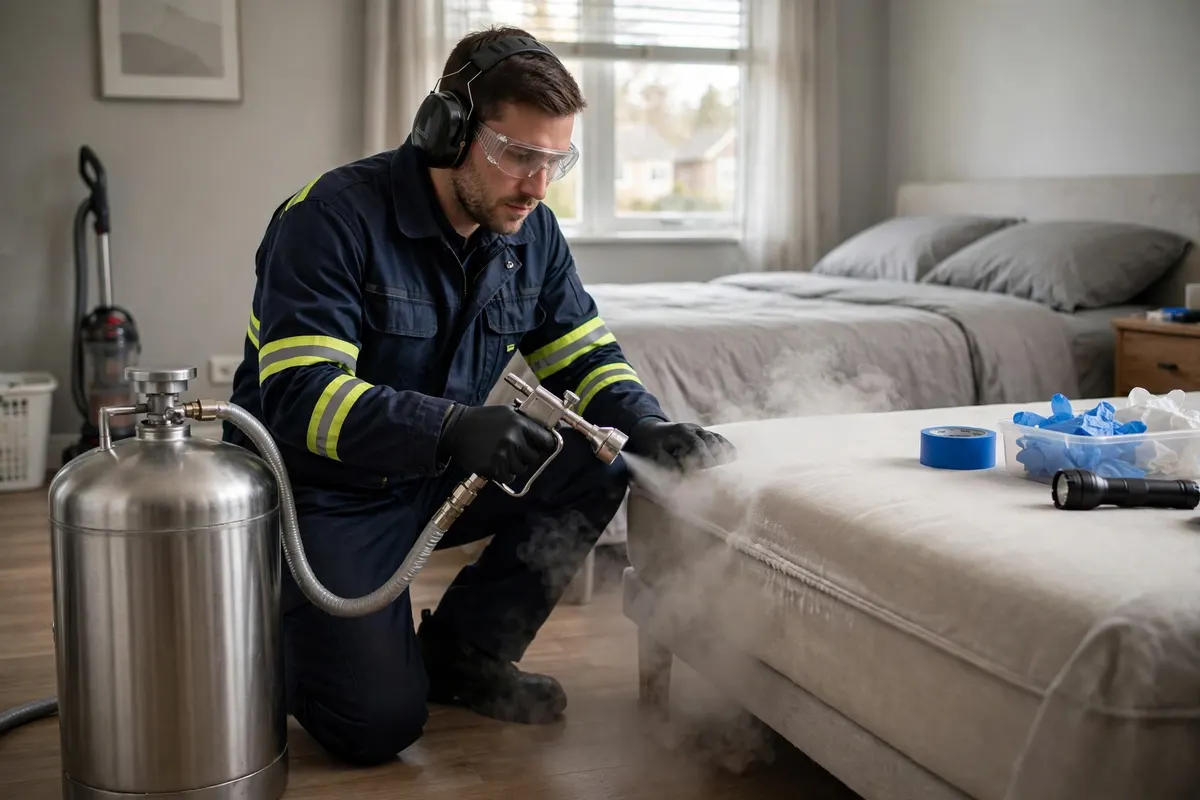
'Freezing' covers two different methods. One is sustained deep cold: items held at 0°F (-18°C) or below for roughly four days, which kills all life stages. The other is cryogenic contact treatment: a pro spraying carbon dioxide 'snow' at around -110°F (-78°C) that freezes bugs on contact. Both work — under strict conditions.
The biology sets the bar. Bed bugs are not fragile in the cold: research and extension guidance agree they can survive short exposures to very low temperatures, and they tolerate ordinary cold well — the EPA notes they stay active at temperatures down to about 45°F (7°C). What kills them is sustained, deep cold that reaches the bug itself, everywhere it is hiding, for the full exposure.
That is why cold is a precision tool in bed bug work rather than a headline method: brilliant for the right items and the right cracks, unreliable as a whole-home promise. Understanding which version you are being offered is most of choosing well.
Does A Home Freezer Kill Bed Bugs And Their Eggs?
Held at 0°F (-18°C) for about four days, yes — eggs included. University extension guidance treats that time-and-temperature combination as lethal to every stage. The catches are practical: the cold has to reach the centre of the bulkiest item, the freezer has to actually hold 0°F (many home freezers hover close to it), and the clock starts when the item is cold through, not when the door closes.
Used well, a freezer is one of the most useful DIY tools in this whole field — for the right objects. Seal the item in a bag first (so nothing wanders), keep the freezer full-cold and undisturbed, and give dense items the full four days or longer. Small, delicate, heat-intolerant things are the classic candidates: books, shoes, soft toys, delicate fabrics, electronics-free keepsakes.
Used casually, it disappoints: a weekend in a frost-free freezer that cycles warmer, or a thick item pulled out after two days, can leave the centre — and the eggs — unharmed. If an item matters and cannot take heat, the freezer route done patiently beats the dryer you were afraid to use on it.
What Is Cryogenic Freezing — The Pro Version?
A specialist applies carbon dioxide snow through a nozzle, freezing bugs, nymphs and eggs instantly where the jet touches them — along seams, joints, bed frames, skirting and furniture cracks. It is a contact method: lethal to what it hits, silent on what it misses, with no chemicals and no residue left behind.
Its virtues are real. Rooms can often be reoccupied quickly, delicate surroundings take no heat load, and the treatment can go into occupied, sensitive settings where sprays are restricted. In a well-mapped room, a careful cryogenic pass combined with encasements and a residual program is a legitimate professional option.
Its limit is the same as steam's: coverage. A jet treats the line it travels. Deep harbourages inside wall voids, hollow frames and dense clutter can sit millimetres from the jet's path and survive it, which is why pros pair contact freezing with inspection, monitoring traps and usually a residual — not with a promise.
Need Bed Bug Treatment Help Near You?
One free call connects you with a local pro who can arrive in 30–60 minutes.
Call (800) 555-0100Free Call · Answered 24/7 · Local Pros Near You
Can Freezing Be The Whole Treatment?
Almost never on its own. It kills on contact and evaporates, leaving nothing behind to catch hatchlings from an egg the jet missed or a bug deep in a void. Used as the visible-bug killer inside a bigger program — inspection, encasements, residual barriers, follow-up checks — it is valuable. Sold as the whole cure, it sets up the sequel.
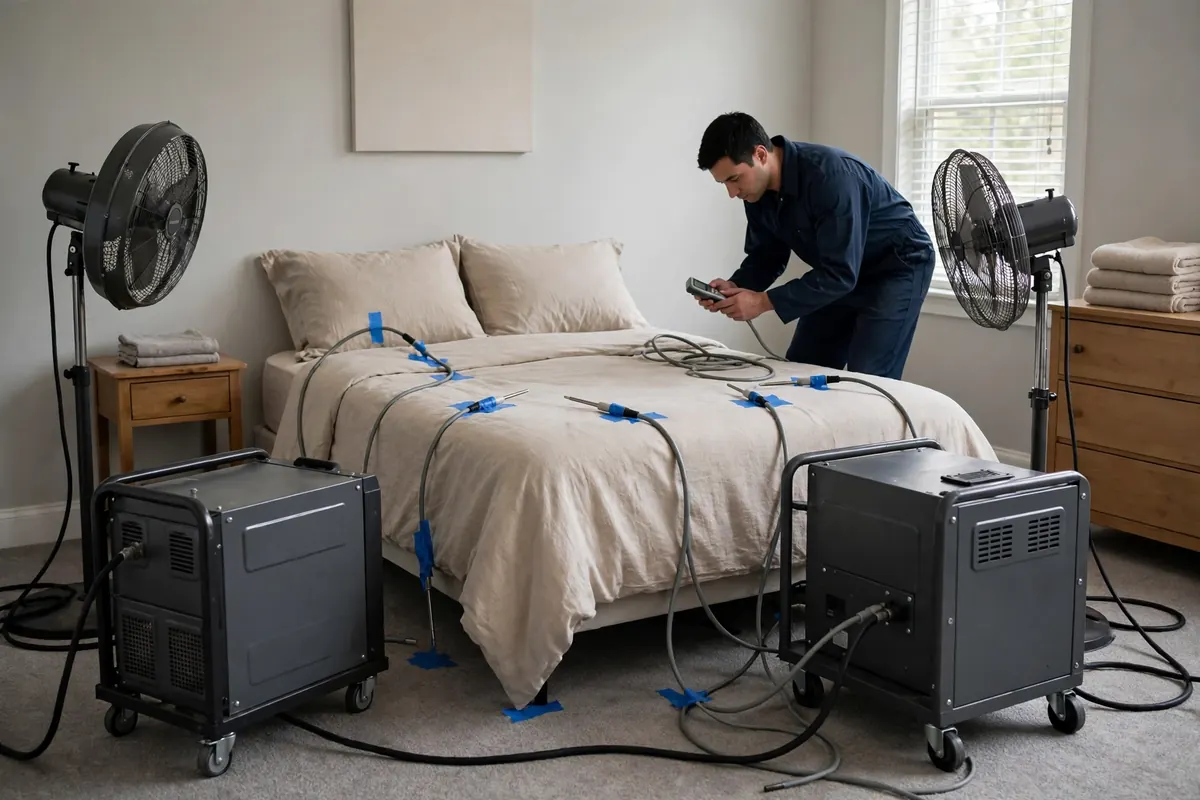
Heat is the contrast that explains the rule: a heat treatment raises the entire room's contents to killing temperature and holds it there, so coverage is a property of physics, not of the operator's aim. Contact freezing's coverage is exactly the operator's aim — skilled and thorough, or not. Our heat treatment vs chemical treatment guide shows how pros combine methods so each covers the other's gaps.
Judge any freezing quote by its companions: if traps, encasements and a follow-up inspection are in the plan, you are looking at a program. If the plan is a single pass and a wave goodbye, keep shopping.
Where Does Freezing Genuinely Earn Its Place?
Delicate and valuable items that cannot take dryer heat; electronics-adjacent clutter; books and papers; sensitive settings where chemical use is restricted; and spot work on frames and furniture during a wider program. Cold is the specialist for the objects and corners the big methods handle worst.
It also earns a place in the plan for people, not just objects: households that cannot have sprays for health reasons, or rooms that must be back in use the same day, sometimes build the program around contact freezing plus physical measures — encasements, interceptors, vacuuming and relentless laundry heat.
None of this is makeshift improvisation. A program matched to the household's real constraints is the one that gets finished properly, and unfinished programs are how infestations survive.
What Should You Ask A Pro Offering Freezing?
Three questions: which freezing do you mean — sustained cold or cryogenic contact? What else is in the program for the eggs and the harbourages the jet cannot reach? And how will we verify — traps and a follow-up inspection on what date? Clear answers mean a pro; vague ones mean a novelty act.
For the home-freezer route, ask your pro which of your belongings they would freeze rather than heat-treat — the answer is a small, useful education in your own infestation, and it saves the items you were most worried about ruining.
And keep the cheap truth in view: for most washable and dryable things, the tumble dryer remains the simplest lethal cold-alternative there is — 30 minutes on high heat, no specialist required.
So, Does Cold Treatment Work?
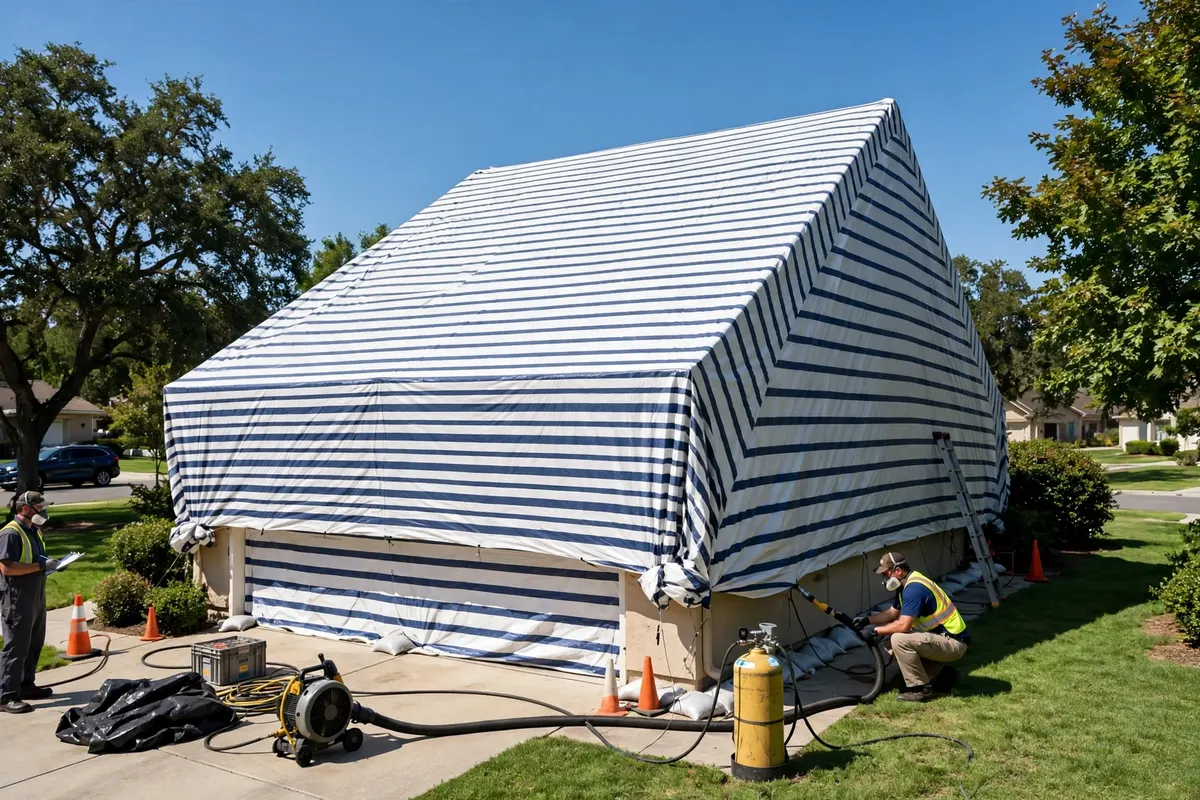
As a supporting method inside a mapped, monitored program — yes. As a stand-alone whole-home treatment — rarely, and only where a specialist is holding an entire space at lethal cold for days. For most homes the headline methods stay heat and residual chemistry, with freezing protecting the delicate things those methods would damage.
That is not a dismissal; it is the correct shelf for a genuinely useful tool. The households that beat bed bugs fastest are the ones whose plan uses each method where it is strongest — and freezing's strength is precision.
Start with an inspection that maps your problem, and let the map decide how big a role cold plays in your home.
If the freezer route is not open to you, a pro program is one free call away — readers in the north-east start at Bed Bug Treatment Albany, NY or Bed Bug Treatment Afton, NY, and the statewide picture is on our Bed Bug Help In New York page.
Terms You Will Hear On The Call
Pros describe the same things this article has been circling, in their own shorthand. The species behind nearly every case is Cimex lectularius, the common bed bug. A bed bug egg is a millimetre long, pearly white, and glued into a seam or crack where sprays rarely reach. A bed bug nymph moults five times before it can breed, and it needs a blood meal at every stage. Pros call the colony's daytime hiding place a harborage — a seam, crack or void within reach of the bed. Fecal spots, tiny black dots of digested blood, gather on the seams and frame where the colony rests. Shed skins (exuviae) are the papery shells left behind at each moult, and they collect beside the seams where the colony rests. Rusty stains on bedding come from crushed, blood-fed bugs rolled on in the night.
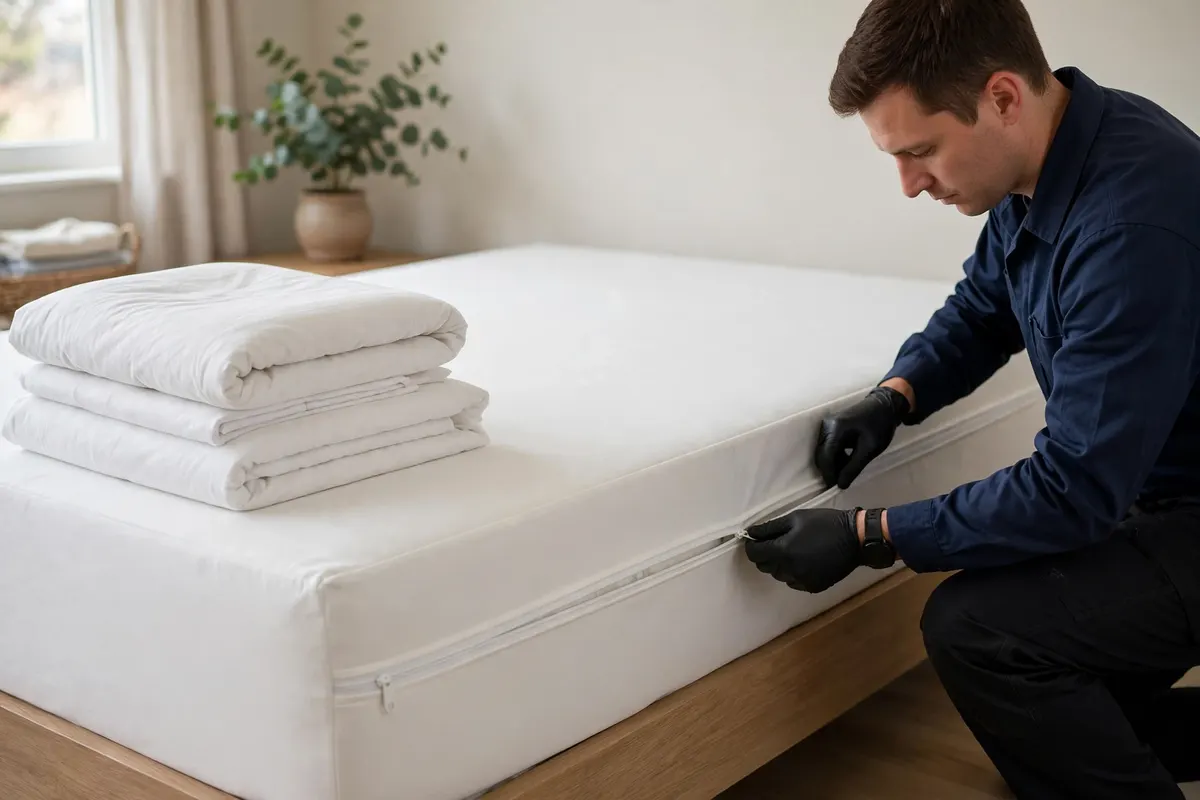
And the equipment in that shorthand is standard: A passive monitor tucked at the head of the bed gives wandering bugs a harbourage that can be checked in seconds. A mattress encasement seals the bed itself, so nothing can hide in its seams or tufts. A box-spring encasement does the same for the base, whose torn fabric and staples hide colonies well. K9 scent detection can sweep a room in minutes, the dog's nose finding what eyes miss in clutter. Everything starts with a visual inspection — seams, screw holes, headboard backs and the joints of the frame. Thermal heat remediation raises the whole room to a lethal temperature and holds it there until every stage is dead.
Cold is a scalpel, not a flood. It works beautifully exactly where it reaches — and the honest question for any freezing treatment is always: what is covering the places it cannot?