Can You Identify The Insect From The Bite Marks?
No — not reliably. Dermatologists and pest pros alike will tell you that bite reactions are one of the least dependable identification tools there is.
A bite mark is your immune system's response, not the insect's signature. The same bed bug can leave a large welt on one person, a faint pink dot on their partner, and nothing at all on a third person sharing the same bed. Flea and mosquito bites pass through the same skin, trigger the same histamine response, and produce the same range of red, itchy, sometimes blistered marks. Size, colour and itch intensity vary with the person far more than with the pest.
That is why this guide will not do what many pages do — show you a photograph and imply your mark matches it. If your skin is blistering, spreading, painful or infected-looking, that is a job for a clinician, not a pest article. What bites can legitimately do is start the investigation: they tell you where and when something may be feeding, and that is where the useful clues begin.
What Patterns Are Commonly Described For Each Biter?
Some tendencies are real, even though none of them is proof. Where marks appear, and when you notice them, narrows the field better than how they look.
Bed bug feeding happens at night, in bed, on skin left exposed above the covers — face, neck, shoulders, arms and hands. Marks noticed on waking, sometimes in loose lines or clusters where a bug fed, probed and fed again, fit that picture. Flea bites concentrate lower: ankles and feet are the classic zone, because fleas jump from carpets and pet bedding and bite the first skin they reach. Pets scratching, and flea dirt in pet fur, point the same way. In apartment buildings like those served by Bed Bug Treatment Albany, NY, travel between units means the room, not the skin, is where answers live.
Mosquito bites usually trace back to time outdoors or an open window, appear on any exposed skin, and are noticed within hours rather than on waking. None of these patterns is exclusive: fleas bite in beds, bed bugs bite ankles, and a mosquito in the bedroom leaves a mark indistinguishable from either. Treat patterns as probabilities, never as a verdict.
Timing misleads people too. A bed bug reaction can take a day or more to appear, so marks noticed on Tuesday may belong to Sunday night's bed — or to a hotel bed from the weekend before last. Flea bites tend to itch hard and fast; mosquito bites usually flare within hours and fade in days; bed bug reactions can keep arriving for several mornings in a row while the source stays in the room. A diary of where you slept, night by night, is worth more than any photograph of the marks themselves.
Skin can raise the question. Only evidence in the room can answer it.
Bed Bugs, Fleas Or Mosquitoes: How Do The Clues Compare?
Line the three up by behaviour rather than by bite photos, and the differences that do exist become clearer.
Need Bed Bug Treatment Help Near You?
One free call connects you with a local pro who can arrive in 30–60 minutes.
Call (800) 555-0100Free Call · Answered 24/7 · Local Pros Near You
Why Do Some People In The Same Bed Get No Marks At All?
Because reaction is personal. A sizeable share of people show little or no response to bed bug bites, especially at first, while their partner may react strongly to the same feeding.
Reactions can also grow with repeated exposure, so the first weeks of an infestation may produce no marks on anyone — one reason problems are often established before the first itchy morning. The dangerous conclusion runs the other way, too: 'my partner has no bites, so it cannot be bed bugs' has delayed many inspections. In family homes like those covered by Bed Bug Treatment Avon Park, FL, pros hear this weekly, and the mattress seams tell a different story.
Children, older people and anyone on medication that alters immune response may react differently again. The only safe rule: absence of marks proves nothing, and presence of marks proves nothing. Both roads lead to the same next step — check the room.
There is one more trap worth naming: new marks do not always mean new bites. Skin can keep reacting to earlier feeding for days, and scratching restarts inflammation that looks like fresh marks in fresh places. Counting this morning's spots is a poor infestation meter. The room's evidence, by contrast, only moves one way — fecal spots, skins and trapped specimens accumulate if something is living there, and stay absent if it is not. That is why every professional answer to 'what bit me?' starts with furniture, not skin.
What Physical Signs Actually Confirm Bed Bugs?
Five signs, all findable with a torch and ten unhurried minutes: live bugs, rusty stains, dark fecal spots, eggs and shed skins, and — in heavier cases — a sweet musty odour.
Work the bed in order. Live bed bugs hide in mattress seams and piping, around the tag, in box-spring corners and bed-frame joints — flat, oval, reddish-brown, about the size of an apple seed. Rusty or reddish stains on sheets come from bugs crushed after feeding. Tiny dark spots along seams are fecal spots, about the size of a printed dot, and may bleed into fabric like a marker. Pale eggs and eggshells, about a millimetre long, and the papery shed skins nymphs leave as they grow, collect in the same harbourages. A sweet, musty odour belongs to heavier infestations and supports the other signs; it never stands alone.
Photograph what you find, note the room and date, and do not strip and drag bedding through the house — that is how bugs get a free ride to the sofa. If the signs are there, the question is settled enough to act. If the room is clean but marks keep appearing, that pattern matters too, and a pro's inspection — sometimes with monitoring traps left in place — is how it gets resolved, in Bed Bug Treatment Arlington, TX as much as anywhere.
What Should You Do If You Cannot Tell?
Stop trying to identify the bite and start ruling the room in or out — then let evidence, not itching, decide whether to call.
Run the five-sign check above. Set interceptor traps under the bed legs and check them for a week: they catch whatever is walking to the bed and turn suspicion into specimens. Keep a simple log of when marks appear and which bed was slept in; a pattern tied to one room, one sofa or one guest bed is genuinely useful information for an inspector. Avoid the two classic mistakes: foggers, which scatter bed bugs deeper into the home, and throwing the mattress out, which usually spreads the problem and solves nothing.
If signs are present — or marks keep coming and the traps catch something you cannot identify — that is the moment for a professional inspection. A pro confirms the pest, finds the harbourages, and only then talks about treatment. Readers who prefer to start at state level can see how inspections are arranged across Bed Bug Help In New York. One free call connects you with a local pro who can arrive in 30–60 minutes — and who will identify the problem from evidence, never from a photograph of your arm.
A Short Field Glossary
A few terms run through every inspection report and treatment plan. The species behind nearly every case is Cimex lectularius, the common bed bug. A bed bug egg is a millimetre long, pearly white, and glued into a seam or crack where sprays rarely reach. A bed bug nymph moults five times before it can breed, and it needs a blood meal at every stage. Pros call the colony's daytime hiding place a harborage — a seam, crack or void within reach of the bed. Rusty stains on bedding come from crushed, blood-fed bugs rolled on in the night.
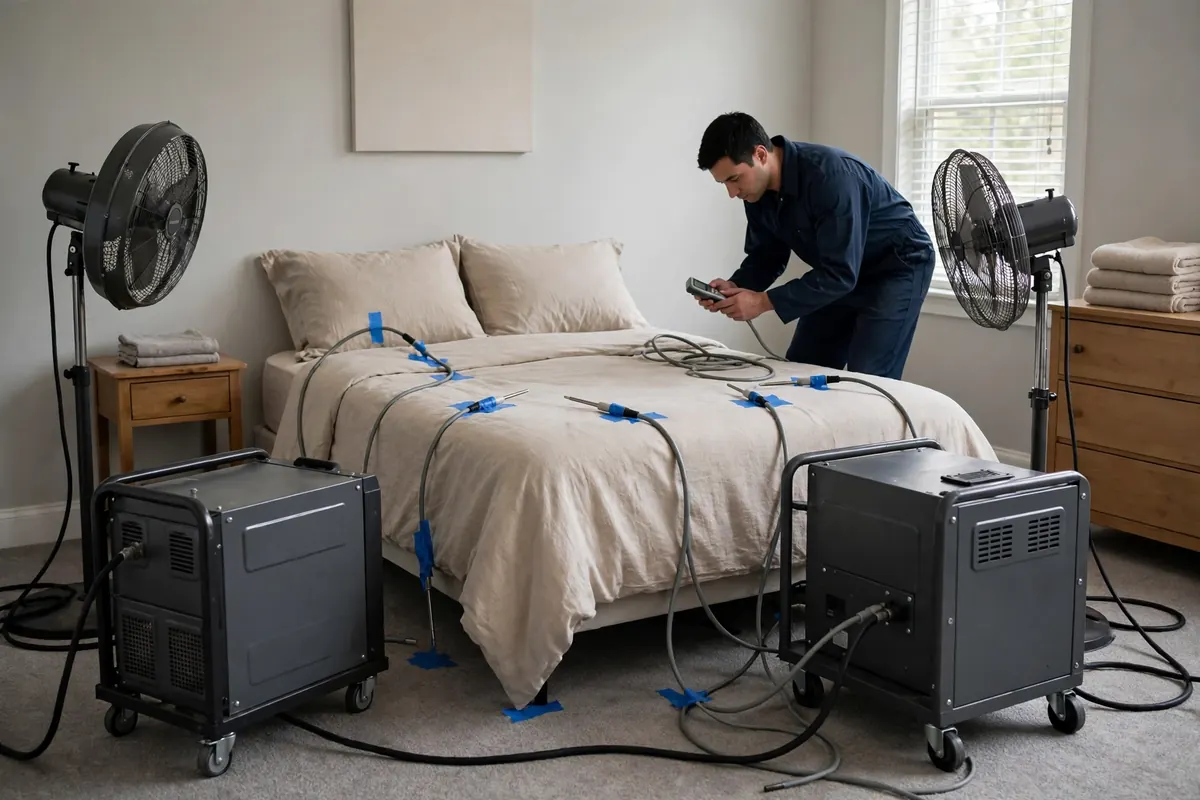
The tools behind the terms are just as plain: A passive monitor tucked at the head of the bed gives wandering bugs a harbourage that can be checked in seconds. A mattress encasement seals the bed itself, so nothing can hide in its seams or tufts. A box-spring encasement does the same for the base, whose torn fabric and staples hide colonies well. Everything starts with a visual inspection — seams, screw holes, headboard backs and the joints of the frame. Thermal heat remediation raises the whole room to a lethal temperature and holds it there until every stage is dead.