What Is Aprehend, Exactly?
Aprehend is a biological insecticide whose active ingredient is Beauveria bassiana, a naturally occurring fungus. It is registered with the EPA for bed bug control and sold for professional application as a sprayed barrier treatment.
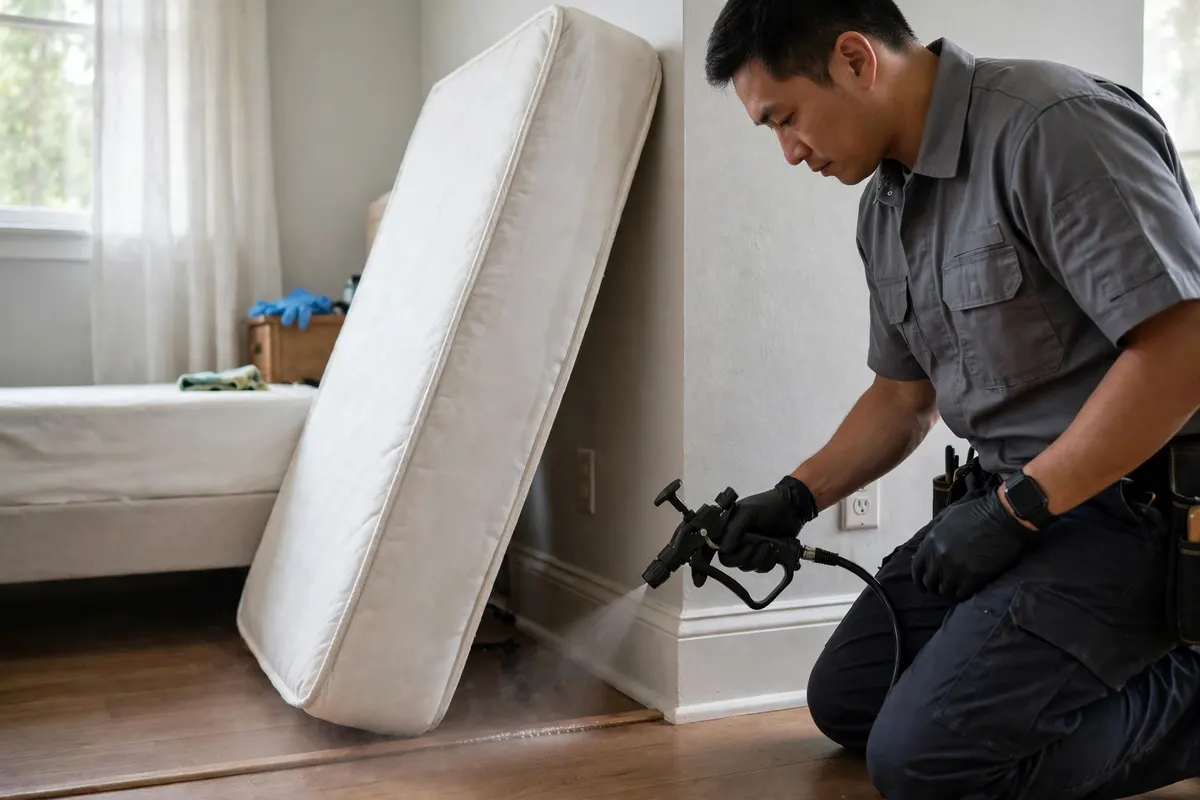
Instead of a conventional chemical that attacks the bug's nervous system, Aprehend is a suspension of fungal spores in oil. The pro sprays it in narrow bands — not across the room — in the places bed bugs must walk: around bed legs and frames, along baseboards, behind headboards, around the edges of the box spring and the frames of sofas. The bands dry inconspicuous and stay where they were put.
It belongs to a different family of tools from everything else in the bed bug kit. Thermal heat remediation kills by temperature, steam treatment kills on contact, a chemical residual treatment kills by poisoning bugs that cross it. Aprehend kills by infection, which gives it two properties nothing else in the kit has — it spreads from bug to bug, and it keeps working for months. Programs using it run the same way in Bed Bug Treatment Austin, TX as anywhere else: the biology does not change with the postcode.
How Does The Fungus Kill Bed Bugs?
A bed bug that walks across a treated band picks up fungal spores on its body. Over the following days the spores germinate, penetrate the bug's outer shell and grow inside it, and the bug dies — typically within about four to ten days of contact.
The part that makes the product genuinely different happens in the harborage. An infected bug returns to the cracks where the colony hides — the mattress seams and piping, the bed frame joints — and spores transfer to the bugs it crowds against. Bed bugs spend most of their lives packed together in those harborages, so a treatment the lead bugs carry home reaches individuals a spray never touched, including bugs that never crossed a band themselves.
There is a trade-off baked into the biology: nothing about this is instant. A bug infected on Monday is still walking, and still capable of feeding, for part of that week. Aprehend is a population collapse over one to three weeks, not a knockdown on the day — and a pro who sells it honestly will tell you that before the visit, not after.
Does It Kill The Eggs?
Not directly — spores do not penetrate a bed bug egg. What covers the eggs is time: the bands remain active for up to three months, so when eggs hatch at roughly a week to ten days, the new nymphs cross a treated band on their way to their first blood meal and are infected then. The long residual is precisely the answer to the egg problem that defeats single-visit sprays.
How Is Aprehend Applied In A Real Room?
As a targeted barrier, not a blanket spray. The pro applies bands along the travel routes between the harbourage and the sleeper, treats the room's furniture, and leaves the bands undisturbed to do their work.
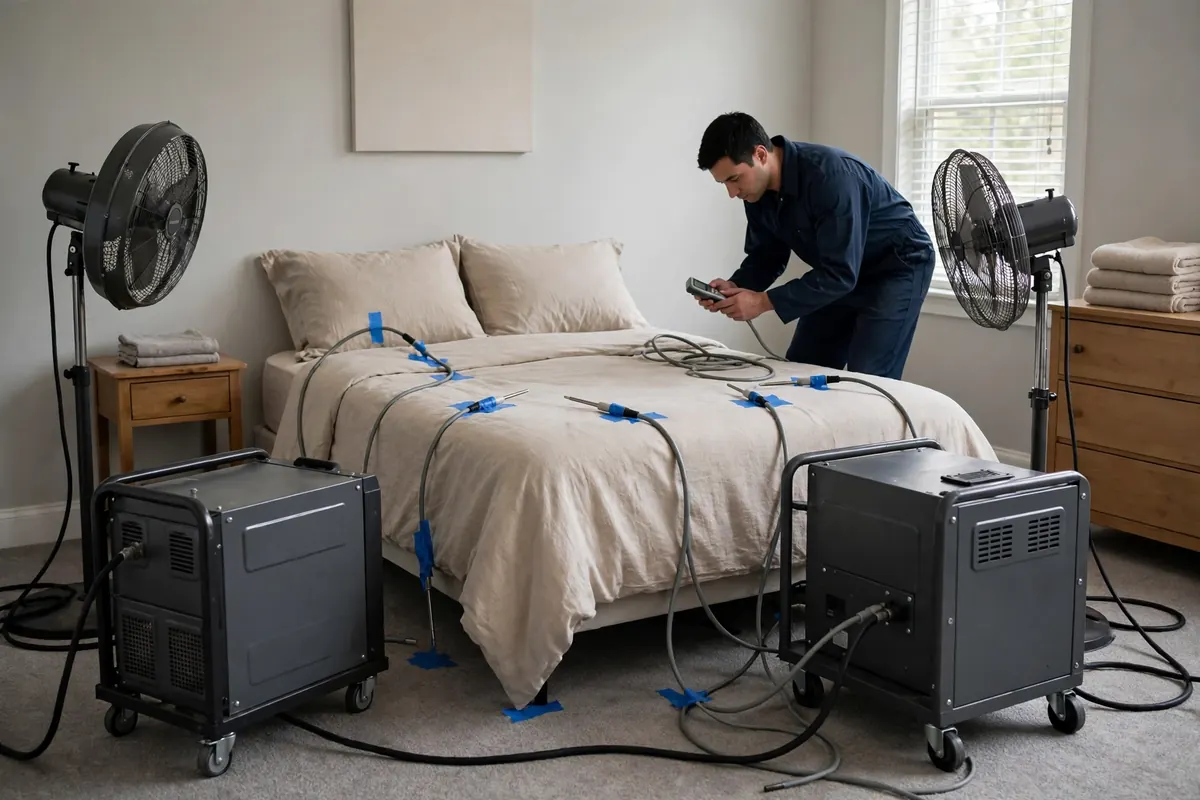
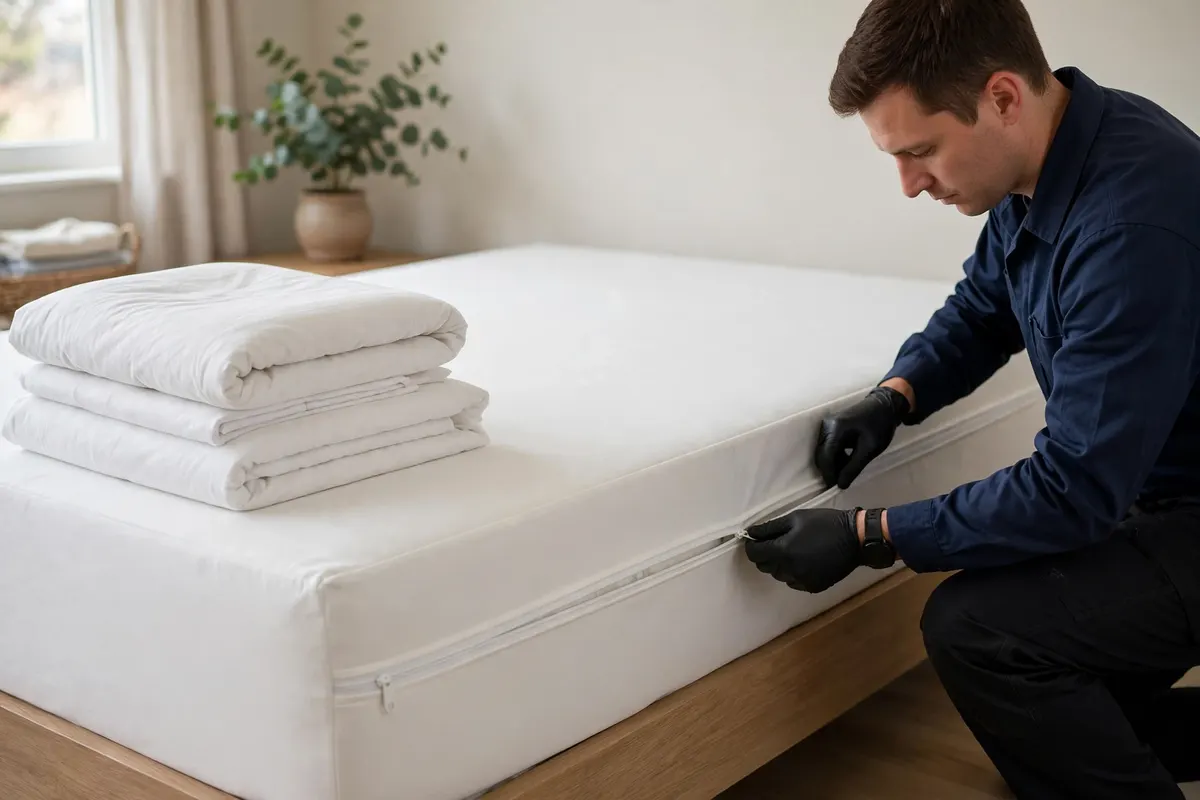
Preparation looks like most professional treatments: bedding and clothing are bagged and laundered on hot cycles, clutter around the bed is cleared so bugs have fewer untouched refuges, and the pro may HEPA vacuum the seams and use steam on the mattress and upholstered furniture first to cut the live population down before the bands go on. Mattress encasement and box-spring encasement are often fitted at the same visit, removing surface harborages and trapping anything left inside the bed itself.
After application, the rules are simple and they matter: do not wash the bands off, do not mop against the treated baseboards, and do not spray other insecticides over them — conventional sprays and repellents can stop the spores working or drive bugs around the bands. Your pro will tell you the labelled re-entry interval for the room, which you observe just as with any other product.
How Long Does Aprehend Keep Working?
Under label conditions the residual is up to three months, which is substantially longer than most conventional residual sprays stay effective — and long enough to span several egg-hatch cycles.
That longevity is the strategic reason pros reach for it in rentals, hotels and multi-unit housing, where the risk is not only the bugs present today but the ones arriving next month from an adjoining unit or a guest's luggage. It is also why Aprehend often appears in the follow-up stage of a combined program: heat or steam resets the room on day one, and the fungal bands stand guard afterwards in homes around Bed Bug Treatment Albany, NY and Bed Bug Treatment Apopka, FL just as they do anywhere else.
Long residual is not a promise of permanence. Heavy cleaning of treated surfaces, renovation, or a fresh introduction of bugs in furniture can all defeat it — which is why monitoring with interceptor traps and a passive monitor still belongs in the plan, so any new activity is caught as data rather than as a fresh outbreak.
Need Bed Bug Treatment Help Near You?
One free call connects you with a local pro who can arrive in 30–60 minutes.
Call (800) 555-0100Free Call · Answered 24/7 · Local Pros Near You
Aprehend Vs A Conventional Residual: How Do They Compare?
The conventional spray kills faster on contact but fades sooner and cannot spread itself. Aprehend kills slowly, lasts longer, and is carried into the harbourage by the bugs — the two products are almost mirror images.
What Are Aprehend's Real Limits?
Its speed, and its dependence on behaviour. Aprehend cannot help a bug that never crosses a band, and it does nothing visible on the day of application — which makes it a poor solo answer to a heavy, established infestation.
In a room where bugs are deep in a sofa, inside wall voids and across several pieces of furniture, a pro will usually cut the population first — vacuuming, steam, sometimes thermal heat remediation of the worst rooms — and use Aprehend as the long residual that finishes and guards. Clutter works against it, as it works against every method, by giving bugs routes that never touch a treated surface.
It also demands the right partnership from the household. Bug bombs and foggers are forbidden — they scatter bugs away from bands — and well-meaning spraying of shop-bought insecticide over the treatment can spoil it. None of this is complicated, but it does need explaining, which is part of what an inspection visit is for.
Most treatments wait where they are sprayed. This one hitches a ride home with the bug.
Is Aprehend Safe Around Children And Pets?
Beauveria bassiana occurs naturally in soils worldwide and has a long history of use in agriculture, with a low-toxicity profile for people and pets — but Aprehend is still a registered pesticide, and the label rules apply in full.
In practice that means: occupants and pets stay out during application and until the pro gives the re-entry interval, treated bands are placed in cracks and along routes rather than on open living surfaces, and nobody handles the product except the applicator. Families who prefer to minimise conventional insecticides often find the fungal option easier to accept, and pros serving homes across Bed Bug Help In Texas will lay out honestly how it compares on that front.
If anyone in the home has a compromised immune system or a specific allergy concern, raise it on the call before the visit. A good pro would rather adjust the plan — leaning on heat and physical methods — than wave the question away.
Who Is Aprehend The Right Fit For?
Homes where the war is about what happens after treatment day: rentals between tenants, multi-unit buildings with repeat introductions, hotels, and anywhere a long, quiet residual is worth more than a fast knockdown.
It also suits households wary of conventional sprays and cases where pyrethroid resistance is suspected, since its mode of action is entirely different. It is a weaker fit as the only treatment for a severe infestation that needs same-day relief, or in rooms about to be deep-cleaned and repainted, where the bands would not survive the week.
As with every method on this site, the choice is made after a visual inspection of your actual rooms — sometimes backed by K9 scent detection where evidence is thin. One free call connects you with a local pro who can tell you whether the fungal bands belong in your program, and what should run alongside them.
The Words Pros Use For All Of This
Guides like this one translate as they go, but on a call you will hear the trade's own terms. The species behind nearly every case is Cimex lectularius, the common bed bug. A bed bug nymph moults five times before it can breed, and it needs a blood meal at every stage. Fecal spots, tiny black dots of digested blood, gather on the seams and frame where the colony rests. Shed skins (exuviae) are the papery shells left behind at each moult, and they collect beside the seams where the colony rests. Rusty stains on bedding come from crushed, blood-fed bugs rolled on in the night.